
The United States is intensifying its economic pressure on Iran, aiming to further isolate the regime through a series of new sanctions. Treasury Secretary Scott Bessent recently announced an initiative dubbed “economic D-Day,” directed at undermining Iran’s engagements within the global marketplace.
Expansion of Secondary Sanctions
The U.S. government will expand its use of secondary sanctions against businesses and nations that maintain economic ties with Iran. Bessent emphasized that countries facilitating any assistance to Iran will face removal from the dollar-based financial system, placing significant restrictions on their economic interactions. This initiative signifies a shift towards leveraging economic tactics instead of direct military action, as the administration hopes to compel change within Iran through financial pressure.
Alongside the sanctions, Bessent specifically identified five critical sectors that are vital to Iran’s economy: digital assets, technology, gold, aviation, and shipping. While these sectors are essential for the regime, they also play a crucial role for the everyday Iranian populace.
Impact on Ordinary Iranians
Esfandyar Batmanghelidj, founder and CEO of the Bourse & Bazaar Foundation, pointed out that these sectors are lifelines for ordinary Iranians rather than the regime itself. In an online post, he noted, “Digital assets and gold are how ordinary Iranians protect their savings from inflation.” He underscored that technology connects Iranians to the outside world, while aviation and shipping are necessary for maintaining familial ties and importing essential goods. Limiting these areas could exacerbate the struggles of the civilian population even further.
The sanctions emerge during a time when Iran’s economy is already reeling from external pressures, including ongoing military conflict and naval blockades that have significantly damaged its capacity to export oil and import necessary products. The International Monetary Fund has projected a 6.1% economic contraction for Iran this year, marking one of the worst downturns in decades. With inflation exceeding 80% and food prices skyrocketing, the economic landscape in Iran seems increasingly precarious.
The Human Cost
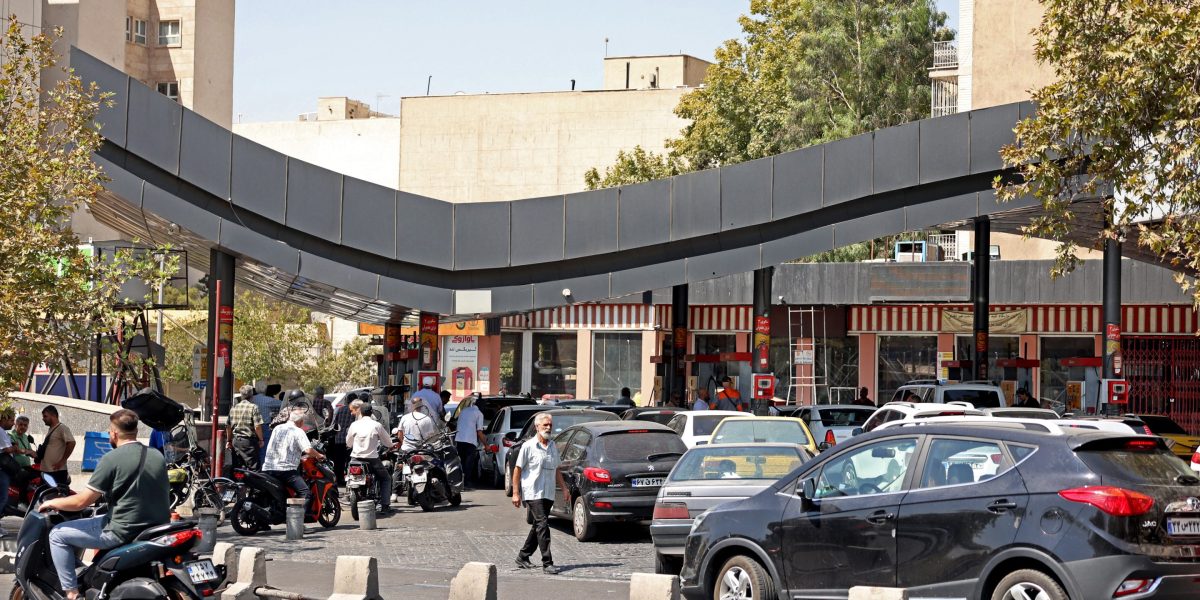
As a result of these economic sanctions and the prevailing turmoil, ordinary Iranians are feeling the brunt of the hardships. Strikes and protests have been reported, reflecting widespread discontent with living conditions. Oil and gas workers recently engaged in demonstrations highlighting their frustration over the economic crisis while trying to sustain production levels. In other areas, educational workers and laid-off personnel from various sectors are also publicly voicing their grievances about unpaid wages and job losses.
Despite the increasing distress among citizens, experts perceive that the Iranian regime may remain resolute in its hardline stance, potentially weathering the economic difficulties longer than the American public can cope with rising gas prices. This persistent pressure on everyday life could lead to more unrest; although current protests are not as widespread or intense as previous uprisings, they indicate an undercurrent of anger and dissatisfaction.
The Road Ahead
Even amidst the strain, the Iranian government is navigating its internal dichotomies, with some officials recognizing the dire conditions and others firmly opposing any diplomatic engagement with the U.S. Parliamentary speaker Mohammad Bagher Ghalibaf articulated the need to address the population’s challenges while reinforcing the nation’s economic resilience. He emphasized the importance of prioritizing the citizens’ needs, especially as the country faces complex and multifaceted issues.
As the U.S.-Iran relations continue to fluctuate with no clear path to diplomatic resolution, the future presents significant uncertainties for both the Iranians and the international community. The unfolding economic situation will undoubtedly influence any future negotiations, and the consequences of these sanctions may ripple beyond the regime, impacting the ordinary citizens caught in the crossfire.