
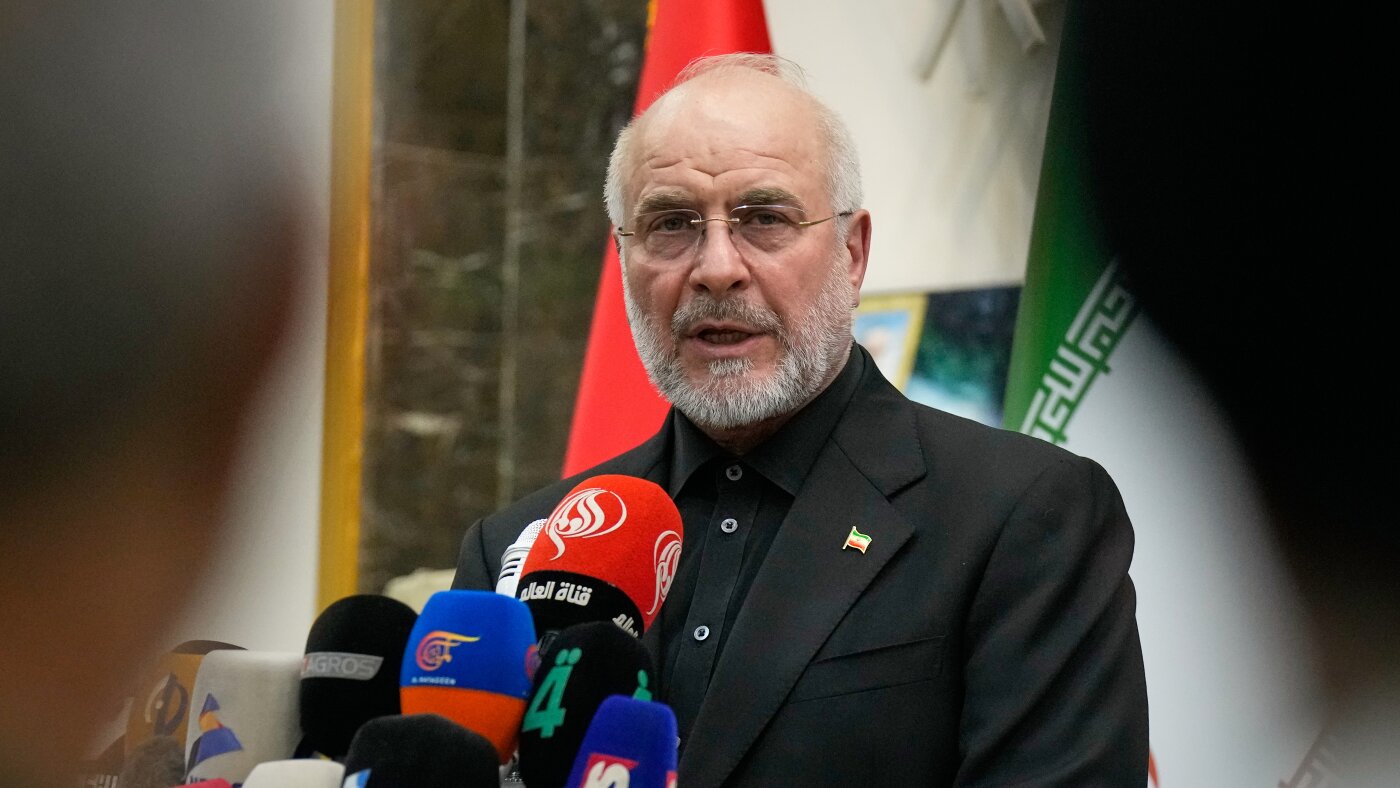
The Iranian government has brushed off President Trump’s threats of economic devastation, arguing that years of U.S. sanctions have fallen short. During a recent event, Mohammad Baqer Qalibaf, the Speaker of Iran’s Parliament and key figure in the nation’s negotiations with the U.S., asserted that Trump’s warning of an “economic D-Day” highlights America’s military failures against Iran. This response underscores Iran’s enduring resilience in the face of external pressures.
Iran’s Stance on U.S. Economic Strategy
Qalibaf stated, “The Americans and the Israelis have realized that they cannot confront Iran… in traditional military terms.” He further claimed that the U.S. has resorted to cognitive and economic warfare out of a sense of desperation. His comments came during a visit to Iraq, where he aimed to solidify regional alliances while confronting the perceived threats from Washington.
Adding to Qalibaf’s sentiments, Iran’s Foreign Minister Abbas Araghchi criticized Trump’s declaration of economic warfare, labeling it as “economic terrorism” designed to distract from America’s own economic challenges. He emphasized that America’s relentless pursuit of failed policies would only enhance anti-U.S. sentiment within Iran and beyond.
Trump’s Promise of Economic Punishment
In a recent statement on Truth Social, Trump vowed to initiate “the most crushing economic operation ever launched against any country.” He called on U.S. allies to band together in this strategy, which has come at a time when peace negotiations have stalled completely. Following the expiration of a 60-day period for discussing an end to hostilities, the diplomatic landscape appears increasingly bleak.
The Trump administration continues to maintain a strong blockade, limiting Iran’s access through vital shipping lanes, particularly the Strait of Hormuz. Existing extensive U.S. sanctions have already severely restricted Iran’s international trade with Western nations, and additional crackdowns on refineries that purchase Iranian oil have intensified these limitations. Treasury Secretary Scott Bessent has indicated that even more secondary sanctions are on the horizon, targeting not just businesses but also countries that engage with Iran.
The Implications of Secondary Sanctions
On social media, Trump warned, “ANY country that allows its financial institutions, businesses, airports, or government entities to provide any type of lifeline to Iran will itself face TREMENDOUS Economic Consequences.” Bessent reiterated that Iran would experience “the greatest coordinated economic isolation in the history of the world,” predicting that this strategy could ultimately lead to the regime’s collapse.
These threats raise significant questions regarding how other nations, particularly China, a major consumer of Iranian oil, will respond. Recent remarks from a Chinese foreign ministry spokesperson emphasized the need for negotiation over sanctions, suggesting that coercive measures are counterproductive.
Sina Toossi, a senior fellow at the Center for International Policy in Washington, noted that hardliners in Iran are currently prioritizing national security over economic concerns. This environment fosters a willingness to endure higher economic costs to safeguard their regime, complicating the U.S. strategy even further.
In light of the precarious geopolitical landscape, Trump’s planned economic measures will likely yield unpredictable outcomes. As stakeholders around the globe watch closely, one thing seems certain: the confrontation between Iran and the U.S. is far from resolution, and strategies may continue to evolve amidst ongoing tensions.