
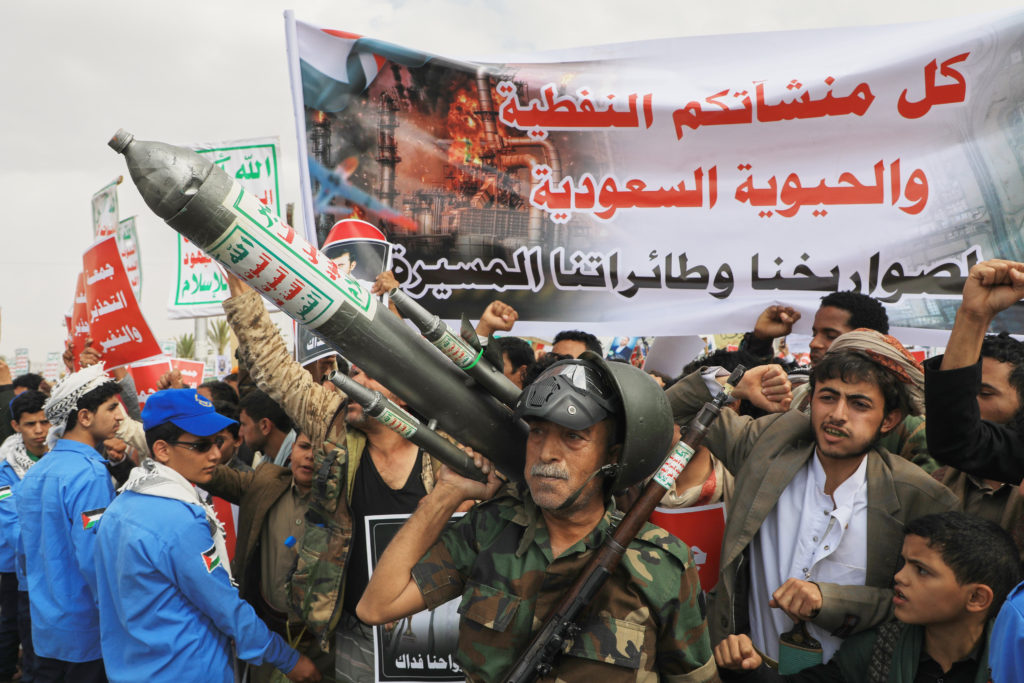
Yemen’s conflict is escalating with a new maritime embargo declared by the Iranian-aligned Houthi rebels against Saudi Arabia. This move, announced recently, aims to retaliate against a long-standing blockade imposed on Yemen and a recent military strike on Sanaa International Airport. The implications of this embargo extend beyond regional tensions, threatening vital shipping routes and raising concerns about a potential resurgence of conflict in the area.
The Strategic Importance of the Bab al-Mandeb Strait
The Bab al-Mandeb Strait, situated at the southern edge of the Arabian Peninsula, represents a critical passageway for maritime trade. Roughly 12% of global trade crosses this strait, including significant portions of container traffic heading toward and from the Suez Canal. A disruption here could force shipping companies to reroute their vessels around the Cape of Good Hope, thus increasing transit costs and delivery times. Given its strategic significance, any conflict involving the Houthis that disrupts shipping could have repercussions felt worldwide.
Houthi Actions and Saudi Responses
The Houthis’ spokesperson stated that the embargo is a form of retaliation, branding it an “eye for an eye.” Although specific operational details remain scarce, the Houthi leadership has indicated that the Bab al-Mandeb will be closed in light of what they call the unjust blockade against Yemen, which they claim has persisted for over a decade. This same group has demonstrated the capability to disrupt shipping in the past, notably during a period of heightened hostilities related to the Israel-Hamas conflict, where they attacked multiple vessels. However, it remains uncertain whether they will escalate their operations against Saudi maritime interests.
Saudi Arabia, for its part, has yet to publicly respond to the Houthi’s provocative actions. The kingdom is already managing a complex situation, relying on its East-West Pipeline as an alternative conduit for oil transport to the Red Sea. This logistical pivot is essential given their ongoing challenges in the Gulf region, particularly the threats to the Strait of Hormuz, which has been a significant flashpoint in the past.
Context of the Yemen Conflict
The civil war in Yemen erupted in 2014, triggered by the Houthis’ seizure of the capital Sanaa and subsequent skirmishes that forced the government into exile. Saudi Arabia has led a coalition to counter these rebels, enforcing air and maritime blockades since 2015. While a ceasefire was brokered in 2022, recent incidents—such as airstrikes on Sanaa’s airport—have reignited hostilities. Experts suggest that these events mark a dangerous turning point, with the Houthis willing to assert their control over Yemen’s airspace.
In light of escalating tensions, a Houthi official articulated their perspective on the blockade, emphasizing their right to retaliate. This sentiment underscores a broader narrative of resistance, framing the conflict as a struggle not only for territory but for sovereignty. The implications for regional stability are significant, especially considering the Houthis’ alignment with Iran’s Axis of Resistance, which includes various affiliated militant factions in the Middle East.
As the situation develops, global stakeholders will be closely monitoring the actions of both the Houthis and Saudi Arabia. The potential for renewed conflict is palpable, making it imperative for diplomatic avenues to be explored as an alternative to military escalation. The region’s security and the global economy remain intricately linked to the developments in Yemen—an issue that could have far-reaching consequences well beyond its borders.