
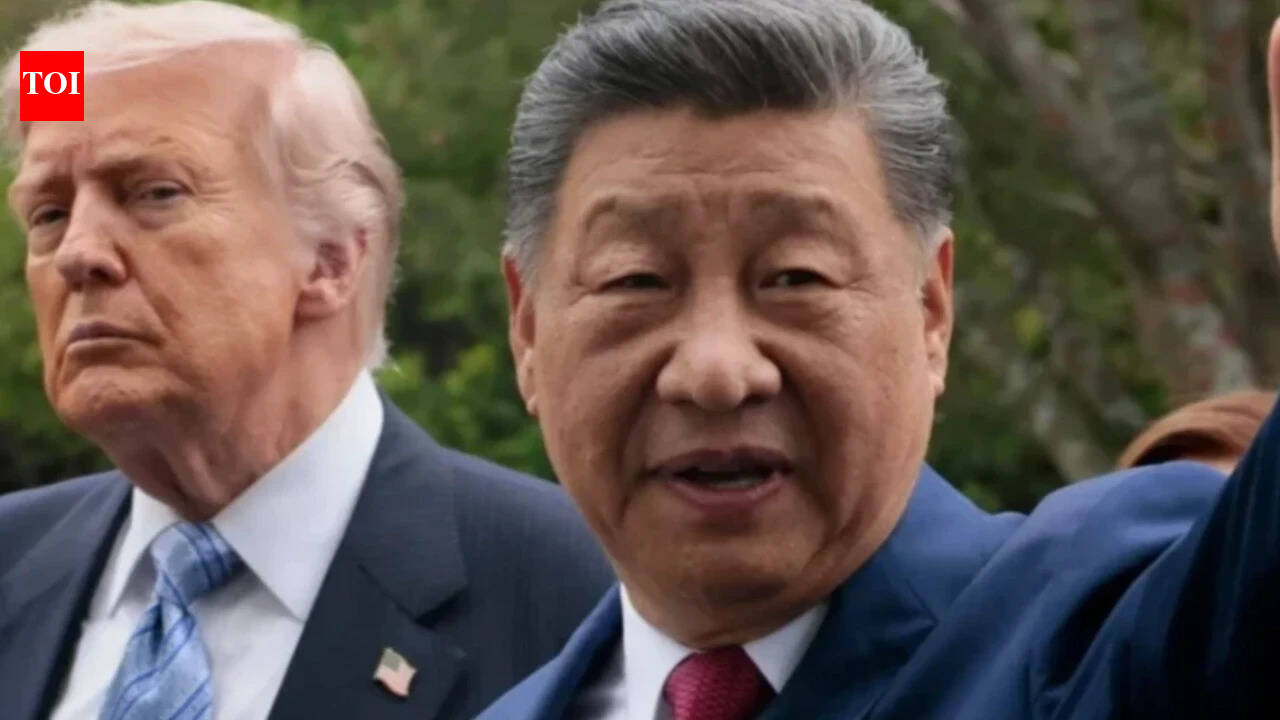
In the backdrop of a lavish welcome extended by President Donald Trump to Chinese President Xi Jinping, a revealing investigation by the Wall Street Journal has surfaced, highlighting China’s military support to Iran amid its ongoing conflict with the United States. This complex relationship comes to the forefront as Trump and Xi discuss critical issues such as trade and artificial intelligence, overshadowed by the implications of Beijing’s deepening ties with Tehran.
China’s Diplomatic Role in the Iran Conflict
As the U.S. and Iran moved toward a temporary ceasefire this summer, China was quick to spotlight its diplomatic efforts. The Chinese foreign ministry boasted about its outreach, claiming numerous calls aimed at de-escalating tensions, while Xi Jinping offered personal recommendations to mend relations. Ironically, even on the day the ceasefire was reached, a Chinese aircraft landed in Tehran, delivering electronics that could be utilized in Iran’s military sector. Investigations revealed that this was part of a bigger pattern, with approximately 1,300 shipments of dual-use components having reached Iran’s defense ministry from China in recent months.
The aforementioned findings shed light on a burgeoning air bridge facilitating the transfer of not only military equipment but also vital components essential for drone technology and missile guidance systems. After U.S. Navy restrictions tightened Iran’s maritime trade, Mahan Air—an Iranian airline under U.S. sanctions—escalated its flight operations from major Chinese cities to Tehran. Flight data indicated an increase from four flights per week to 27 over a short timeframe, suggesting a significant upsurge in cargo rather than passenger transport.
The Economic Interdependence
China’s monetary ties with Iran further complicate the situation, as Beijing has become Tehran’s largest oil purchaser. This partnership has allowed Iran to generate crucial revenue, even as U.S. sanctions aimed to cripple its economy. Front companies and covert financial channels have enabled these transactions, leading to increased Chinese dependence on Iranian crude. Reports suggest that over 80% of Iranian oil exports are now directed to China, raising alarms in Washington.
Consequently, the Trump administration has lashed out with extensive sanctions against both Iranian and Chinese entities. Nevertheless, a cautious approach has prevailed regarding direct confrontation with Beijing, particularly amidst a backdrop of previously heightened tariff disputes. Inside the administration, conflicting perspectives have emerged, with some officials urging for a more aggressive stance against China’s role in supporting Iran, while others endorse maintaining amicable relations to ensure smooth diplomatic exchanges.
China’s Dual Approach
With Xi’s recent visit to Washington, the narrative surrounding China’s role in Middle Eastern conflicts has become increasingly dichotomous. On one hand, China portrays itself as a stabilizing force advocating for peace in the region. It publicly distances itself from associations with Iran’s conflict, declaring its opposition to unilateral U.S. sanctions. Yet, the evidence compiled by the Wall Street Journal contradicts this narrative, underscoring the ongoing military-related trade between China and Iran.
Chinese officials refute allegations of deliberately enabling conflict, insisting that exports of dual-use items are strictly regulated. However, the complexities of this diplomatic dance reveal an unnerving reality: while Trump seeks to reinforce trade relations with China, the ties Beijing maintains with Tehran complicate the geopolitical landscape further. The interplay of economic considerations against the backdrop of military support for Iran creates a challenging dynamic at a summit designed to address the broader relationship between the two nations. Thus, Iran looms as an inconvenient topic at this critical dialogue, emphasizing the multifaceted nature of U.S.-China relations.