
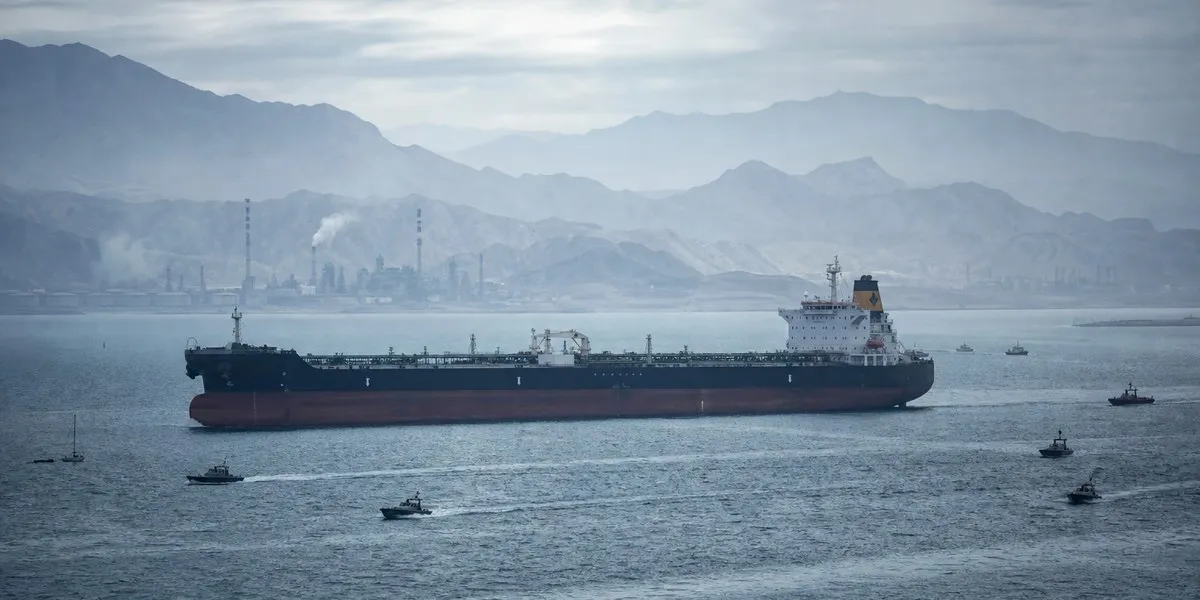
Iran is reportedly adjusting its strategies regarding vessels traversing the Strait of Hormuz. Senior officials have indicated that these new tactics aim to stabilize global oil prices and impact the upcoming U.S. midterm elections. An in-depth report by Reuters, circulated by various news outlets, highlights a notable shift in Iran’s maritime operations.
Recent Developments in the Strait of Hormuz
Historically, approximately one-fifth of the world’s oil and liquefied natural gas trade moved through the Strait of Hormuz. Following U.S. and Israeli military actions against Iran in late February, Tehran adopted a more aggressive stance, restricting shipping through this vital waterway. This new wave of threats and attacks has led to a significant reduction in maritime traffic, contributing to escalating global oil prices, although some cargoes still manage to navigate through.
Recent analysis suggests that in a 48-hour period, there were at least five incidents involving commercial vessels in the Strait, which included drone activity. The International Maritime Organization has characterized these incidents as part of a rising escalation, which matches the intensity of attacks observed in early October.
Changes in Tactics and Escalation
A U.S. military official, who chose to remain anonymous, highlighted pivotal changes in Iran’s approach. With the U.S. having degraded much of Iran’s radar capabilities, the Islamic Revolutionary Guard Corps (IRGC) has turned to using unarmed observers on small boats to track potential targets, including American Navy ships. Reports also indicate that Iranian observers aboard a dhow were detected, allegedly transmitting target information back to the IRGC. U.S. forces responded by ordering the observers off the vessel and subsequently destroying it, with no reported casualties.
Additionally, Iranian officials have expressed intentions to broaden their operational reach beyond the Strait of Hormuz, targeting areas in the Gulf of Oman and around Qatar and the United Arab Emirates. The U.S. Navy’s Joint Maritime Information Center has assessed the threat to commercial shipping in the Strait as “serious,” classifying it as the second-highest level of concern.
Impact on Global Oil Markets
These developments bear significant implications for global oil markets and the broader geopolitical landscape. As Iran enhances its military activities in strategic maritime zones, the volatility surrounding oil prices is likely to increase. Observers are particularly concerned about the ripple effects of this escalation, potentially destabilizing an already sensitive economic environment amid global energy demands.
With these new tactics, Iran is not only asserting its influence over crucial trade routes but is also making a calculated move to sway public sentiment during pivotal political moments, such as the U.S. midterm elections. The intertwining of military strategies with economic objectives reveals a complex layer to Iran’s maritime operations that extends well beyond its borders.
As this situation unfolds, it is critical for both policymakers and shipping industries to maintain vigilance and adapt to the ever-evolving landscape. The implications of these maritime strategies could reverberate through global markets, affecting everything from oil prices to international relations as conflicts spill into economic domains.