
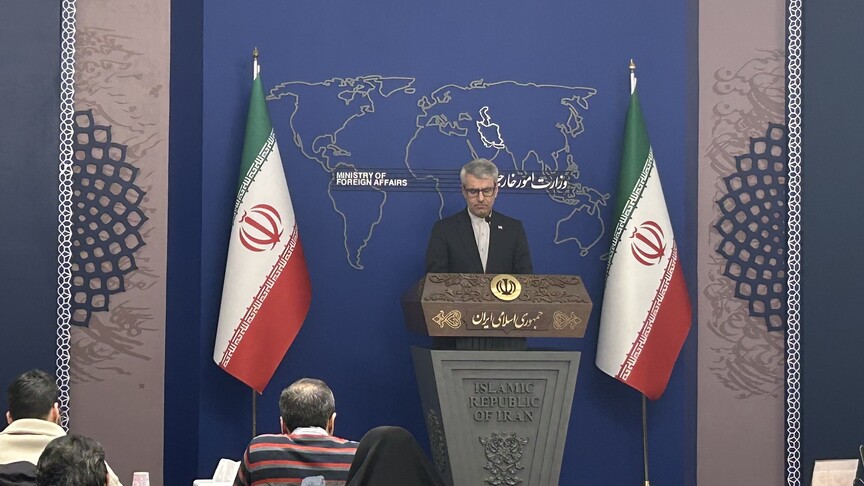
Iran recently announced its intention to convey its responses to U.S. proposals regarding the ongoing conflict through mediators. Additionally, there have been marked advancements in discussions with Oman focused on establishing secure shipping routes in the strategically critical Strait of Hormuz.
Iran’s Diplomatic Position on U.S. Proposals
Foreign Ministry spokesman Esmaeil Baghaei stated that Tehran has clearly articulated its “considerations and conditions” for concluding the conflict and restoring stability in the Gulf region and specifically in the Strait of Hormuz. He emphasized that any necessary reactions to U.S. proposals would be communicated through third-party mediators. This method of communication aims to facilitate a more structured dialogue between the involved parties. Reports indicate that intermediary channels are currently being utilized for message exchanges between Iran and the United States.
Baghaei also addressed recent comments made by U.S. Secretary of State Marco Rubio, who claimed that Iran had missed various chances to come to an agreement regarding its nuclear program. Baghaei rebutted these claims by insisting that altering historical facts does not change the established viewpoint on the U.S.’s record, citing its withdrawal from the 2015 nuclear deal as a significant breach of trust. His remarks highlight a growing frustration in Iran over perceived U.S. transgressions throughout their negotiations.
Impact of U.S. Actions on Regional Security
Furthermore, Baghaei emphasized that the ongoing insecurity in the region stems largely from U.S. actions. He outlined how these actions have had bleeding economic consequences not just for Iran, but also internationally. This narrative stresses that the destabilization of the Middle East has ripple effects, impacting global trade and security, particularly given the Strait of Hormuz’s role as a pivotal passage for maritime shipping.
In terms of navigation safety, Baghaei revealed that Iran and Oman have achieved meaningful progress in their discussions about maritime security. Both nations have reportedly reached an agreement on the geographical coordinates for secure shipping lanes in this vital waterway, essential for oil transport and global trade. Moreover, an understanding has been established regarding how this arrangement will be communicated to the necessary international bodies.
Future Endeavors for Regional Engagement
Baghaei reiterated Iran’s commitment to fostering trust and enhancing cooperation with neighboring countries. This proactive diplomatic stance reflects Iran’s desire to engage more comprehensively with its counterparts in the region, aiming for a collaborative approach to security and economic stability. As discussions with Oman evolve, Iran is likely to pursue further dialogues designed to bolster regional trust and cooperation.
In summary, Iran’s strategic use of mediators to engage with the United States and its collaborative efforts with Oman showcase a dual approach toward diplomatic and regional stability. The outcomes of these initiatives could significantly influence not only the security landscape in the Gulf but also the dynamics of international relations concerning U.S. foreign policy.