
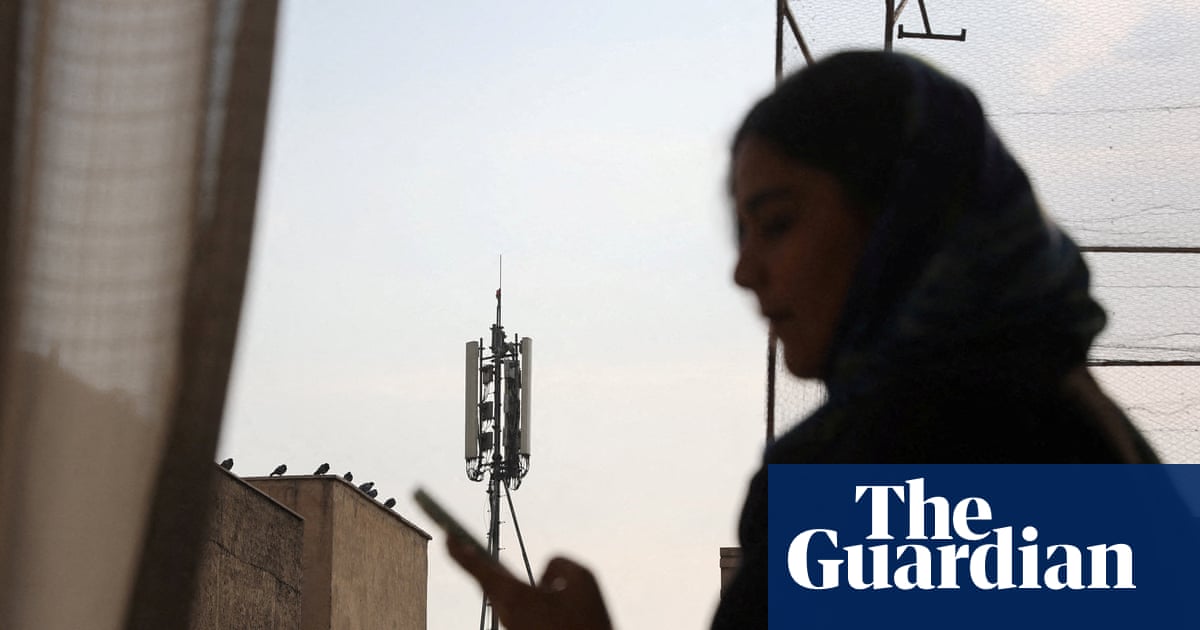
The recent announcement from the Iranian government regarding the end of an 88-day internet blackout has generated little immediate change, according to internet monitoring agencies. This historic clampdown began in January, coinciding with widespread protests that sparked fierce government responses.
Unspecified Delays in Lifting Restrictions
It remains uncertain whether the delays in restoring internet access are attributable to technical difficulties or political factors. Although officials spotlighted the reinstatement of Gmail as a positive step, most Iranians still face restrictions that cut them off from the global internet. The internet blackout has severely affected the populace, with only a select few enjoying unrestricted access.
The Iranian president, Masoud Pezeshkian, who campaigned with promises of a free internet, has been actively advocating for the restrictions to be lifted. This push, prompted by fears of mass unemployment and business failures, culminated in a formal decision following a vote by a specialized task force overseeing cyberspace management. Communications Minister Sattar Hashemi acknowledged that the process of restoring internet access would be gradual, underlining the extensive damage that prior restrictions had inflicted on the economy, digital businesses, and service industries.
The Economic Ramifications of Internet Restrictions
Hashemi emphasized that ongoing internet restrictions could exacerbate economic decline, leading to weakened investments and increased emigration of skilled workers. Security officials remain wary of fully returning to pre-protest conditions, fearing that reopened communication could result in renewed protests. The government frequently commodifies the role of social media and satellite channels as sources of anti-government propaganda, while many Iranians believe that the internet shutdown is an attempt to obscure a broader crackdown on dissent, illustrated by numerous judicial executions.
Human rights organizations have sounded the alarm, citing that Iranian authorities have executed at least 36 individuals on politically motivated charges. Numerous protesters and dissidents remain under threat of execution, revealing a grim backdrop to the current internet situation. The internet blackout has had tangible effects, with estimates indicating that around five million jobs in Iran are tied to internet accessibility. This has worsened an already dire economic crisis characterized by soaring inflation, making basic food items increasingly unaffordable for many families.
Claims of Resilience Amidst Severe Losses
Despite assertions from the labor ministry that the internet shutdown has not led to job losses—claiming businesses have transitioned to domestic platforms—a significant portion of Iranian companies reports losses. Many industries depend on the global search engine Google, and experts estimate that the economic toll from the internet restrictions may exceed $6 million daily. A survey commissioned by the Tehran Electronics Association revealed that the unavailability of major communication channels like WhatsApp and Instagram has curtailed nearly 75% of vital communication avenues for businesses.
The nationwide blackout began in the wake of January’s protests and intensified after military conflicts involving the U.S. and Israel. Iranian authorities impose severe penalties for any individual transmitting information through satellite channels, undermining public safety and free expression. In response to persistent demands for internet restoration, a plan dubbed Internet Pro was green-lighted, allowing certain demographics restricted access to the internet, albeit with usage limits. Yet, the costs of such access remain prohibitive for many, particularly the youth.
Platforms like Instagram, X (formerly Twitter), and YouTube have long been officially blocked in Iran yet are accessible through virtual private networks (VPNs). Interestingly, members of the political elite frequently utilize X, despite its nominal illegality, while a thriving market exists for the sale of anti-filtering devices, revealing a complex relationship between the state and digital communication.