
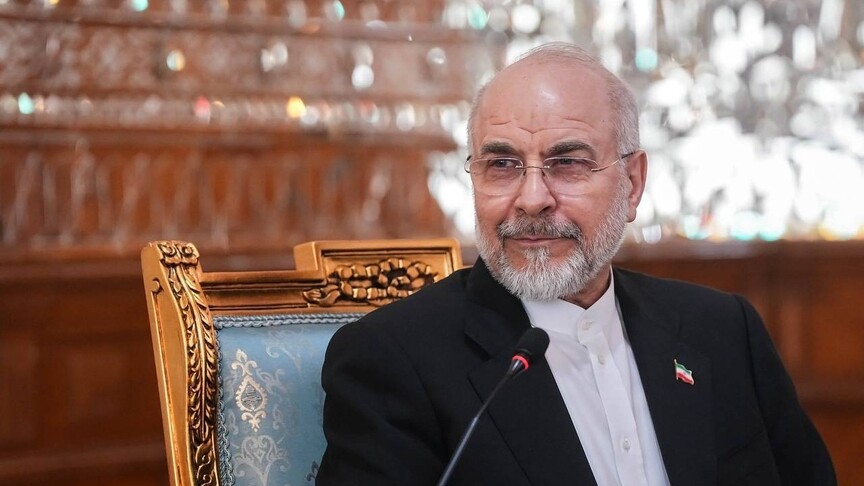
Iranian Parliament Speaker Mohammad Bagher Qalibaf recently dismissed claims made by U.S. Treasury Secretary Scott Bessent that the U.S. economic sanctions would devastate Iran’s economy. Qalibaf’s strong rebuttal highlights the ongoing tensions between the two nations and sheds light on the complex interplay of economic factors in this geopolitical conflict.
Qalibaf Challenges Bessent’s Assertions
In a pointed social media response, Qalibaf labeled Bessent’s commentary as deceitful, stating, “Liar, liar, pants on fire.” This remark came in reaction to Bessent’s claim that over the last two weeks, the U.S. has successfully placed 130 million barrels of oil into the market. Qalibaf refuted these assertions by encouraging Bessent to investigate data from Moody’s, which purportedly indicates that war-related expenses have exceeded $130 billion. This indicates Qalibaf’s aim to not only counter the narrative but also to assert that the financial impact of U.S. actions is more significant than reported.
Economic Analysis and Implications
Qalibaf cited a particular incident involving the trading firm Jane Street, which allegedly incurred losses exceeding $130 million by speculating on lower oil prices during a recent futures contract rollover. This example serves to illustrate the volatility and unpredictability of the oil market as influenced by shifts in U.S. policy and economic strategy. Furthermore, Qalibaf reiterated his point with an article from economist Paul Krugman, titled “Scott Bessent Fails to Gaslight the Market,” reinforcing his argument against the alleged success of U.S. measures.
Heightened Tensions between Washington and Tehran
The exchange between Qalibaf and Bessent exemplifies the elevated tensions that have characterized U.S.-Iran relations, particularly since the conflict escalated with military action against Iran in late February. In retaliation, Iran targeted U.S. military positions and assets in neighboring Arab nations supportive of Washington. The ongoing hostilities represent a troubling chapter in regional politics, signifying a complex struggle for influence.
A memorandum of understanding was signed in Islamabad in June, facilitated by Pakistan and Qatar, to mitigate conflicts and create a pathway for negotiations. However, the implementation of this agreement has encountered substantial challenges, with Tehran accusing Washington of not holding up its end of the deal. As both parties grapple with trust issues, the prospects for peaceful resolution remain murky.
In conclusion, the back-and-forth between Qalibaf and Bessent not only showcases the deep-rooted animosities but also reflects broader economic realities that underscore the challenges facing both nations. As these geopolitical tensions play out, the future of both economies hangs in the balance, emphasizing the importance of diplomatic engagement and economic stability in this volatile region.