
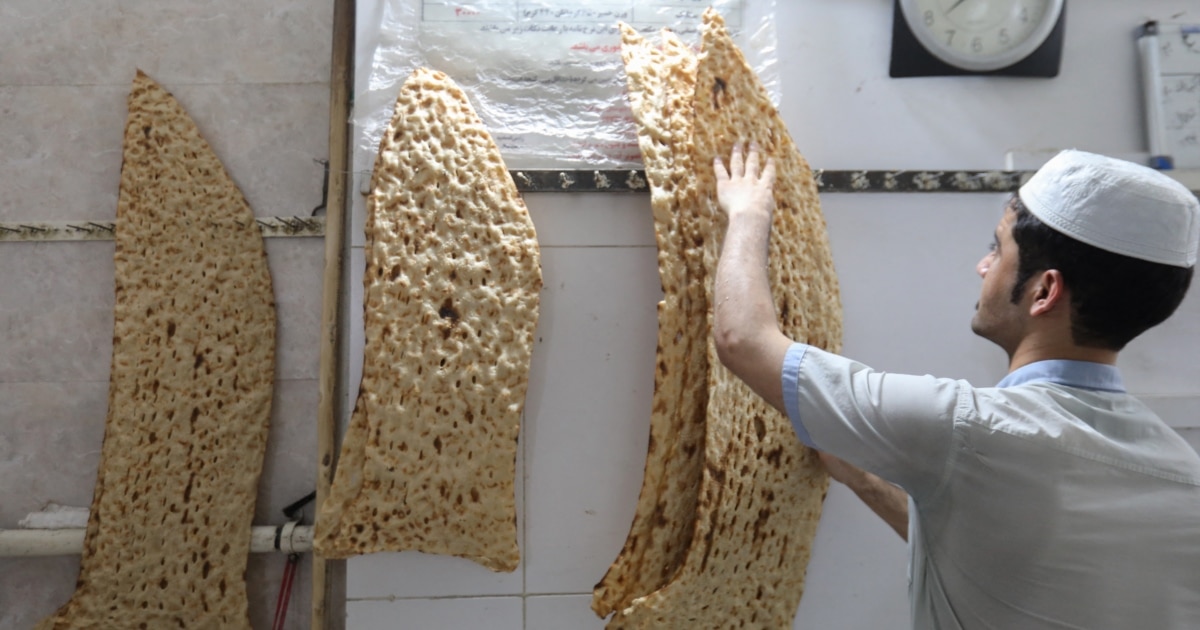
Despite enduring years of severe economic sanctions, many Iranians have managed to keep basic necessities on their tables. However, the situation has drastically deteriorated in recent times.
### Economic Turmoil and Rising Costs
The ongoing conflict involving the United States and Israel has led to escalating costs and supply shortages, severely affecting Iran’s infrastructure and industries. This has resulted in rampant inflation and widespread unemployment. Traditionally, the Iranian government has subsidized bread prices, making this essential food item affordable for citizens. However, prices for bread have surged, more than doubling in cities like Tehran over the past year, leaving numerous families struggling to afford this staple.
A resident of Tehran, who preferred to remain anonymous due to potential government backlash, shared, “Things are very bad,” admitting that while her situation is dire, it is still better than that of many others. She has resorted to skipping meals and has cut back on purchasing meat and dining out, having not bought anything for herself in months. Meanwhile, diplomatic talks between Tehran and Washington over a potential peace deal appear to have no immediate impact on the ground. As negotiations continue, millions of Iranians face the grim reality of drastically reduced food intake, with some households relying on just one meal per day to survive.
### Skyrocketing Food Prices
The inflationary pressures affecting food prices extend well beyond just bread. Statistics from Iran’s Statistical Center reveal that food prices soared by about 130 percent in May, marking the third consecutive month of rising inflation, which presently sits just under 58 percent. The International Monetary Fund (IMF) forecasts that this trend could see overall inflation reaching approximately 69 percent by 2026, the highest since the Islamic Revolution in 1979.
Years of harsh US sanctions compounded by governmental mismanagement have led to this economic crisis. In January, a plummet in the national currency’s value sparked widespread anti-government protests. Shortly thereafter, airstrikes by US and Israeli forces targeted crucial energy and transport infrastructures, further disrupting production and increasing prices for essential goods. The ongoing naval blockade on Iranian ports has severely restricted oil exports, crippling an already beleaguered economy.
### Daily Struggles of Ordinary Iranians
The repercussions of these economic pressures are glaringly evident in the lives of Iranian families. Currently, the minimum monthly salary is about $100, and reports indicate that an average family of four spends around 70 percent of its income on basic food items. An anecdote from Tehran highlights the desperation: a single mother was forced to move back in with her parents due to her inability to pay rent, with all her earnings directed towards essential groceries.
Bakery owner Hossein remarked that the rising cost of bread correlates directly with increased rent and utility expenses. “You’re only seeing one side of the story,” he explained. “Everything has gone up a hundredfold.” Economist Javad Rahimpour articulated that the economic situation in Iran is marked by structural failures, describing how businesses simply transmute rising costs onto consumers in what he terms as “transmitted mismanagement.” Even if a peace agreement with the United States were reached, he cautioned that Iran’s economic framework would still require extensive restructuring.
In summary, the combination of rampant inflation, supply shortages, and the fallout from international conflicts has plunged many Iranians into a state of economic despair. As families navigate these challenges daily, the hope for improvement hangs in the balance, reliant on both diplomatic negotiations and comprehensive reforms within the nation’s economy.