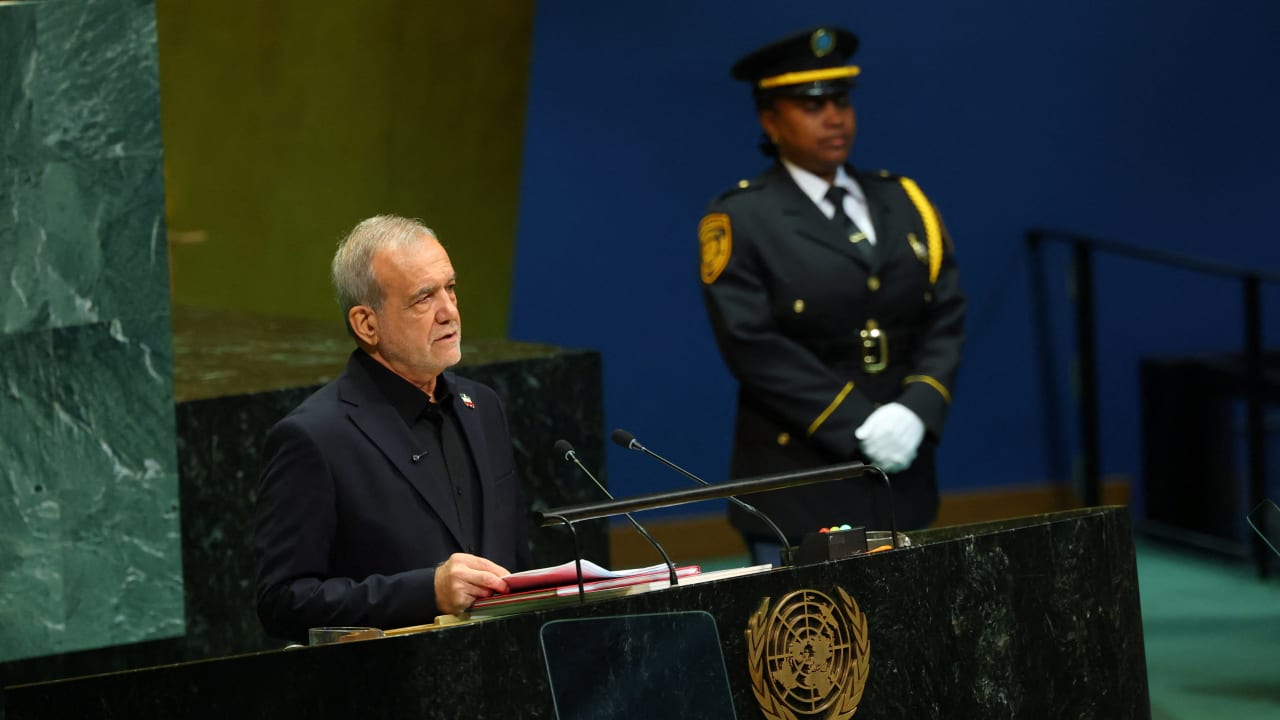
In recent developments, Iranian President Masoud Pezeshkian’s assertions regarding the armed January protests have ignited controversy and denial among the families of those who died during the unrest. The president claimed that protestors were equipped with weapons supplied by foreign powers, specifically Israel and the United States. However, numerous bereaved Iranian families have taken to social media, firmly denying these allegations, insisting that their loved ones were unarmed and acting independently.
Pezeshkian’s Claims at the UN
During a recent speech at the United Nations General Assembly, Pezeshkian emphasized the ongoing struggle of Iranian citizens, stating, “For the past seven months, our people have been in the streets every night to defend our Iran.” He dropped hints that external forces sought to destabilize the nation, reiterating that the Iranian populace is the true source of power. Pezeshkian’s declaration comes in the wake of significant unrest following protests that were catalyzed by various socio-political grievances.
Government Death Toll vs. Independent Estimates
The Iranian administration has reported that over 3,100 individuals, including security personnel, were killed during the January protests. The government has attributed these deaths to supposed “foreign-backed rioters.” However, this official story is widely contested by human rights organizations and various international probes. A recent United Nations report suggested that the actual death toll is likely much higher than the government’s figures and pointed to possible crimes against humanity committed by Iranian authorities.
Survivors’ Testimonials and Continued Revelations
Among the most poignant revelations are the accounts from the family members of victims. The sister of Sina Kazemi, a 22-year-old protestor who lost his life, shared on Twitter, “I testify that my brother was unarmed when he was killed by the Islamic Republic of Iran’s forces.” Kazemi was last seen on January 8, and his family’s search concluded when they found his body days later, revealing signs of violence suggesting he had been assaulted. His death certificate contradicted government claims, asserting he was dead the same night he disappeared.
Similarly, Babak Sadeghi Mohseni’s sister relayed similar sentiments, stating he was also shot while unarmed. Calls for accountability and justice are becoming increasingly common among families, who continue to urge the international community to scrutinize the Iranian government’s narrative.
As the tragedy unfolds deeper into its narrative, the personal accounts of victims continue to paint a stark contrast to official tales. The struggle for truth and justice persists in the hearts and actions of those impacted by the tragedy. The Iranian public remains resilient, demanding accountability, and actively participating in the discourse surrounding the country’s tumultuous events.