
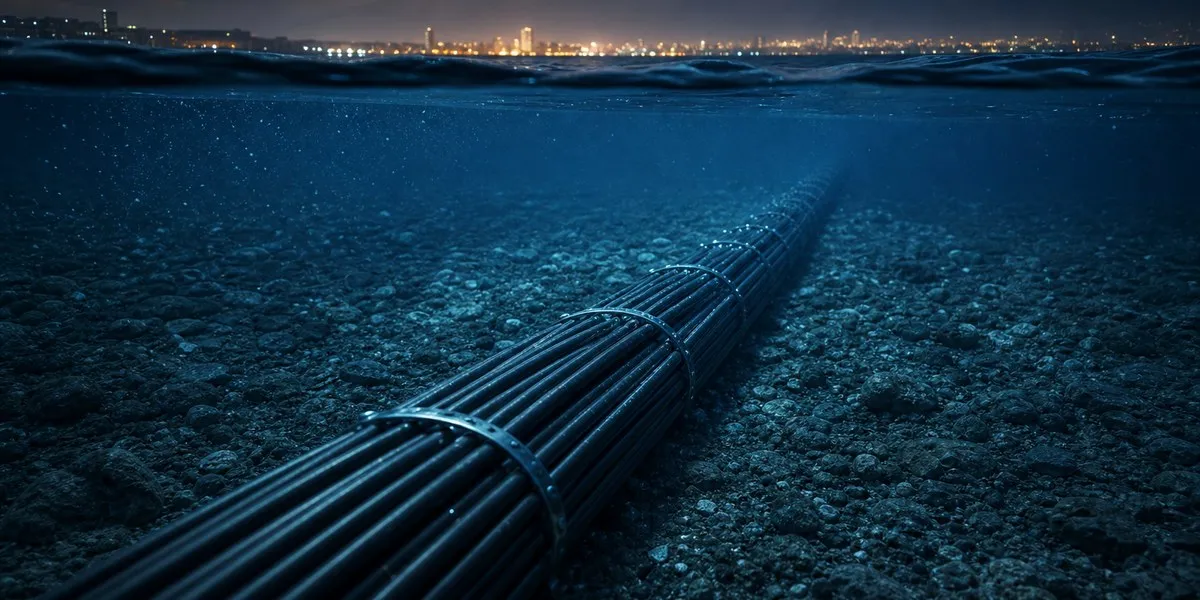
Iran’s Islamic Revolutionary Guard Corps (IRGC) has recently made headlines with its declaration to unveil new targets and weaponry. This announcement particularly focuses on the seven crucial underwater internet cables situated beneath the Strait of Hormuz, a key maritime region. The spokesperson for the IRGC, Hossein Mohebbi, shared these details during a ceremony at the Sacred Defense Museum in Tehran.
The Importance of Underwater Internet Cables
Mohebbi emphasized that these seven major internet cables are vital for the passage of internet and commercial data traffic. The significance of these cables cannot be overstated, as they form the backbone of digital communication in the region. The IRGC’s focus on these infrastructures highlights the strategic leverage Iran believes it holds in regional security dynamics.
In addition to discussing the cables, Mohebbi expressed Iran’s intention to introduce new types of weapons and identify further targets. He also indicated that Iran aims to expel what he referred to as the remnants of American influence from the region, a statement reflecting Tehran’s ongoing geopolitical stance. This kind of rhetoric is likely to escalate tensions in an already volatile area.
Tehran’s Recent Statements on Potential Attacks
Adding to the discussion, earlier in October, Mohsen Rezaei, of Iran’s Supreme National Security Council, warned that Tehran could target not just internet cables but also data centers and artificial intelligence facilities linked to the United States if hostilities were to reignite. Although these facilities have yet to be officially designated as targets, Rezaei’s comments suggest a readiness to expand the scope of potential military actions should conflict arise again.
The backdrop to these statements is a history of confrontations between Iran, the United States, and its allies. According to reports from Anadolu Agency, a renewed conflict began on February 28, leading to missile and drone strikes by Iran across the region. Following this, the Strait of Hormuz was effectively closed to international navigation, underlining the critical significance of the area in global trade.
The Broader Implications for Regional Security
The geopolitical landscape surrounding the Strait of Hormuz is fraught with complexities. While the United States and Iran signed a memorandum concerning freedom of navigation in June, its implementation has been stalled due to ongoing disputes over security measures in this essential maritime corridor. The situation remains precarious, with both sides cautiously eyeing each other’s military capabilities.
As tensions continue to rise, the international community must monitor these developments closely. The threats to underwater internet cables indicate not just a potential military conflict but also a clash over technological infrastructure in an increasingly digital world. Understanding these dynamics is crucial for grasping the broader implications for regional stability and international relations.
As Iran gears up to reveal its new military strategy and targets, the stakes are significantly high. The situation in the Strait of Hormuz is more than just a regional issue; it has implications for global commerce and security that cannot be ignored.