
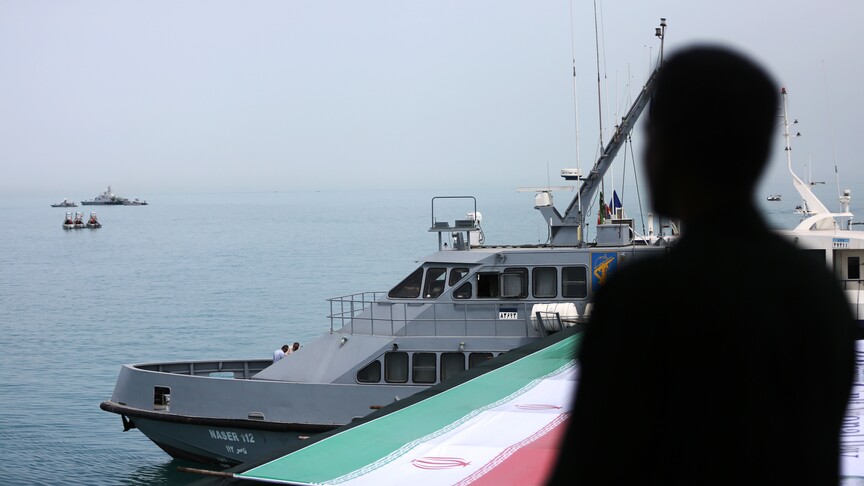
Tensions continue to escalate in the Strait of Hormuz, a vital global shipping corridor, as a senior commander of Iran’s Islamic Revolutionary Guard Corps (IRGC) Navy has issued stark warnings to the United States. This announcement follows an ongoing backdrop of conflict and misunderstandings between the two nations, particularly over maritime navigation rights and territorial control.
Feared Threats to US Warships
On Tuesday, Rear Adm. Ali Azmaei, a prominent commander within the IRGC, openly threatened to sink American warships that come too close to the Strait of Hormuz. According to statements made during a televised address covered by Iran’s state news agency IRNA, Azmaei proclaimed that Iranian military forces are “counting down” for such confrontations. He asserted that U.S. warships hesitate to approach the strategic waterway due to their perceived vulnerabilities, highlighting that a U.S. aircraft carrier worth $13 billion had retreated approximately 700 kilometers (about 435 miles) from the strait.
In Azmaei’s view, the Strait of Hormuz should be viewed as a region under Iranian control. He challenged the U.S. by asserting that if they wish to determine whether the strait is “open or closed,” they should engage directly and witness firsthand who maintains authority over it. This confrontational stance underscores the rising tensions in the waters surrounding Iran, further complicating an already fraught diplomatic landscape.
Claims of Controlled Navigation
The commander’s assertions are backed by claims regarding Iran’s management of maritime traffic through the Strait of Hormuz. Azmaei stated that Iranian naval forces have exercised “smart control” over the area, suggesting that they issue permissions for vessels navigating through Iranian waters. This claim contrasts sharply with the U.S. perspective, which champions the principle of freedom of navigation in international waters.
Adding to the rhetorical flare, Azmaei accused the U.S. and its allies of suppressing information about incidents involving “violating vessels” in the region. He noted that Iranian forces had acted in response to these violations, insisting that recent maneuvers by Tehran had been necessary to uphold their maritime rights. With such accusations, the IRGC plays on national pride and sovereignty, attempting to enhance its standing both domestically and internationally.
The Broader Context of Maritime Tensions
The situation in the Strait of Hormuz is not just a matter of military posturing; it is deeply intertwined with the broader geopolitics of the Iran-U.S. conflict. As both nations vie for influence and control over this economically pivotal maritime gateway, the stakes become increasingly high. Iran maintains that it has full control over maritime routes in its territorial waters while Washington emphasizes the need for unhindered navigation.
Recent incidents involving attacks on commercial vessels have added another layer of complexity to these maritime disputes. Such altercations raise the risk of military escalation and further jeopardize the safety of shipping lanes vital for global commerce. The situation is now more precarious than it has been in recent years, as both sides prepare for potential confrontations amidst their conflicting narratives about sovereignty and security.
In summary, the war of words and military implications surrounding the Strait of Hormuz are reflective of a larger historical tension between Iran and the United States. Enhanced vigilance and preparedness by Iran, as noted by Azmaei, signal an increasing willingness to defend its maritime interests aggressively. This ongoing conflict illustrates the fragile balance of power in one of the world’s most strategically important water routes. As this narrative unfolds, the international community watches closely, aware of the potential ramifications for global trade and regional stability.