
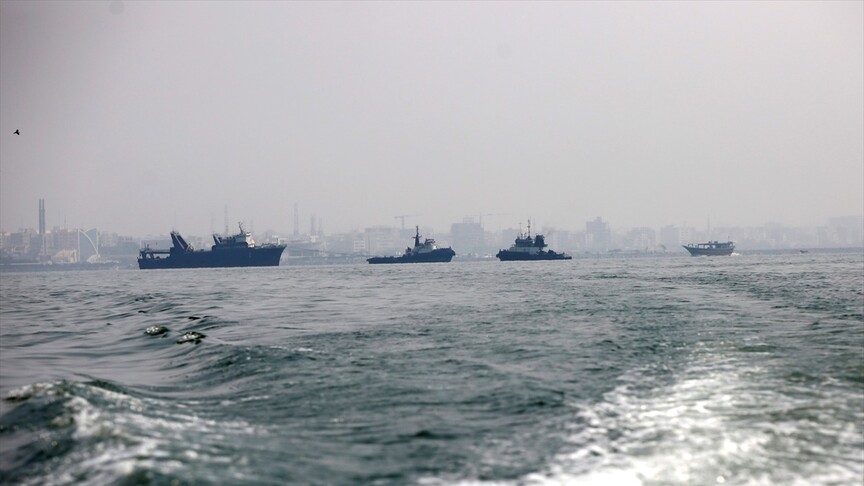
An oil tanker recently encountered a mine while navigating the Strait of Hormuz, leading to a significant explosion in its engine room, according to the Islamic Revolutionary Guard Corps (IRGC) Navy. This incident highlights ongoing tensions in a critical maritime passage and raises concerns about the safety of vessels operating in the region.
Incident Overview
The IRGC Navy reported that the supertanker, with a capacity to transport approximately 2 million barrels of oil, was attempting to cross the vital waterway with its navigation system turned off. This marks the third occurrence of a vessel hitting naval mines in this restricted area in just two days. While details regarding the specific identity or flag of the tanker were not provided, the implications of this incident are significant for maritime safety and international shipping.
Warnings Issued by Iranian Authorities
In light of this recent event, the IRGC Navy reiterated its warning that any vessels that deactivate their navigation systems while traversing the Strait of Hormuz would be interpreted as “hostile.” This serves as a stark reminder of the escalating risks faced by shipping companies in a region plagued by geopolitical strife. The Strait of Hormuz is a crucial conduit for a significant percentage of the world’s oil supply, making it a focal point of international attention and military readiness.
Background of Tensions
This announcement follows a statement from the U.S. Central Command (CENTCOM) made in late August, indicating that international shipping lanes in the Strait had been re-established after U.S. forces removed Iranian naval mines. Tensions, however, reignited when Iran declared on July 12 that it had again closed the strait, following renewed U.S. military actions begun on July 8. Tehran’s resolve to target vessels that do not adhere to its designated routes or that attempt passage without permission underscores the precarious nature of maritime operations in the area.
The conflict escalated further when, on February 28, the U.S. and Israel initiated military action against Iran. In response, Iran launched missile and drone strikes across the region and effectively shut down the Strait of Hormuz. The situation intensified with Washington imposing a naval blockade on Iranian ports, which raised alarms among global shipping experts and policymakers.
Memorandum of Understanding Stalled
Despite the signing of a memorandum of understanding in June aimed at ensuring freedom of navigation in the Strait, the implementation of this agreement has faced challenges. Disagreements regarding security measures in the strategic maritime corridor have stalled progress, amplifying uncertainty for vessels operating in the area.
In conclusion, the recent mine incident involving an oil tanker in the Strait of Hormuz exemplifies the complex and dangerous dynamics at play in this vital passage. As tensions rise and authorities issue stern warnings, the international maritime community must navigate these challenges with caution, ensuring that safety protocols are strictly followed to mitigate risks.