
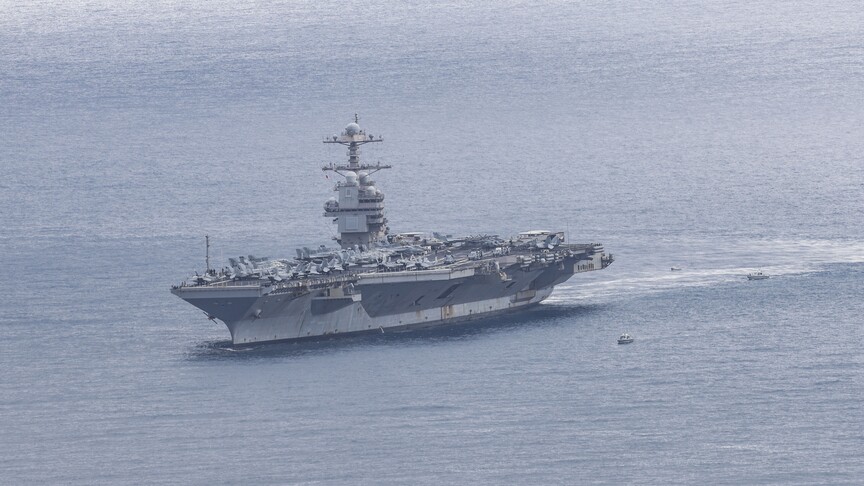
On September 6, 2026, escalating tensions in the Gulf took a sharper turn as Iran’s Islamic Revolutionary Guard Corps (IRGC) proclaimed that it had launched ballistic missiles at a U.S. aircraft carrier and a navy destroyer, alleging that both vessels were damaged and subsequently retreated from the region. This development highlights the growing hostilities between the U.S. and Iranian forces in a strategic maritime zone critical for global oil transport.
Iran’s Claims and Justifications
The IRGC issued an announcement via the IRNA news agency detailing the missile strikes executed by its Aerospace Force. They asserted that these U.S. warships had engaged in actions detrimental to Iranian vessels and were participating in a maritime blockade against Iran. The IRGC emphasized that following the missile attacks, both naval ships exited the “engagement area” after reportedly suffering damage. This bold claim is part of Iran’s broader narrative that it is defending its territorial waters against perceived aggressions by foreign military forces.
U.S. Military Response
In the wake of these claims, the U.S. military’s Central Command (CENTCOM) confirmed that the Iranian forces had indeed targeted two navy warships. However, their statement reassured the public that the vessels managed to evade the incoming missiles and that no American personnel were injured during the incident. CENTCOM noted that following these engagements, U.S. forces retaliated by striking three Iranian crude oil tankers, further intensifying the cycle of retaliation.
Escalating Maritime Conflict
The latest skirmishes are part of a broader conflict that has been simmering since the U.S. and Israel commenced military operations against Iran in February 2026. Just the day before the missile attacks on U.S. vessels, the IRGC reported targeting three oil tankers in the strategically significant Strait of Hormuz, in addition to attacking three vessels linked to U.S. interests elsewhere in the region. This pattern of reciprocal strikes illustrates a dangerous escalation in maritime hostilities that threatens the stability of international shipping and energy supplies.
Implications for Regional Stability
The ongoing confrontations between the U.S. and Iran are not only concerning for the nations directly involved but also pose serious ramifications for regional stability. As both forces have displayed a willingness to engage in military operations in a maritime corridor vital for global commerce, the potential for a larger conflict looms. The IRGC’s warning that further American military actions would provoke “heavier” responses underscores the precariousness of the situation. As the tension builds, observers worldwide are left questioning how long this cycle of aggression can be sustained before it leads to a broader military confrontation in the region.
In summary, the recent missile launches by Iran’s IRGC and the subsequent U.S. responses highlight a significant rise in tensions between the two nations. As maritime military operations continue, the risk of a larger disaster in the Gulf persists, which could affect not just the two adversaries but also the entire global community reliant on oil and trade routes in the region.