
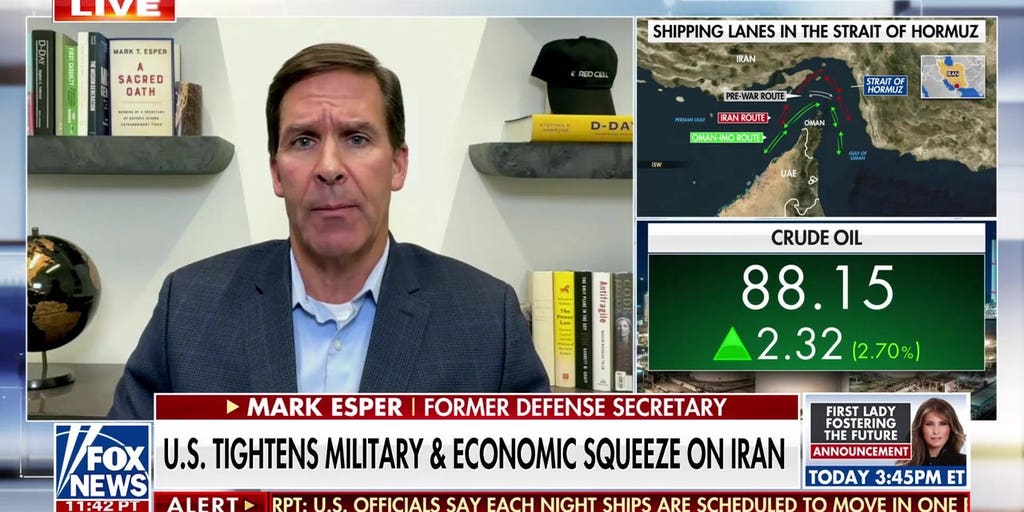
The geopolitical landscape surrounding Iran remains complex, particularly as the United States intensifies its military and economic measures against the nation. Former Secretary of Defense Mark Esper offers insights into this shifting dynamic, focusing on the ramifications and strategies that define American policy toward Iran.
The U.S. Stance on Iran: An Evolving Strategy
The United States has long held a contentious relationship with Iran, marked by a series of sanctions and military postures designed to curtail Tehran’s influence in the Middle East. Recent developments indicate a shift towards a more stringent approach, combining economic sanctions with military readiness. This dual strategy aims to pressure Iran into reconsidering its regional ambitions, particularly in areas pertaining to nuclear capabilities and support for proxy groups.
Mark Esper emphasizes the importance of a cohesive U.S. strategy that transcends administrations. The need for a unified approach is crucial, particularly when addressing Iran’s aggressive actions, such as missile tests and cyber threats. By tightening the noose through targeted sanctions and demonstrating military readiness, the U.S. hopes to deter further escalation and encourage diplomatic negotiations.
The Benefits of Military Readiness
One aspect of U.S. policy that has garnered attention is the emphasis on military readiness. The presence of U.S. forces in the region serves as a deterrent against aggressive maneuvers by Iran. This military posture not only reassures allies in the region, such as Israel and Saudi Arabia, but it also signals to Iran that provocative actions will have consequences. Esper argues that such a stance is essential for maintaining stability in an area rife with tension.
Moreover, enhancing military capabilities can work in tandem with international diplomatic efforts. By showcasing military strength, the U.S. stands stronger in negotiations, making it clear that concessions will be granted only when Iran complies with international norms regarding nuclear proliferation and regional destabilization.
Economic Sanctions: A Tool for Change
In addition to military measures, the U.S. is leveraging economic sanctions as a critical component of its strategy against Iran. These sanctions target key sectors of the Iranian economy, including oil, banking, and trade. The objective is to create economic pressure that compels the Iranian regime to alter its policies and engage in constructive dialogue.
Esper notes that while sanctions are intended to weaken the Iranian government, the impact is also felt by ordinary citizens. This economic hardship can lead to public discontent, potentially igniting internal movements for change. Therefore, the U.S. must balance its approach, ensuring that sanctions impact the regime while minimizing suffering among civilians.
The Path Forward: Balancing Diplomacy and Deterrence
Looking ahead, a combination of diplomacy and military deterrence appears to be the most effective strategy for the U.S. in addressing the Iranian threat. Engaging international partners and allies will be crucial for fostering a united front against Iran’s destabilizing actions. Esper highlights that a strong international coalition can enhance the effectiveness of both sanctions and military posturing.
In conclusion, as the United States sharpens its focus on Iran, understanding the interconnected roles of military readiness and economic sanctions is vital. By adopting a comprehensive approach, the U.S. can better navigate the complexities of a region defined by historical rivalries and modern geopolitical challenges. A commitment to diplomacy, enforced by a readiness to act, may ultimately lead to a more stable Middle East.