
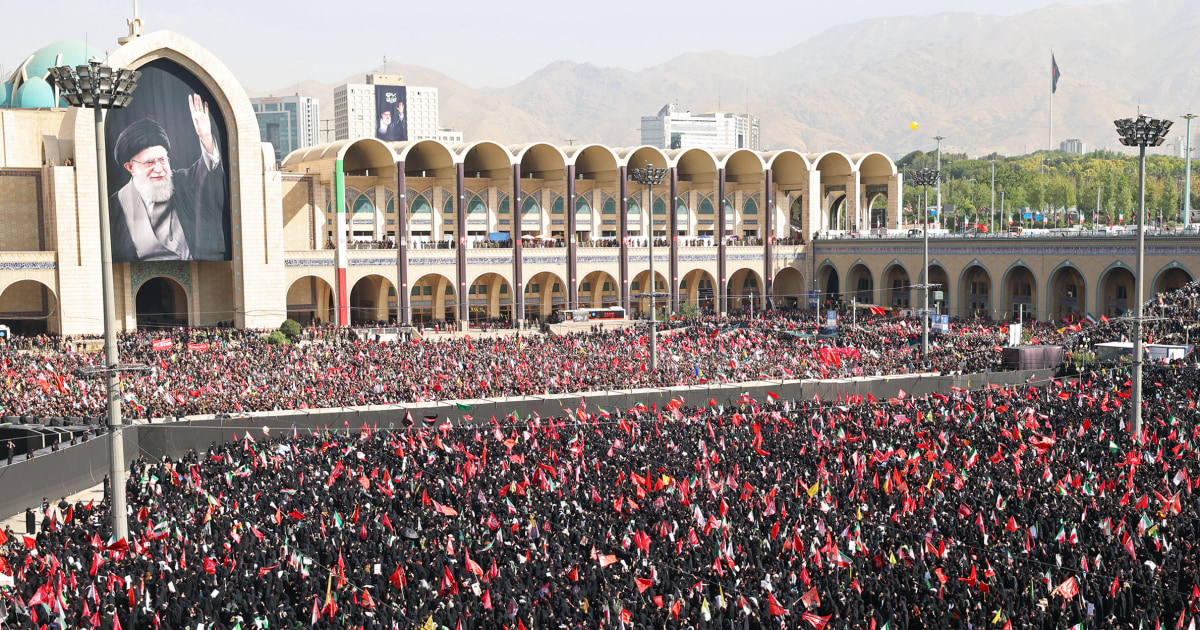
On Saturday, Tehran witnessed an outpouring of public mourning as crowds gathered to pay their respects to Iran’s former Supreme Leader, Ayatollah Ali Khamenei. This marks the commencement of a week-long period of mourning aimed at showcasing the unity and strength of the Islamic Republic.
Massive Turnout for Khamenei’s Funeral
The funeral, taking place at the Grand Mosalla, featured Khamenei’s coffin draped in the Iranian flag and encased in glass. The atmosphere was one of deep sorrow, as the late Ayatollah’s loved ones, who had perished alongside him in the recent conflict, were also honored at the site. Mourners dressed in black began lining the streets during the early hours of Saturday after leaders had called for a significant turnout. As the day unfolded, tens of thousands had converged at the mosque, creating a powerful sea of emotions. Many mourners waved Iranian flags, while others bore witness to the beating of chests in grief, underscoring the communal sentiment surrounding Khamenei’s legacy.
The Role of Security Forces
In anticipation of this event, security was notably heightened throughout the capital. Traffic towards the Grand Mosalla was curtailed to ensure safe passage for mourners, many of whom continued on foot to reach their destination. Religious songs echoed through the streets, filling the air with a somber yet patriotic tone as mourners prayed beneath enormous portraits of Khamenei. The ceremony served not only as a farewell but also as a demonstration of solidarity among Iranians. Distinctly, the mood reflected a shift towards a more nationalistic sentiment among attendees, as more people carried national flags compared to the traditional religious banners typically seen at such gatherings.
Calls for Retaliation
Amid the mourning, chants for revenge resounded through the crowd, reflecting the prevailing emotions rooted in recent conflicts. Some supporters openly called for violence against perceived enemies and even raised banners with provocative slogans. This fervor indicated a heightened sense of urgency and aggression that has emerged since the onset of hostilities with the U.S. and Israel. The emotional climate was further compounded by the oppressive heat, with temperatures soaring and misters providing some relief to the sea of mourners.
A Week of Mourning and Memorials
The funeral is just the beginning of several events planned throughout the week. Officials anticipate that the number of attendees could balloon to 20 million during the main procession on Monday, signifying one of the largest public gatherings for a funeral in recent memory. Following the Tehran ceremonies, further memorials will be held in Qom, the heart of Iranian religious scholarship, and in Iraq, providing a platform for showcasing regional influence.
Khamenei’s burial is set to take place in Mashhad, where one of Iran’s most significant Shiite shrines resides. His passing, coupled with the ongoing regional tensions, has elevated the stakes for the Islamic Republic, with military and political figures eager to reinforce their presence both domestically and in neighboring countries. The ceremonial events will serve as a moment for the regime to reflect its power and resilience, setting the stage for a continuation of its policies in the Middle East.