
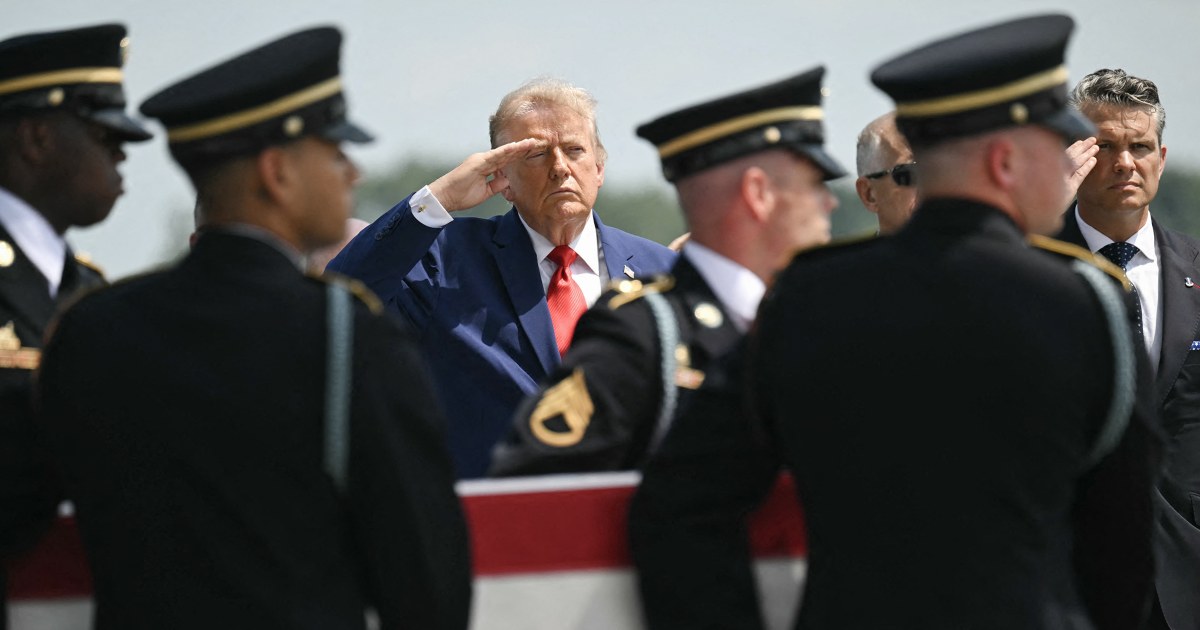
In recent developments regarding the ongoing conflict between the United States and Iran, a shift in how casualties are reported has raised significant concerns. Four American soldiers, who tragically lost their lives amid renewed hostilities, are no longer included in the Defense Department’s official casualty list. Instead, they have been categorized separately, prompting questions about the transparency of casualty assessments and the broader implications for U.S. service members.
Shift in Casualty Reporting
According to the latest military statistics, the Defense Casualty Analysis System (DCAS) has refrained from listing the four fallen soldiers as part of the official death toll in the Iran conflict. This decision has stirred debate about adequate acknowledgment of the human cost of the military engagement. As the Pentagon experiences a surge in casualties due to intensified clashes in the region, clarity regarding how these figures are presented becomes paramount.
The recent updates reveal a new classification titled “Overseas Operations,” which lists the names of the four Army fatalities alongside 207 wounded troops. However, it remains ambiguous whether all the injured individuals stem from the ongoing skirmishes involving Iran. U.S. Central Command has deferred inquiries back to Pentagon officials, who have remained relatively silent amid escalating tensions.
Impact on Military Operations and Strategy
The ambiguity surrounding casualty numbers raises broader questions about U.S. military strategy and operations in the Middle East. Pentagon spokesperson Joel Valdez dismissed concerns about the decreases in reported figures as “temporary data disruptions.” Prior to these changes, the official count reported 18 fatalities and 482 wounded troops. However, this figure sharply dropped to 14 dead and 420 wounded, fueling speculation about how seriously the conflict is being managed.
Efforts to assess the impact on U.S. service members are critical, especially as operations against Iranian forces intensify. Despite the Trump administration’s attempts to instill control over the Strait of Hormuz through increased military activities, public opinion reflects substantial unease toward these military operations. The latest escalation has led to a scenario where U.S. forces are engaged nightly against Iranian targets, often met with retaliatory actions from Tehran.
Concerns About Transparency and Communication
Since the renewed hostilities began in early July, information regarding U.S. military strategy and casualty reports has become increasingly scarce. The Pentagon has not held a press conference concerning the conflict since May, leaving a void in public and media knowledge regarding operations. This lack of transparency is further complicated by the newly established “Overseas Operations” category, which only includes casualties from the period following renewed fighting.
Critics argue that this shift in categorization is an attempt to obscure the true impact of the conflict on American servicemen and women. Given the previous death toll recorded and the current operational intricacies, additional scrutiny is necessary to understand the realities on the ground better.
In conclusion, the recent changes in casualty reporting and the evolving military landscape underscore the importance of transparent communications from the Pentagon. As the U.S. continues its operations in the Middle East, it will be essential to address these concerns head-on to ensure both accountability and clarity about the cost of such military engagements.