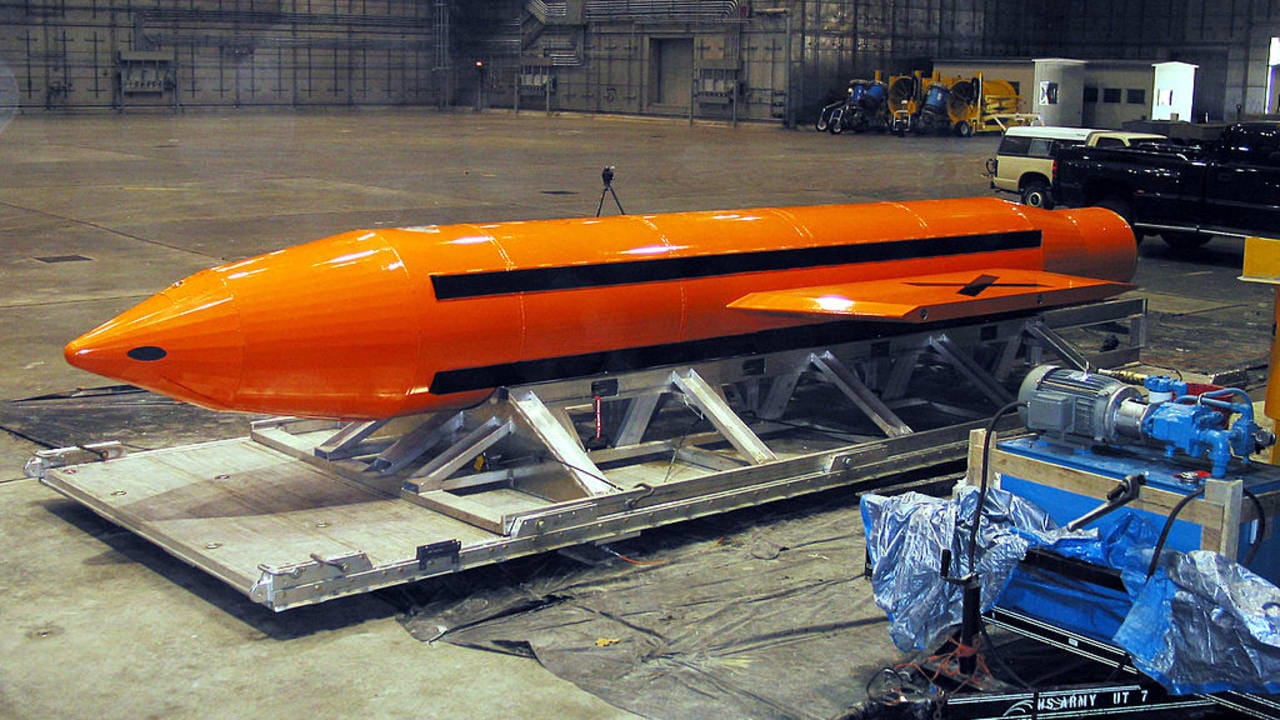
The U.S. military has outlined potential strike options against Iran, notably including the GBU-43/B Massive Ordnance Air Blast Bomb (MOAB), known as the “mother of all bombs.” This is the largest non-nuclear weapon in the American arsenal. According to reports, these strategies target key Iranian infrastructure and nuclear facilities, such as those located at Pickaxe Mountain.
Strategic Considerations for Military Action
Sources reveal that a significant component of the proposed military plan involves launching an attack “prior to U.S. retrograde in CENTCOM AOR (area of responsibility),” which suggests a potential immediate withdrawal of American forces post-strike. While President Trump has indicated that he would refrain from further actions against Iran before the midterm elections, speculation continues regarding the possibility of a shift in this stance as Election Day approaches.
The use of the MOAB represents a serious escalation in military engagement. Nevertheless, differing opinions exist among defense experts regarding its effectiveness in fulfilling strategic military objectives. Reports indicate that while the MOAB can create significant surface damage, its ability to penetrate deeply into the ground—where many of Iran’s nuclear facilities, including the aforementioned Pickaxe Mountain, are presumably located—is limited.
Effectiveness and Psychological Impact of the MOAB
Experts in military strategy assert that the MOAB is not designed for deep penetration but rather serves as a psychological weapon intended to create awe and intimidation. A military analyst summarized this by stating, “The MOAB is great for large area clearance but offers limited tactical benefits in terms of penetrating deeply buried sites.” This suggests that while the MOAB has a formidable reputation, its practical applications may be constrained in this conflict.
In the current political climate, there are concerns that President Trump finds himself in a position where he feels compelled to act against Iran. Sources reveal that without appropriate munitions specifically designed for penetrating critical targets, the focus may shift to leveraging the psychological effects of the MOAB.
Military Plans and Government Positions
When asked about these military plans, a White House spokesperson emphasized President Trump’s commitment to keeping all options available to prevent Iran from acquiring nuclear capabilities, although they refrained from commenting on specific operational blueprints. This signals a continued U.S. posture of deterrence while underlining the sensitivity of military discussions.
A Pentagon representative reiterated that the Department of Defense prepares for various operational scenarios to align with directives from presidential and secretary-level decisions. The strategic context surrounding a potential strike on Iran remains complex, influenced by domestic political factors and broader international concerns.
Overall, the developments surrounding the potential use of the MOAB against Iran raise significant questions about the efficacy of conventional military power in achieving strategic aims, particularly in a landscape where psychological warfare might play as vital a role as physical destruction.