
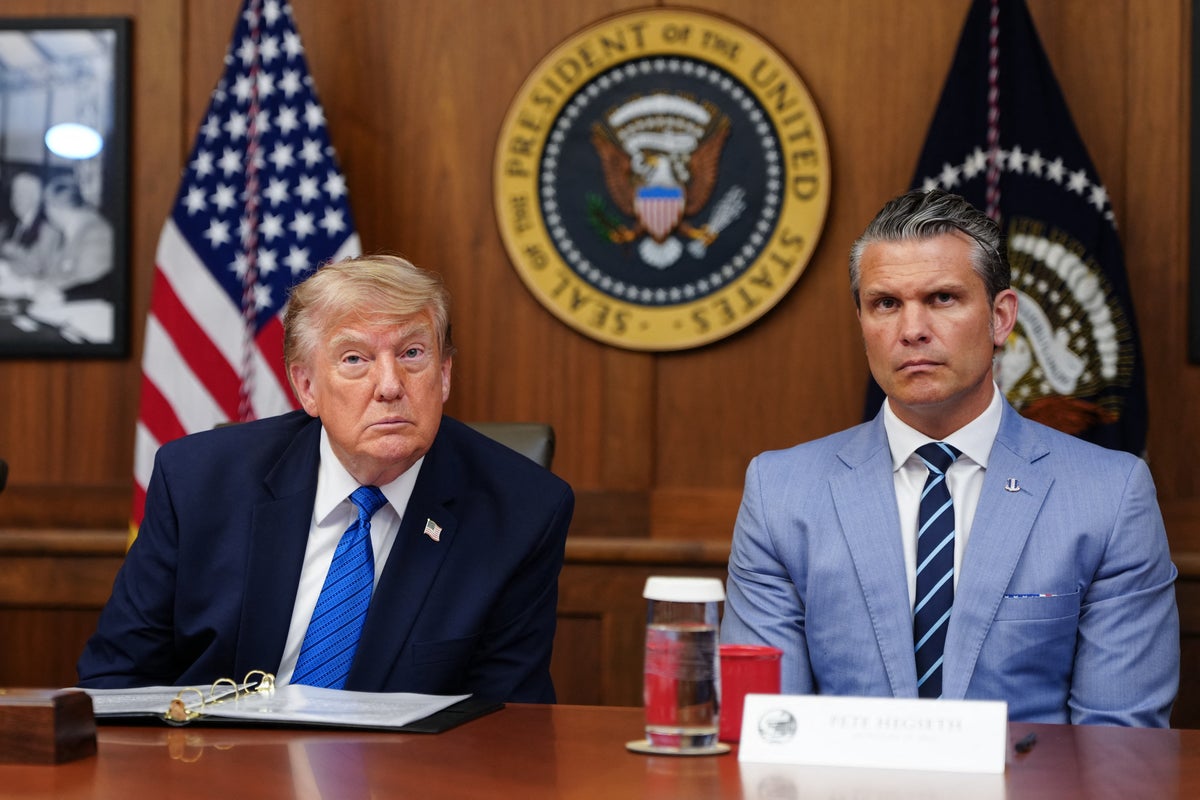
Donald Trump’s recent interactions with Defense Secretary Pete Hegseth at Camp David highlight growing concerns about diminishing munitions in the ongoing Iran conflict. As the situation develops, these tensions reveal layers of complexity within military leadership and strategies.
Trump’s Concern Over Munitions Shortages
Last week, during a Cabinet meeting, President Trump confronted Hegseth regarding claims of a munitions shortage, expressing confusion over why he was not accurately informed about the decreasing weapons stockpiles. According to sources close to the incident, Trump believed the matter had been resolved prior to this exchange. Hegseth, in turn, pointed fingers at Deputy Secretary Stephen Feinberg, asserting that Feinberg failed to keep Trump fully updated about the issue.
The Pentagon has recently reported that the U.S. military is running low on missile interceptors as the conflict approaches its sixth month. Prior to the outbreak of the war, the U.S. had around 2,330 Patriot systems and approximately 452 Terminal High Altitude Area Defense (THAAD) systems. However, recent assessments indicate that numbers have dwindled significantly, with only an estimated 759 to 827 Patriot systems and 234 to 278 THAAD systems remaining.
Financial Implications of Military Operations
In a Senate Appropriations Committee meeting last month, Hegseth revealed that military engagements in Iran had cost the U.S. an estimated $37.5 billion. To address the munitions shortages, he requested an additional $67 billion from Congress. Hegseth emphasized that these funds would help increase production lines and expedite the delivery of critical munitions, including solid rocket motors, Joint Direct Attack Munitions (JDAMs), hypersonics, and counter-drone technology.
However, he also insinuated that the Democratic administration under President Biden had left the Defense Department underfunded, directly impacting the military’s readiness and capabilities. This relationship between funding and military preparedness showcases the challenges faced by the current administration in maintaining effective operations abroad.
Official Denials and Further Developments
Amid these discussions, White House Press Secretary Karoline Leavitt came to Hegseth’s defense, labeling the claims about his interactions with Trump as “100% fake news.” She asserted that these events never transpired and that Trump has great confidence in Hegseth’s abilities. Additionally, Chief Pentagon Spokesman Sean Parnell echoed these sentiments, asserting that Hegseth was not misled about the military’s munitions status and denied any blame directed towards Feinberg.
Despite the seemingly tense atmosphere during their private discussions, Hegseth publicly praised Trump in the same Cabinet meeting, commending him for having the resolve to confront the Iranian regime. His remarks highlight the complicated dynamics at play in balancing public support for the administration while navigating internal challenges.
Overall, as tensions in Iran escalate and discussions of military strategy continue, it’s evident that effective communication and transparency within the defense leadership are critical. With the stakes high, the need for clarity regarding military resources is paramount for sustaining U.S. operational capabilities in the region.