
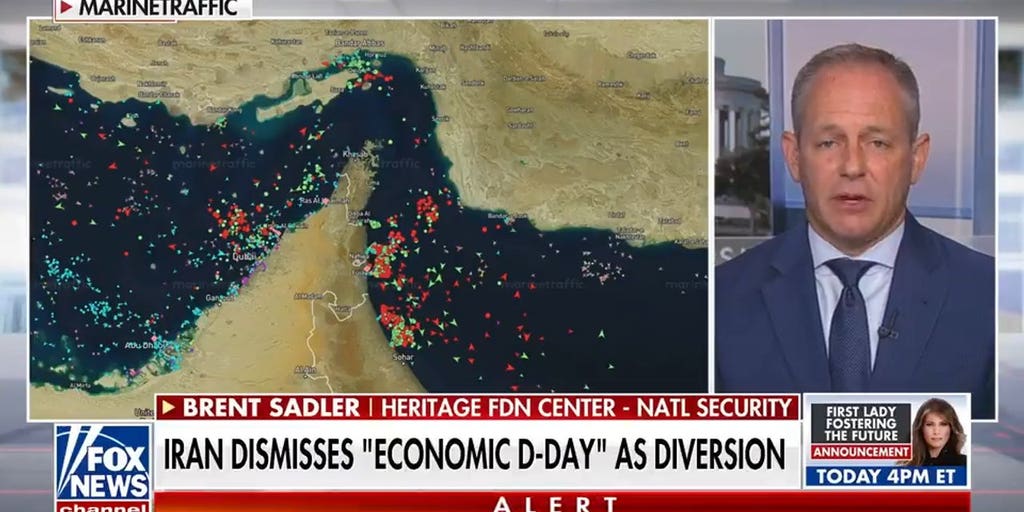
President Donald Trump has initiated a significant economic strategy aimed at Iran, dubbed ‘Economic D-Day.’ This initiative focuses on severing the financial resources that sustain Iran’s extensive proxy networks throughout the Middle East. The following analysis from retired U.S. Navy Captain Brent Sadler delves into the implications of this strategy and its potential impact on Iran’s behavior in the region.
The Objectives of ‘Economic D-Day’
The primary goal of the ‘Economic D-Day’ operation is to cripple Iran’s economy by targeting its financial lifelines. By implementing strict sanctions and economic pressure, the United States aims to hinder Tehran’s ability to fund militant groups and destabilizing activities across the region. This strategic blockade not only seeks to weaken Iran’s financial opportunities but also hopes to deter its aggressive actions against neighboring countries. A diminished economy could significantly reduce Iran’s military capabilities and influence, making it less likely to engage in acts of aggression.
Impact on Regional Stability
The ramifications of this economic strategy extend beyond Iran’s borders. As financial support for its proxy groups diminishes, countries in the Middle East may experience a shift in the balance of power. This could lead to a decrease in violence and instability, particularly in nations heavily affected by Iranian influence, such as Iraq, Syria, and Lebanon. A constrained Iran may be less potent in fomenting unrest, ultimately paving the way for a more stabilized region.
Moreover, ‘Economic D-Day’ represents a broader strategy to enforce U.S. interests in the Middle East. By pressing Iran economically, the U.S. signals to its allies that it is committed to countering Tehran’s influence. This could strengthen alliances in the region, as countries may feel emboldened to cooperate against a common threat. The ultimate aim is to create a more secure environment where diplomacy can flourish, leading to a potential resolution of long-standing conflicts.
Challenges Ahead
While the intentions of ‘Economic D-Day’ are clear, the execution of such a complex strategy presents challenges. Iran may seek to bypass sanctions through alternative financial systems or partnerships with nations willing to defy U.S. policies. Historical precedents show that when cornered, regimes often resort to unpredictable behavior, which could lead to an escalation in regional tensions. It is crucial for U.S. policymakers to anticipate these reactions and develop contingency plans.
Additionally, the success of this operation relies on sustained international cooperation. Engaging allies and ensuring they adhere to the sanctions and embargoes against Iran is vital for maintaining the pressure on Tehran. Any erosion of this coalition could undermine the entire effort, possibly allowing Iran to regroup and rebuild its resources.
In summary, President Trump’s ‘Economic D-Day’ aims to diminish Iran’s financial capabilities and forestall its belligerence in the Middle East. While the operation holds the promise of fostering regional stability, it is accompanied by a host of challenges that require careful navigation. Understanding and anticipating Iran’s adaptive strategies and fostering international alliances will be key in ensuring that this economic offensive achieves its intended goals.