
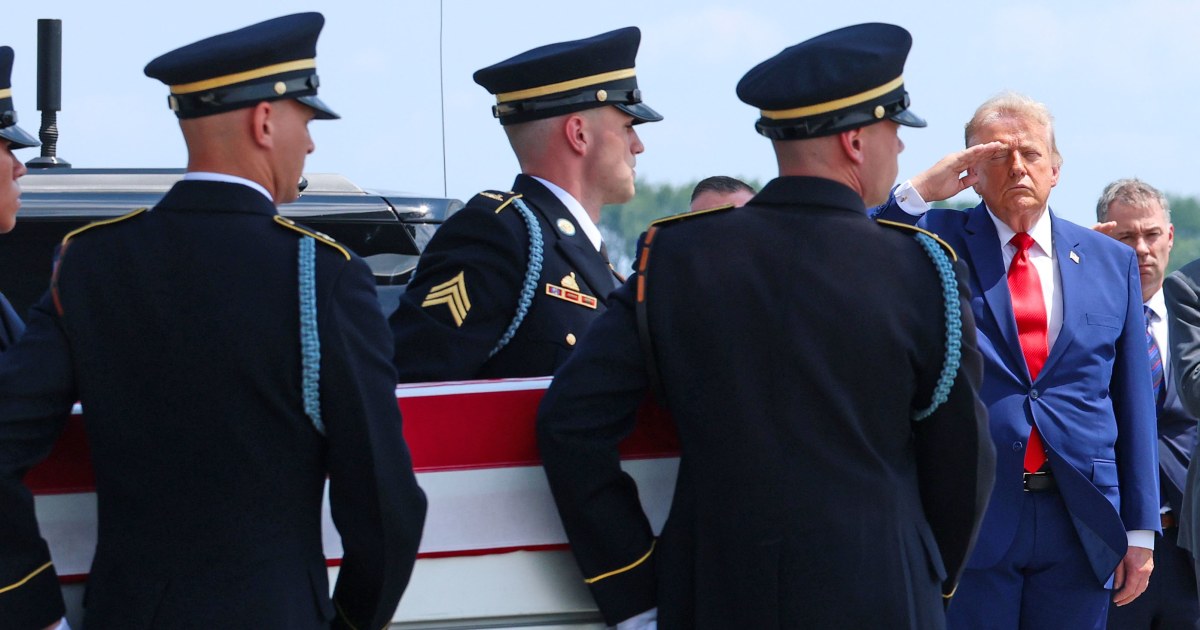
On Wednesday, President Donald Trump participated in the solemn transfer of the remains of four service members who lost their lives in Iranian attacks during recent escalated hostilities. This tragic event followed the collapse of a previously established ceasefire, highlighting the ongoing ramifications of the conflict.
Details of the Fallen Service Members
The four service members whose remains were returned to U.S. soil are 28-year-old Angel S. Rampersad from New York, 30-year-old Michael Emmanuel Swinton from North Carolina, 25-year-old Tyler James Feehan from Hawaii, and 19-year-old Isabella Gonzales from Texas. Their sacrifice underscores the ongoing risks faced by military personnel in the complex geopolitical landscape of the Middle East.
The Dignified Transfer Ceremony
Dignified transfer ceremonies are significant for any sitting president, offering them a chance to show respect for those who have made the ultimate sacrifice in service to their country. Trump previously attended two dignified transfers this year; however, this was his first since declaring an end to the ceasefire in early July. The circumstances surrounding the ceremony are a reminder of the heavy toll inflicted by war on both individuals and families.
Family members were present for the solemn ceremony, which involved the transfer of flag-draped caskets from a plane to waiting vehicles. The event was attended by notable figures, including Defense Secretary Pete Hegseth and members of Congress, who honored the fallen by saluting as their remains were carried past. Trump’s involvement and presence serve to reinforce the emotional weight of such moments, bringing national attention to the sacrifices made by service members.
The Impact of the Ongoing War
The recent conflict has drawn scrutiny from lawmakers on both sides of the aisle, who question the strategy of the Trump administration in this prolonged battle. Hostilities have resumed after an unsuccessful peace plan, resulting in significant losses, including at least 18 American lives and financial repercussions estimated at $37.5 billion. Rising oil prices have contributed to inflation rates as well, reflecting the war’s broad impact.
In response to the criticisms, the president and his administration have defended their actions, stressing the necessity of their military efforts to prevent Iran from acquiring nuclear weapons. Trump poignantly remarked, “It’s one of the hardest things to do as a president, but it has to be done,” reflecting on his commitment to honoring the fallen and ensuring national security.
Gonzales, Feehan, Swinton, and Rampersad each faced perilous duties that ultimately led to their deaths, which are under investigation by the Pentagon. The toll of the conflict illustrates not only the dangers service members face but also the burden carried by their families. As the nation mourns their loss, the need for effective conversation on war strategy remains crucial in the wake of such tragedies.