
U.S. military forces recently engaged in significant actions against Iranian oil tankers following missile attacks aimed at U.S. Navy ships. These developments underscore the rising tensions between the two nations, particularly in the strategic waters of the Persian Gulf.
Iranian Assault on U.S. Naval Assets
On Saturday, the U.S. military confirmed that it took action against three Iranian oil tankers after Iran launched ballistic missiles targeting two Navy vessels. According to a statement from U.S. Central Command (CENTCOM), American ships, including an aircraft carrier and a guided missile destroyer, successfully evaded multiple missile strikes by Iran’s Islamic Revolutionary Guard Corps, with no reported American injuries or fatalities. This incident illustrates the volatile nature of military engagements in the region and the potential for escalation.
Retaliatory Measures by U.S. Forces
In a decisive response, U.S. forces permanently disabled two crude oil carriers: the M/T Downy off the coast of Kharg Island and the M/T Stark 1 near Jask. Additionally, they destroyed a third vessel, the M/T Kylo, in the Gulf of Oman. CENTCOM reported that the Kylo was not transporting oil at the time of the strike, and its crew was evacuated prior to the attack, ensuring their safety. This course of action reiterates the U.S. commitment to defending its naval personnel and assets in the region.
The Strategic Importance of Kharg Island
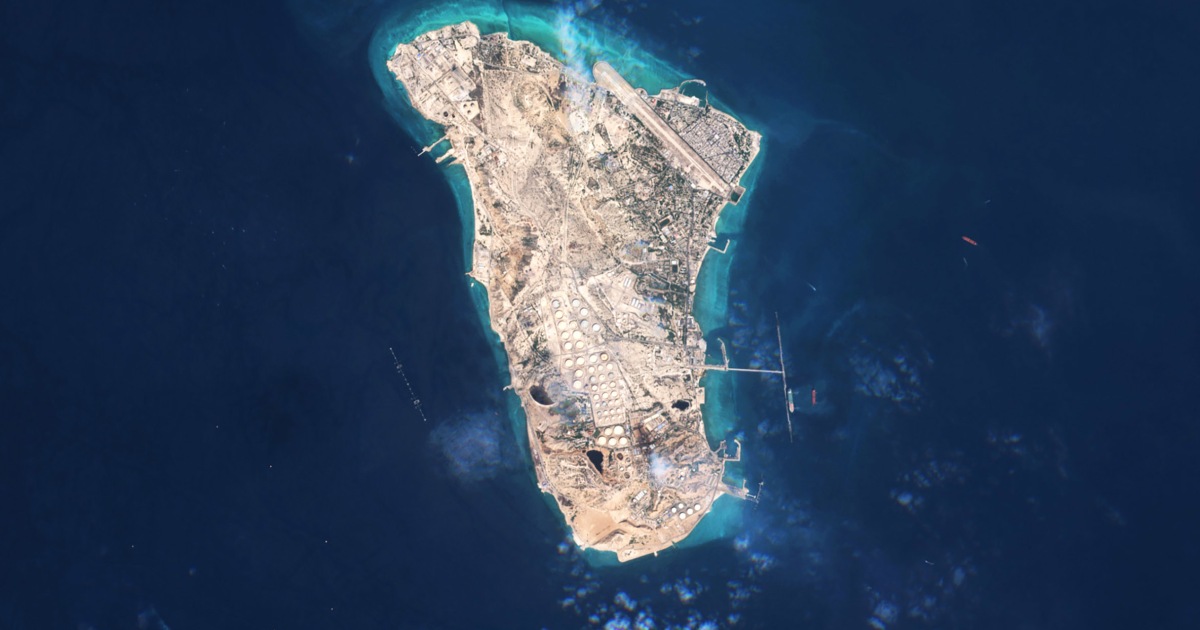
Kharg Island, positioned just 15 miles off the Iranian coast in the Persian Gulf, is crucial to Iran’s oil industry. The island houses key military capabilities, including advanced air defenses and hidden mines. As a primary conduit for Iran’s oil exports, Kharg Island serves as the backbone of the nation’s energy infrastructure, making it a focal point in ongoing military and economic conflicts. Previous engagements have shown U.S. forces have been careful not to strike the island’s oil facilities in an effort to limit escalatory responses.
Implications for Future U.S.-Iran Relations
Admiral Brad Cooper, the commander of CENTCOM, stated, “If you shoot at two of our ships, we will impose an even higher economic cost — taking out three of yours.” This declaration emphasizes the U.S. military’s readiness to act firmly against aggressive actions by Iran. The situation illustrates the complex dynamics at play, where military power and economic repercussions intertwine.
As these developments unfold, observers note that the likelihood of further confrontations in the region may increase. The strategic importance of both military and economic assets in this area means that any future incidents could escalate tensions significantly. The potential for consequences to ripple through the global oil market cannot be overlooked, as this region remains a critical junction for oil supplies.
In summary, the recent military engagements between U.S. forces and Iranian assets highlight the precarious nature of international relations in the Persian Gulf. As the situation evolves, the balance between military readiness and diplomatic efforts remains essential for regional stability.