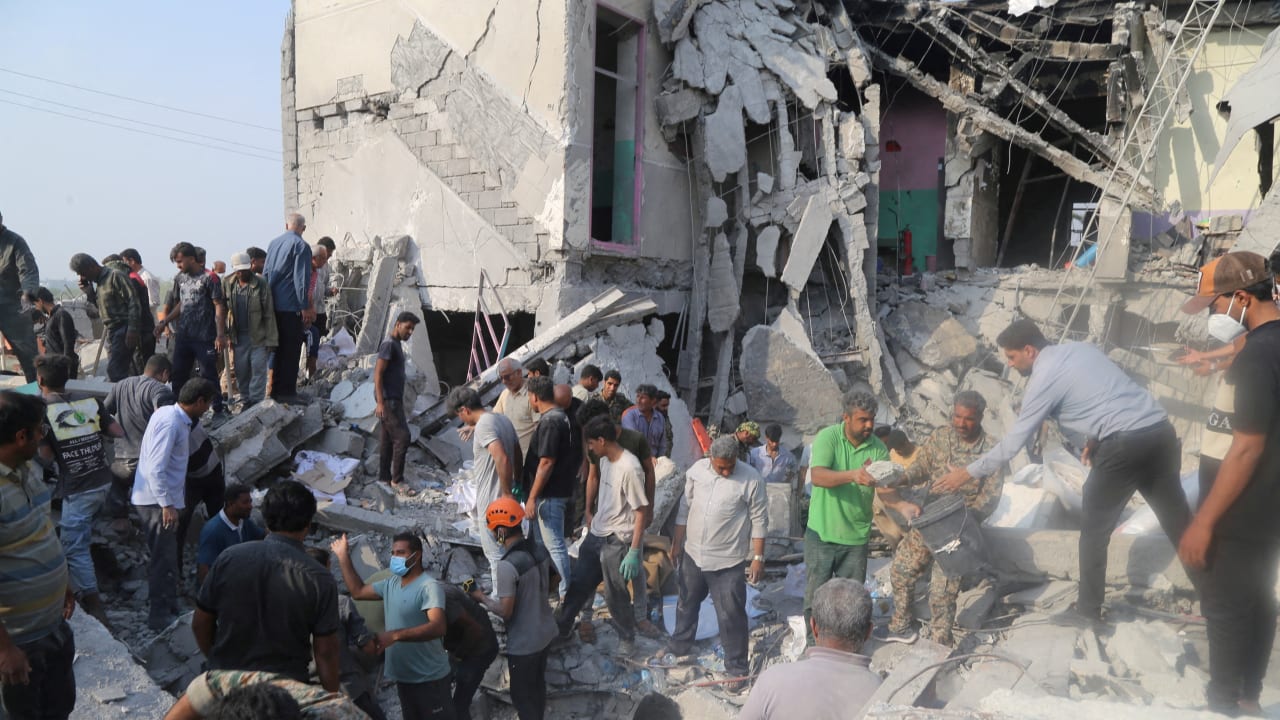
A recent report from a United Nations fact-finding mission on Iran has indicated that there is substantial reason to believe the United States was involved in military attacks against civilian structures in Iran. The report claims that these operations, which targeted a school and a sports facility earlier this year, could be classified as war crimes. The mission’s findings bring to light the complex geopolitical landscape surrounding Iran, emphasizing the ongoing tensions between the U.S. and Iranian authorities.
U.S. Military Strikes and Their Implications
The investigation by the Independent International Fact-Finding Mission on Iran found that U.S. military strikes in February resulted in significant civilian casualties. Specifically, the attack on the Shajareh Tayyebeh Primary School in Minab led to the deaths of over 150 individuals, including approximately 120 children. The report characterized this military action as an indiscriminate attack, outlining that such actions violate international law and could be regarded as war crimes. The mission indicated that U.S. forces failed to adequately confirm whether the targeted sites contained military objectives, thereby exhibiting a reckless disregard for civilian life.
Moreover, the findings suggest a fundamental failure in the execution of U.S. military operations. It was noted that the intelligence used to justify the strikes was insufficiently vetted, which raises critical questions about accountability. The report emphasized that the responsibility for the civilian casualties rests heavily on U.S. command, which appears to have acted without the necessary precautions to avoid endangering non-combatants. This revelation is likely to heighten scrutiny over U.S. military conduct in the region and prompt calls for a reassessment of tactics in future engagements.
Iran’s Response to Dissent
In addition to critiquing U.S. actions, the UN report also shed light on the Iranian government’s handling of domestic unrest, specifically during anti-government protests that erupted in late December. The investigation highlighted systematic human rights violations, including unlawful killings, torture, and arbitrary detentions. Rights groups reported that many civilians—innocent bystanders—were victims of a brutal crackdown, which Tehran framed as necessary to combat “terrorism” and protect state stability.
Although the Iranian government has consistently denied allegations of human rights abuses, the scale of the reported violence and internet shutdowns suggests a deliberate strategy to quell dissent. The UN mission indicated that the official death toll from these protests may significantly understate the true extent of human suffering, with estimates suggesting that 3,000 individuals may have lost their lives. The report pointed out that the government’s violent measures signal a concerning escalation in its approach to dealing with opposition.
International Reaction and Future Considerations
While the Iranian and U.S. permanent missions in Geneva did not provide immediate responses to the report, the ramifications of these findings are far-reaching. Human rights advocates are likely to call for accountability and potentially push for international sanctions against those found culpable of war crimes. The U.S. military has previously defended its operations as compliant with the law of armed conflict; however, these findings may provoke critical discourse regarding the standards to which military forces are held, especially concerning civilian casualties.
As the international community continues to monitor the situation, it is essential for dialogues on military ethics and human rights to take center stage. These recent developments not only challenge the narratives surrounding military engagement but also emphasize the urgent need for a comprehensive understanding of the impacts such actions have on civilian populations. In an age where information spreads rapidly, public sentiment, influenced by these events, will likely shape future policy decisions in various nations involved in similar conflicts.