
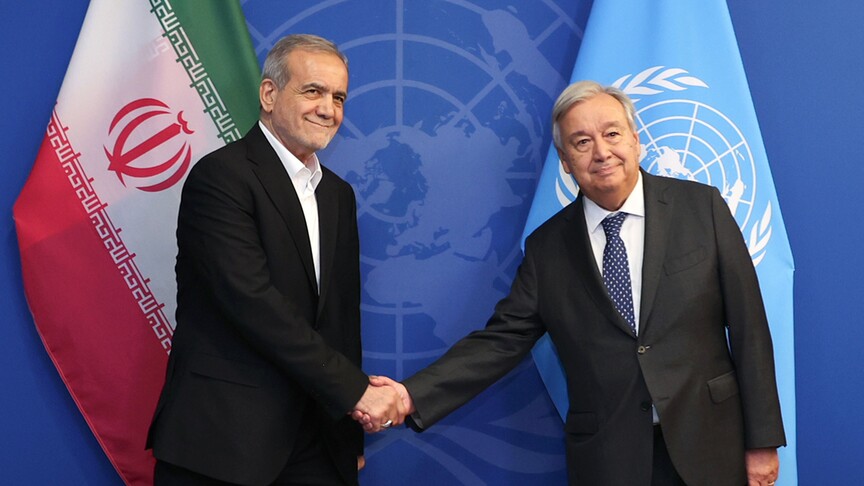
UN Secretary-General Antonio Guterres recently underscored the importance of dialogue and negotiations in addressing the ongoing conflict in the Middle East. His meeting with Iranian President Masoud Pezeshkian emphasized a collective need for peaceful resolutions and a commitment to upholding international law, particularly regarding navigational rights in the crucial Strait of Hormuz. This initiative comes amidst escalating tensions in the region, highlighting the urgency for diplomatic solutions.
Dialogue as a Solution for Middle Eastern Conflict
During the Friday meeting, Guterres reiterated the necessity of using diplomatic channels to address the conflict, stressing the significance of negotiations that respect international statutes. “The urgent need for resolving the situation can only be achieved through open dialogue,” he stated, as reported by the UN. The Secretary-General’s commitment is a call to the international community, urging all parties to engage in discussions rather than resorting to military action.
Iran’s Proposal to Ease Hostilities
In a significant diplomatic move, Iran has proposed a seven-day plan aimed at ending hostilities and reinstating access to the vital Strait of Hormuz. Foreign Minister Abbas Araghchi disclosed that this proposal was communicated to the United States via Qatar. He emphasized that reopening the strait hinges on the fulfillment of certain “necessary conditions.” This seven-day timeline suggests a proactive approach by Iran to stabilize the situation and underscores a willingness to negotiate.
The Strategic Importance of the Strait of Hormuz
The Strait of Hormuz is a critical maritime route, with a significant percentage of the world’s oil supply passing through it. The recent conflict, which intensified on February 28, has severely disrupted the flow of energy supplies in the region. Iran has responded to military actions led by the U.S. and Israel with missile and drone strikes, effectively blockading the strait. The escalation of these hostilities has raised concerns among international observers regarding global energy security and regional stability.
The Call for International Support
Guterres has reaffirmed the United Nations’ dedication to supporting all diplomatic efforts aimed at resolving the situation. The UN’s involvement is crucial not only for mediating discussions between Iran and the U.S. but also in fostering a broader alliance among Middle Eastern nations. A cooperative effort can pave the way for enduring peace in a region fraught with conflict and tension. As tensions mount, the international community’s response to Iran’s proposal remains to be seen, with expectations for a constructive dialogue rising.
In conclusion, Guterres’s meeting with President Pezeshkian highlights a turning point in the quest for peace in the Middle East. As Iran presents a proposal for negotiations, the opportunity exists for all parties involved to assess the importance of dialogue over military intervention. The next steps in this evolving situation could determine the future of stability in the region and the safety of global energy routes.