Iran’s Alleged Role in Recent Security Incidents: A Closer Examination
Recent claims by leaders in the United States and the United Kingdom suggest potential Iranian involvement in two significant security events. These accusations have emerged following arrests near a U.S. military installation in England and an unsettling disturbance aboard a FlyDubai flight. However, the lack of supporting evidence raises questions about the credibility of these assertions.
Current Investigations and Lack of Evidence
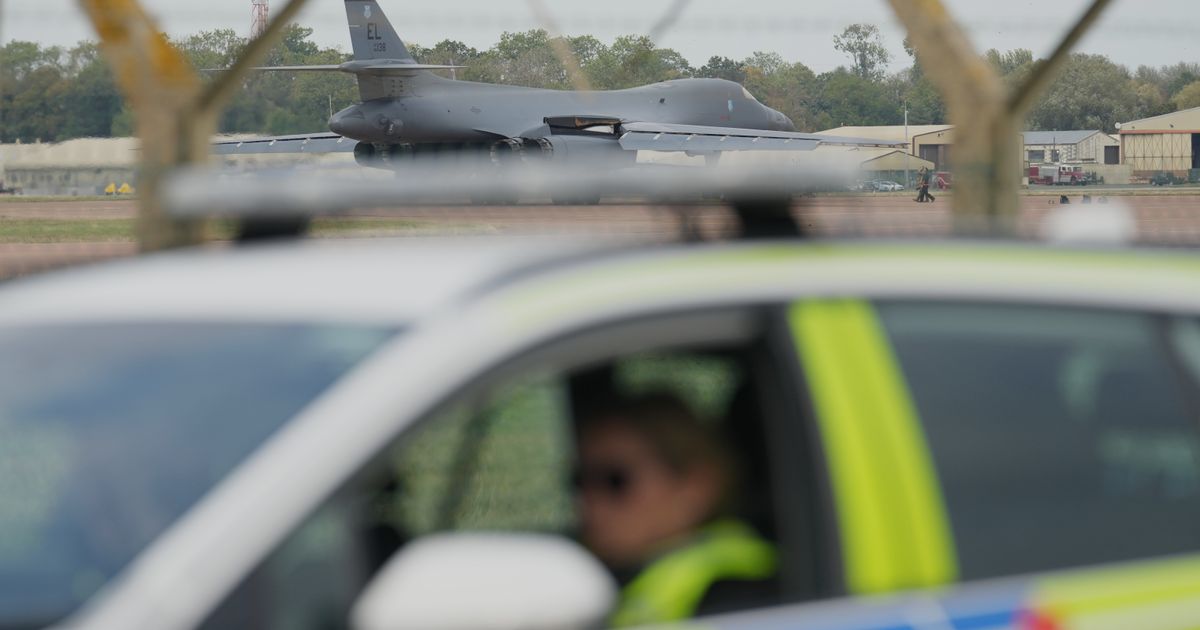
As investigations into the incidents continue, there is still no verified proof connecting Iran to the arrests in England or the FlyDubai incident. Officials have not disclosed any concrete links to the Islamic Republic. A 25-year-old dual U.K.-Iranian national was arrested on terrorism-related charges, while five others were released after questioning. Despite law enforcement’s discovery of gasoline near the military base, authorities found no explosives, further complicating any narrative that ties Iran to these events.
Prime Minister Andy Burnham recently indicated that the U.K. perceives “strong indications” of Iranian involvement. However, he did not provide additional context or evidence. The reluctance of governmental bodies to release specific details, such as the identities of suspects or their motivations, feeds into a realm of speculation. Antonio Giustozzi, a senior research fellow with the Royal United Services Institute, emphasized that in the absence of evidence, it is easy for perceptions to shift toward Iran being the culprit. This creates a troubling narrative that oversimplifies complex situations, especially when it comes to politically charged incidents.
Iran’s Response and Denials
Iran has vehemently denied any link to the incidents surrounding the RAF Fairford air base. Iranian officials summoned the British ambassador and demanded a formal explanation regarding the accusations. They argue that the claims lack substantiation and are politically motivated. In contrast, U.S. President Donald Trump’s insinuation that the co-pilot of the FlyDubai flight may have connections to Iran has also drawn a lack of response from Tehran, signifying the nuanced nature of these allegations. Even Israeli Prime Minister Benjamin Netanyahu, usually outspoken against Iran, acknowledged it might be too early to draw firm conclusions about the incidents.
The incidents reflect a larger pattern of Iran’s strategic use of asymmetric warfare, which has often involved lower-cost methods to challenge stronger adversaries. Such tactics are intended to strike fear and create friction among rival nations without requiring significant military resources. In the context of the recent events, experts suggest that if Iran’s involvement were confirmed, it would represent an escalation of its historical trend of engagement through indirect means, marking a troubling shift in regional dynamics.
The Broader Patterns of Asymmetric Warfare
Iranian officials have long endorsed the notion of asymmetric warfare as a core strategy to counter overwhelming military might. Brig. Gen. Abolfazl Shekarchi suggests that utilizing simpler, less expensive methods allows Iran to effectively confront its rivals. This strategy has evolved since the 1979 Islamic Revolution, which severed Iran’s support from former allies like the United States.
Tehran has employed various tactics, including drone assaults and maritime threats in the Strait of Hormuz, to maintain pressure on adversaries and showcase its capabilities. Reports indicate that Iran’s use of proxies to carry out attacks in different regions—ranging from Lebanon to Iraq—further complicates the narrative surrounding its military strategies. The Soufan Center has recently noted that Iran’s approach focuses more on endurance than on decisive victories against superior military forces.
Parallels with Other Global Tensions
The ambiguity surrounding Iran’s alleged involvement in the recent incidents mirrors the broader geopolitical landscape, where accusations of sabotage have emerged in various forms. The shadow of past military actions and proxy warfare casts a long shadow, raising concerns among nations about the potential for misattribution and miscommunication.
In summary, while the claims of Iranian involvement in the recent security incidents in England and the FlyDubai flight have sparked significant speculation, concrete evidence remains elusive. As investigations proceed, the international community remains cautious, recognizing the complex web of accusations and strategic actions at play. The unfolding situation has the potential to influence geopolitical relationships and regional stability, making it a focal point for both analysts and policymakers alike.