
Iranian officials announced on Wednesday that they have received an official response from the United States regarding Tehran’s recent proposal aimed at ending the ongoing conflict that has lasted for seven months. This revelation comes despite U.S. President Donald Trump’s earlier public dismissal of the proposal just days prior.
### U.S. Response Remains Unclear
Officials from Iran did not disclose the specifics of the U.S. response, leaving uncertainty about whether it was a rejection or an acceptable counter. Iranian Foreign Minister Abbas Araghchi delivered the U.S. reply to President Masoud Pezeshkian during a Cabinet meeting, according to government spokesperson Fatemeh Mohajerani, who shared the details with the state-run IRNA news agency. Pezeshkian emphasized their commitment to advancing the agreement, underscoring the necessity for a win-win scenario for all parties involved.
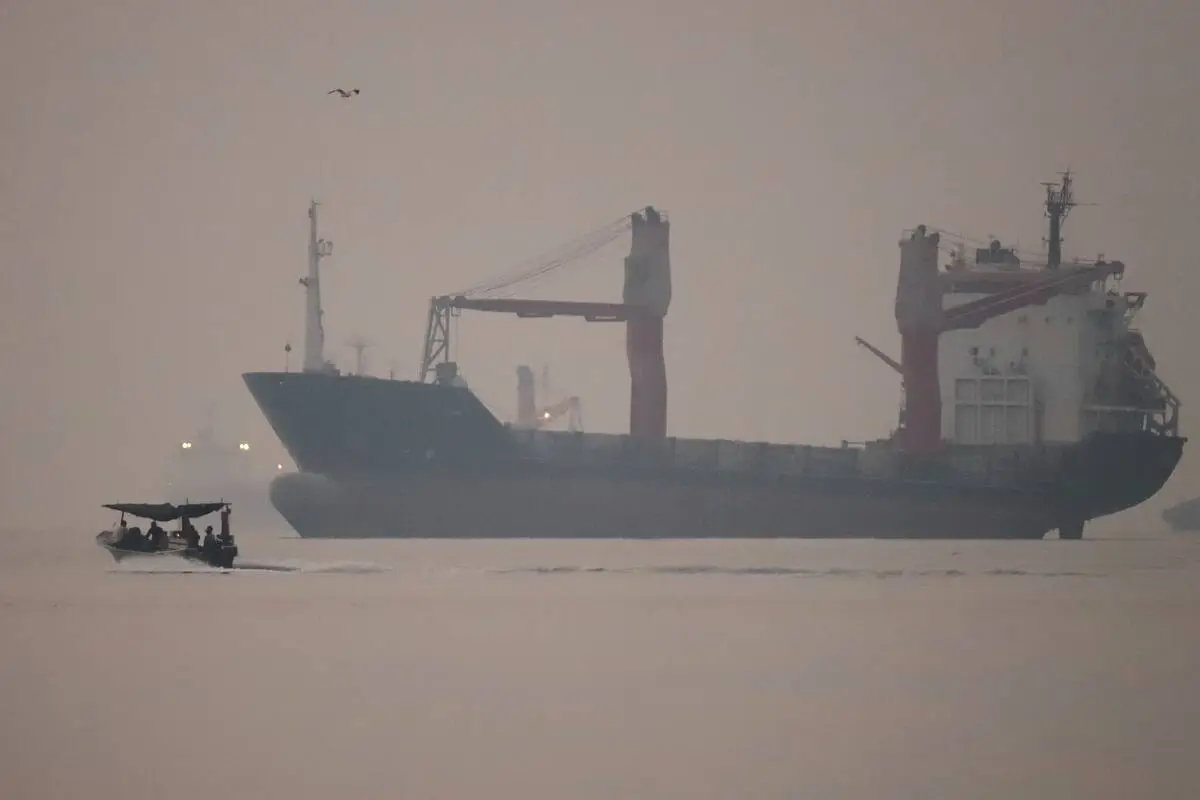
This Cabinet meeting followed Araghchi’s return from New York, where he participated in the U.N. General Assembly last week. While in New York, he engaged in indirect talks with U.S. officials and met with mediators from Qatar and Pakistan, seeking pathways toward a resolution. He updated the Cabinet on his discussions, which included Iran’s conditions for reopening the vital Strait of Hormuz, a strategic waterway crucial for oil transportation.
### Economic Turmoil Persists
Iran’s economy, already under considerable strain before the start of the war, has faced further decline since the conflict erupted in late February. The Iranian rial hit a disturbingly low point this week, with estimates showing it trading at over 2.5 million rials to the U.S. dollar, reflecting the significant economic deterioration linked to the ongoing war. Just 27 days ago, the rial had reached another record low of 2.2 million to the dollar. These consistent drops have marked a troubling trend since the confrontation began, indicating deepening economic instability.
President Trump commented that Iran is “failing very badly,” predicting that the conflict will come to an end soon, though he initially believed it would resolve in just weeks. He now expects it may extend well past the upcoming U.S. midterm elections on November 3.
### Escalating Government Responses
Simultaneously, the U.S. administration continues to advance its economic measures against Iran, stoking uncertainty about the prospects for a diplomatic agreement. The U.S. Treasury Department recently announced new sanctions targeting individuals and companies globally, alleging they are facilitators for Iran’s military supply chain. This move is part of what is termed “Operation Economic Outcast,” which aims to cut off critical financial resources to the already heavily sanctioned Iranian government.
Ten entities and individuals across Iran, Hong Kong, and Pakistan are now facing sanctions. They are accused of assisting in procuring weapons and components for Iran’s defense operations during the ongoing war against the United States.
### Domestic Tensions Rise
In a parallel development, Iran executed two men linked to violence during anti-government protests that erupted in January. Reports from IRNA indicated that these individuals participated in unrest in Mashhad, resulting in the deaths of four security personnel. Their executions were carried out after their death sentences were confirmed by the Iranian Supreme Court.
These protests ignited on December 28 due to widespread frustration over Iran’s declining currency and deteriorating economic conditions. What began as a demonstration against rising prices morphed into calls for significant political changes, leading to a severe governmental crackdown. Human rights organizations allege that thousands were killed and tens of thousands arrested, while Iranian authorities provide significantly lower estimates of casualties.
The evolving situation demonstrates the complex interplay between international diplomacy, economic sanctions, and domestic unrest in Iran, highlighting the dire circumstances facing the Iranian people amid escalating conflicts.