
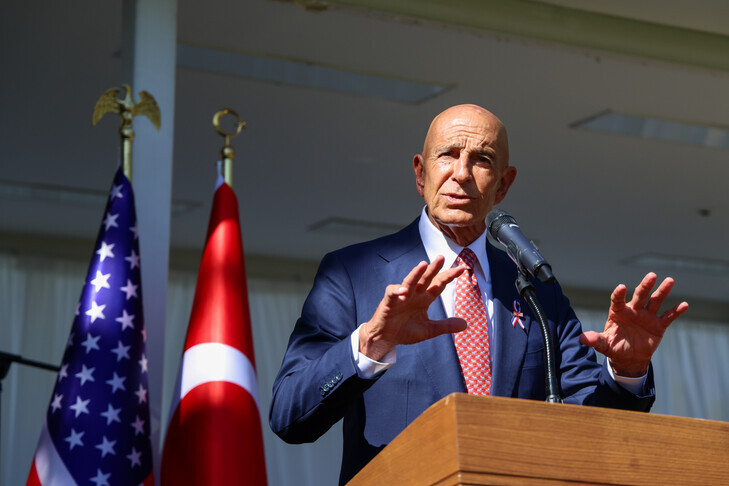
US relations with Iran remain tense, as recent comments from US Ambassador to Türkiye, Tom Barrack, hint at an escalatory stance. Barrack remarked on the possibility of military action against Iran, creating ripples throughout political circles. This commentary comes as President Donald Trump claims to be uninformed about any impending strikes, raising questions about internal communications within the administration.
Ambassador’s Bold Statement
In a recent interview, Barrack stated, “Could there be a strike this weekend? Absolutely.” His position as both US Ambassador to Türkiye and special presidential envoy for Syria and Iraq gives his remarks significant weight in foreign policy discussions. Clips from this interview have circulated widely, igniting debates about the implications of such military action. His assertion has left many questioning the United States’ strategic objectives in the region, especially in light of high-stakes diplomatic relations.
Trump’s Reaction
When asked about Barrack’s alarming remarks, President Trump expressed surprise, asking, “That was my ambassador?” This unexpected response indicates a potential disconnect between Trump and his envoy. The President further remarked, “He’s a pretty powerful man, I guess. Well if that’s the case, I don’t know anything about it.” This comment could suggest broader issues regarding administration coherence and policy direction on critical national security matters.
Strategic Objectives Towards Iran
Despite the provocative implications of a potential military strike, Barrack clarified the administration’s overall approach to Iran. He emphasized that the goal was not regime change but rather to mitigate security threats in the region. “The consequence won’t be regime change,” he asserted, adding that the administration seeks to balance regional tensions to ensure global stability. According to Barrack, the aim is to create an environment where hostages and threats do not exist, which could ultimately lead to a more peaceful dialogue.
The Path to Diplomacy
Interestingly, Barrack emphasized that President Trump remains open to reaching an agreement with Tehran. “Trump is open and available and accessible to a deal, but he’s also been very clear about what he wants,” Barrack noted. This statement indicates that while military actions may be on the table, diplomatic efforts are still a key part of the administration’s strategy. Balancing these two approaches will likely be critical for future US-Iran relations and regional stability.
The fluctuating dynamics within the administration highlight the complexity of US foreign policy. As these developments unfold, both Washington and Tehran will be closely monitoring each other’s actions and statements. The world waits to see how this intricate web of diplomacy, military readiness, and strategic intentions will affect not only US-Iran relations but also the broader geopolitical landscape in the Middle East.