
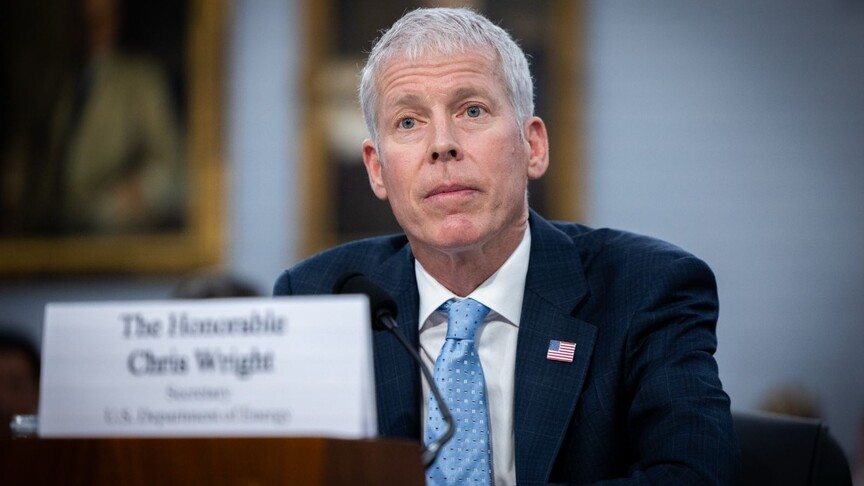
The ongoing tensions between the U.S. and Iran have raised questions about the prospects of a nuclear agreement. According to U.S. Energy Secretary Chris Wright, even if a diplomatic resolution remains elusive, the United States may pivot towards neutralizing Iran’s nuclear capabilities through military action.
Potential for Diplomacy Uncertain
Speaking to ABC News, Secretary Wright highlighted the potential futility of a nuclear agreement in the current geopolitical climate. He stated, “There may not be a nuclear agreement. It may be simply destroying their capabilities to do it.” This statement underscores the apprehension among U.S. officials regarding the Iranian regime’s willingness to engage in meaningful negotiations. With significant shifts in power dynamics following U.S. and Israeli strikes, President Donald Trump has expressed skepticism about Iran’s leadership, suggesting that fundamental changes have occurred. However, reports indicate that the structure of Iran’s government remains largely unchanged under its new supreme leader.
Military Action as a Strategy
Wright also affirmed that continued military action could serve as a viable strategy to deter Iran from advancing its nuclear ambitions. “You have to destroy their capabilities to do it,” he emphasized, pointing out the extensive missile infrastructure Iran has developed. While these capabilities appear formidable, U.S. intelligence suggests that Iran currently lacks the ability to produce additional missiles, bolstering arguments for a preemptive military response.
Energy Flow and Regional Stability
Another critical aspect of this situation is the impact on global energy flows through the Strait of Hormuz, a vital corridor for oil shipments. Secretary Wright reported a record-high seven-day average of over 9 million barrels of oil passing through the strait, further magnifying its strategic importance. When combined with pipelines in neighboring regions like Saudi Arabia and the UAE, the average daily flow from the area can reach between 13 million and 14 million barrels.
Ongoing Diplomatic Efforts
In June, both Iran and the U.S. signed a memorandum of understanding facilitated by Pakistan and Qatar, outlining steps to ease hostilities and address economic sanctions. However, the ongoing exchange of accusations suggests that the two nations may struggle to fulfill their commitments under this agreement. The situation remains fraught, particularly concerning the status of the Strait of Hormuz.
The pivotal waterway has become a contentious point, with both countries making conflicting claims about its safety and control. U.S. officials assert that the internationally recognized shipping lanes are clear of Iranian mines and remain safe for commercial traffic. In contrast, Tehran maintains that it retains control over the strait and insists that it poses risks from naval mines.
As the geopolitical landscape continues to evolve, the relationship between the U.S. and Iran remains critical not only for regional stability but also for global energy markets. The possibility of a nuclear agreement may be dim, but its ramifications loom large in the realm of international relations and economic stability.