
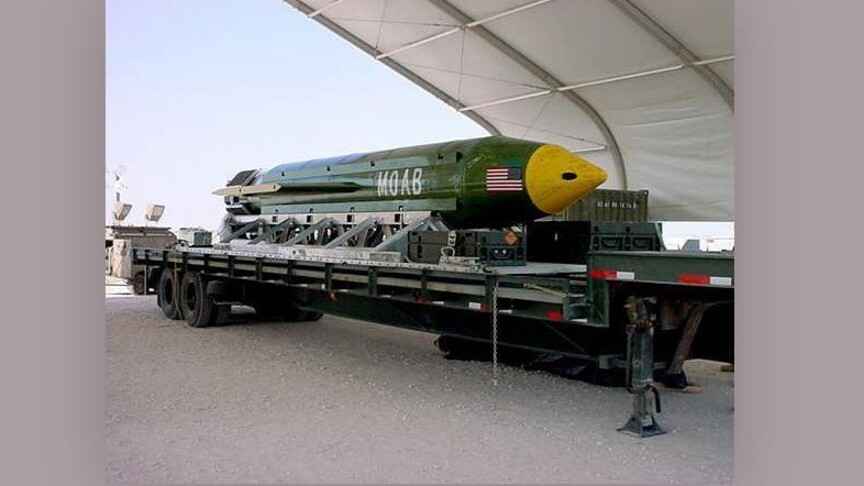
The U.S. military has reportedly crafted new strike strategies that contemplate deploying the largest non-nuclear bomb, known as the GBU-43/B Massive Ordnance Air Blast Bomb (MOAB), against Iranian energy infrastructures and nuclear sites. This information, sourced from multiple officials familiar with the plans, suggests a noteworthy potential escalation of hostilities, particularly if President Donald Trump chooses to reinitiate combat operations.
Context of Military Options
According to insights shared by CNN, Trump has instructed military leaders to prepare additional striking options targeting key Iranian assets, including energy sectors and facilities pertinent to the nation’s nuclear ambitions. This maneuvering comes in the lead-up to the upcoming U.S. midterm elections, with potential activation of these plans either before or after, depending on the president’s decisions regarding combat actions. Reports also indicate the military may act on these options prior to any withdrawal from the U.S. Central Command area, paving the way for further military actions before achieving a perceived victory.
Specific Targets and Military Concerns
Among the prospective targets under consideration are Iranian nuclear facilities, notably a clandestine site believed to be located at Pickaxe Mountain. This site has been a focal point for U.S. and Israeli concerns, as it is suspected to house critical components of Iran’s nuclear program. Trump has openly stated that one of the U.S. administration’s primary objectives is to prevent Iran from acquiring nuclear capabilities, ensuring that military options remain on the table.
Effectiveness of the MOAB
A significant point of discussion among military officials pertains to the MOAB’s effectiveness against deeply entrenched nuclear facilities. While the bomb can devastate a considerable surface area, comparable to roughly nine city blocks, its design does not allow for deep penetration into fortified sites fortified with heavy granite and other protective materials. Experts within the military planning circles noted that the MOAB functions more efficiently in large area demolitions rather than as a targeted solution for deeply buried infrastructures.
If deployed, the MOAB could result in major destruction at ground zero, yet its extensive blast radius raises critical concerns about civilian safety, especially when aimed at energy sites near populated regions. There is a growing apprehension about potential civilian casualties, which remain a pressing concern whenever military strike options are discussed.
Psychological Implications of Military Action
Despite the limitations surrounding the MOAB’s effectiveness, U.S. officials have reportedly contemplated its psychological impact as part of a comprehensive military strategy. According to sources, there is pressure on the president to consider further actions against Iran, even if the effectiveness of such strikes in compelling compliance from Tehran remains in question. The MOAB could function as a method of psychological intimidation, creating a deterrence effect even in light of the complexities and hazards associated with striking well-defended targets.
As geopolitical tensions continue to escalate, the implications of these military strategies stand to impact not only U.S.-Iran relations but also broader regional stability. The ongoing deliberations surrounding potential military actions against Iran underline the urgent need for careful assessment of consequences and the pursuit of diplomatic solutions whenever feasible.