
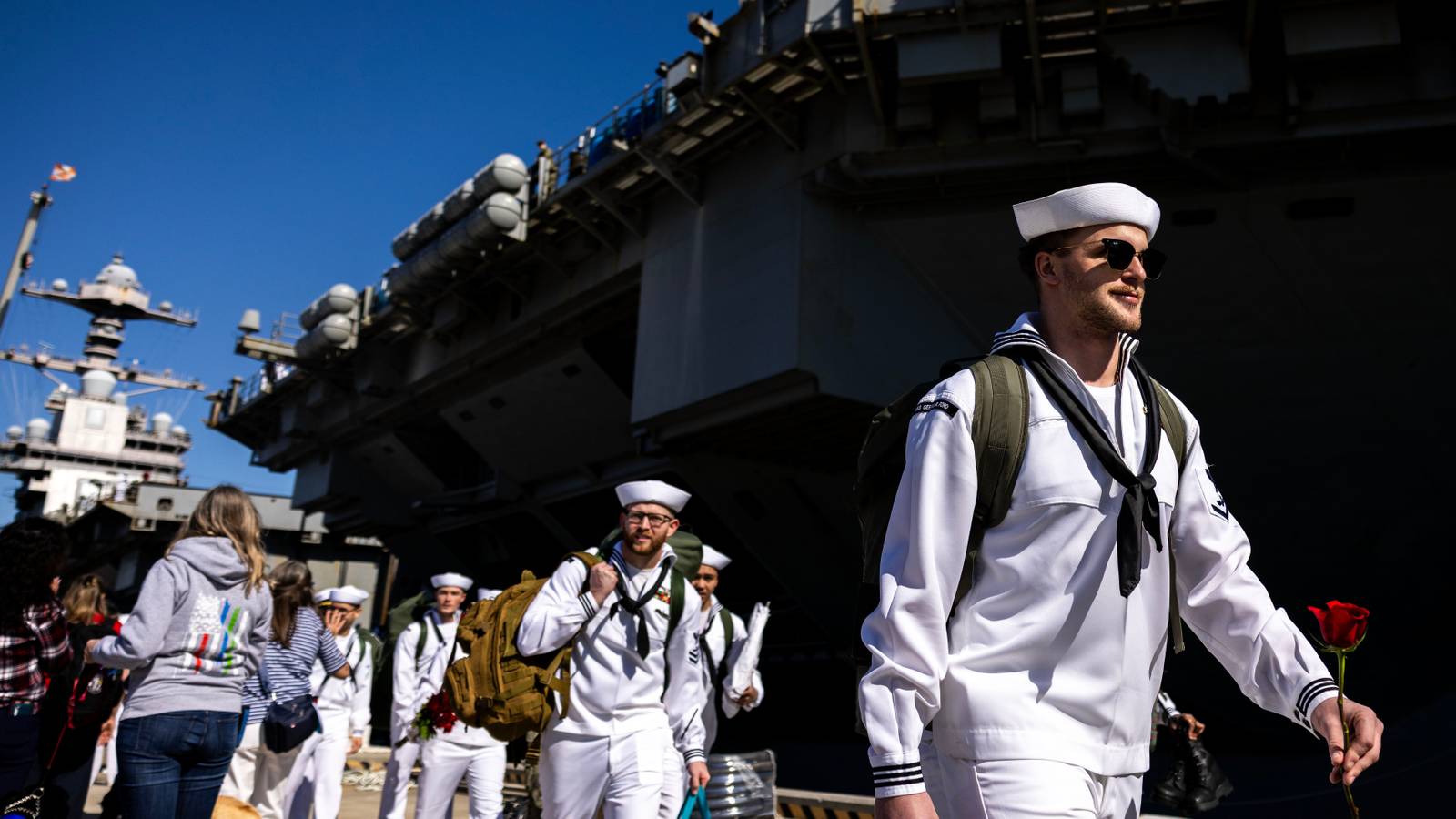
The USS Gerald R. Ford, the largest aircraft carrier in the world, has returned to its home port in Norfolk, Virginia. This monumental homecoming marks the end of an unprecedented 11-month deployment—the longest since the Vietnam War. During this time, the carrier played a crucial role in supporting U.S. military operations related to the conflict with Iran and the capture of former Venezuelan President Nicolás Maduro.
Historic Deployment and New Achievements
As the most advanced vessel in the U.S. Navy, the USS Gerald R. Ford arrived accompanied by two destroyers and approximately 5,000 sailors eager to reunite with their families after months of hardship. The deployment was not merely a test of military might; it was also a challenging period for the crew, who faced a significant noncombat fire incident on the Greek island of Crete, leading to extensive repairs and displacing many sailors from their accommodations.
Defense Secretary Pete Hegseth was present to welcome the vessels back home, offering accolades to the crews for their exceptional service. He lauded them not only for completing their mission but also for becoming part of military history, stating: “You didn’t just accomplish a mission, you made history. You made a nation proud.” Hegseth expressed similar admiration for the crews of the USS Mahan and the USS Bainbridge.
Recognitions and Notable Records
In recognition of their extraordinary efforts during this deployment, the USS Gerald R. Ford and its accompanying ships received the prestigious Presidential Unit Citation. This award, which acknowledges “outstanding performance in action” against formidable opponents, represents the highest honor a military unit can achieve—typically reserved for exceptional feats in combat.
The carrier’s 326 consecutive days at sea are a historic benchmark, surpassing all other deployments in the past half-century. While USS Midway holds the record for the longest deployment at 332 days, the Ford’s journey redefined what is possible for modern naval operations. Concerns have arisen regarding the impacts of such prolonged deployments, particularly on crew morale and the strain placed on the ship’s machinery.
Deployment Path and Operations
The USS Gerald R. Ford commenced its journey from Virginia in June, initially heading towards the Mediterranean Sea. By October, it was rerouted to the Caribbean as part of a significant military buildup in that region, indicating a strategic shift within the Navy. During its deployment, the carrier participated in a key military operation aimed at capturing Maduro in January before being repositioned to address escalating tensions with Iran.
As the situation heightened, the Ford continued to play a critical role, transitioning from the Mediterranean through the Suez Canal and into the Red Sea in early March. The intricacies and challenges of this deployment highlight the evolving nature of naval warfare and the essential contributions made by modern warships like the USS Gerald R. Ford.
In conclusion, the USS Gerald R. Ford’s recent deployment reflects not only its enhanced capabilities but also the dedication and resilience of its personnel. As the Navy continues to navigate complex global conflicts, the lessons learned from this unprecedented deployment will be invaluable for future operations and strategies.