
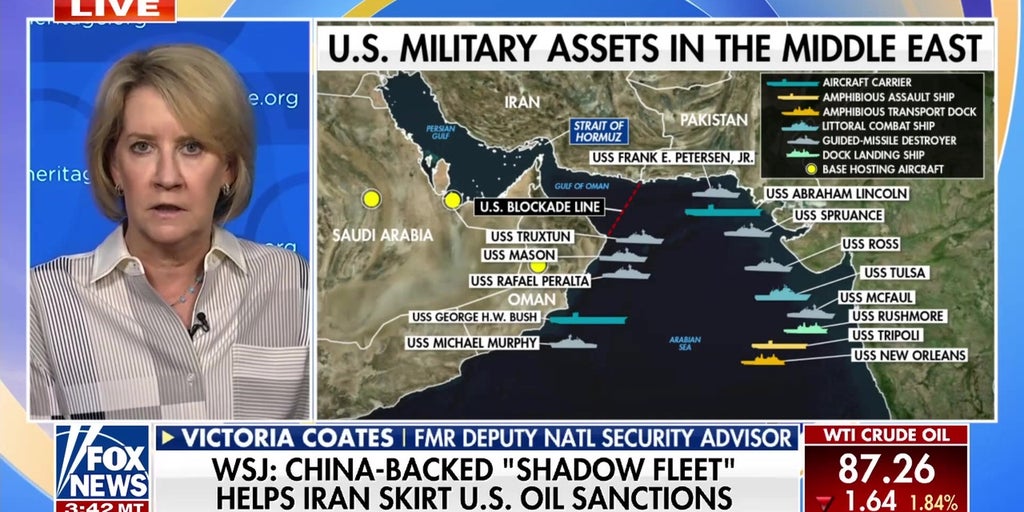
Victoria Coates, a former Deputy National Security Advisor, emphasizes the United States’ ability to target and dismantle Iran’s clandestine oil operations that evade sanctions. With a focus on the importance of revitalizing the U.S. Navy and leveraging current monetary incentives from the Treasury Department, Coates articulates a multi-faceted approach to countering Iran’s influence in the Gulf region and protecting U.S. interests.
Disrupting Iran’s Illicit Oil Trade
Coates believes that the U.S. is in a strong position to disrupt Iran’s “shadow fleet,” the network of vessels Iran employs to smuggle oil despite international sanctions. By utilizing intelligence and strategic warfare capabilities, the United States can significantly undermine these operations. Coates highlights how Iran continues to face economic challenges due to these sanctions, claiming that the evasion tactics they deploy have not been sufficient to stabilize their economy. The key is to adopt a comprehensive strategy that utilizes both naval power and smart financial incentives.
The Role of Financial Incentives
A critical element of this strategy is the Treasury Department’s monetary rewards program, which offers up to $15 million for information that leads to the disruption of Iran’s operations. This program encourages whistleblowers and private sector involvement, creating a collaborative environment focused on intelligence sharing. Coates stresses the importance of this mechanism in revealing the intricacies of Iran’s oil smuggling networks and providing actionable insights. By incentivizing foreign nationals and partners to share valuable information, the U.S. can further erode Iran’s ability to engage in illicit activities.
Rebuilding U.S. Naval Capabilities
In addition to financial incentives, Coates emphasizes the necessity of strengthening the U.S. Navy. She believes that American maritime dominance in the Gulf can act as a powerful deterrent against Iranian aggression. The importance of naval prowess cannot be understated, especially as geopolitical tensions rise. A robust naval presence not only secures shipping lanes but also sends a clear message to Iran that the U.S. remains steadfast in defending both its interests and allies in the region.
The Economic Impact on Iran
Coates also highlights that despite the tactics employed by Iran to evade sanctions, the country’s economy is suffering from long-standing external pressures. The layered sanctions significantly impact Iran’s oil exports, leading to budget deficits and a strained financial system. By focusing on disrupting the shadow fleet and encouraging community participation through rewards, the U.S. can intensify these economic pressures. The exhibit of a strong naval fleet and a proactive approach to intelligence-gathering may ultimately lead to a more precarious situation for Iran.
In summary, through a combination of financial incentives and the enhancement of naval capabilities, the United States holds a powerful card in the ongoing struggle against Iran’s illicit oil trade. Coates elucidates that with a coordinated strategy that emphasizes disruption and economic pressure, the U.S. can significantly challenge Iran’s operations, thereby safeguarding American interests and promoting stability in the Gulf region.