
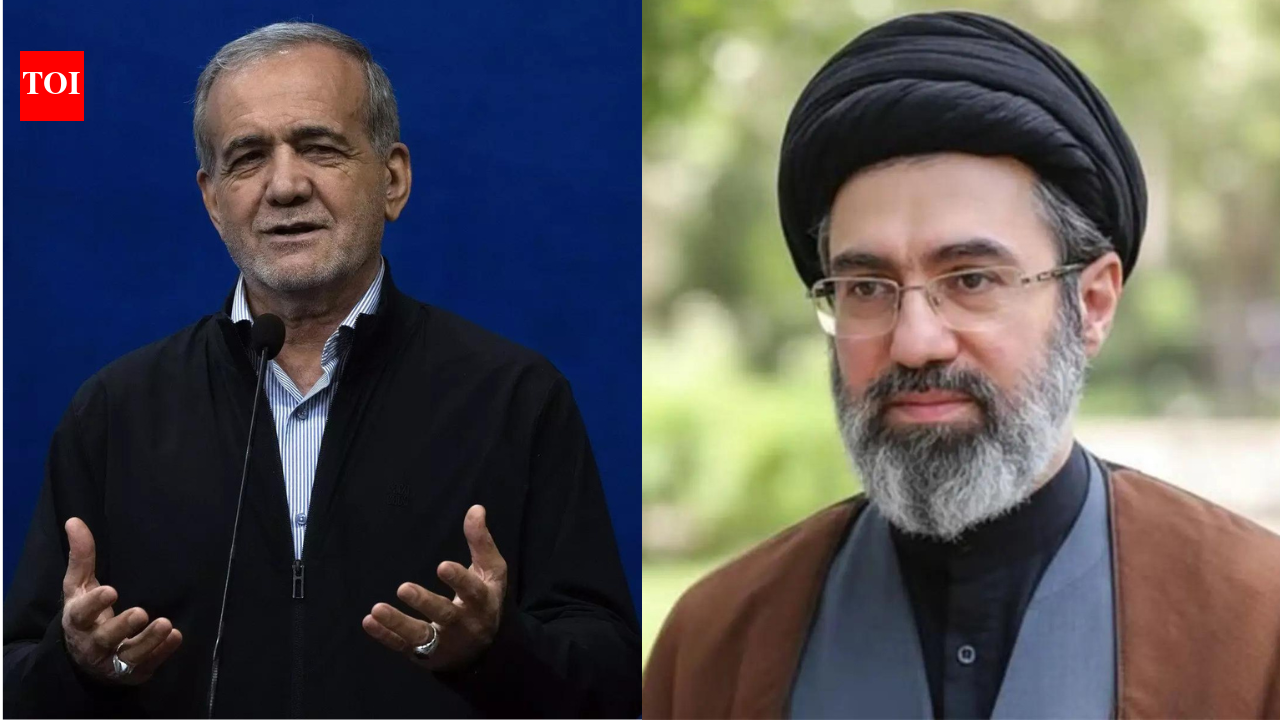
Iran is currently experiencing escalating political tensions after reports from Israeli media alleged that Supreme Leader Mojtaba Khamenei has issued a “final ultimatum” to President Masoud Pezeshkian. This situation raises critical questions about the dynamics of Iran’s leadership and its implications for both domestic and international politics.
Allegations of Khamenei’s Ultimatum
The Israeli broadcaster Channel 14 has claimed sources close to the Iranian government report that Khamenei has informed Pezeshkian that any future resignation offers will be accepted. This move appears to strip the president of a significant tool he had previously wielded during internal disagreements. The report alleges that Pezeshkian has threatened to resign multiple times due to his frustrations over being sidelined from crucial national security and foreign policy discussions. In May, he reportedly made a formal offer to resign, underscoring his discontent with the existing decision-making framework.
Despite these allegations, Iranian officials have fervently denied the claims, arguing that such assertions undermine the integrity of Iran’s political landscape. This denial has led to a political backlash, thrusting the government into a further state of scrutiny and debate regarding its internal cohesion and external relations.
Influence of the Islamic Revolutionary Guard Corps
Channel 14 has also indicated that Khamenei has aligned himself with Ahmad Vahidi, the commander of the Islamic Revolutionary Guard Corps (IRGC), signaling a shift in influence toward a more hardline approach on several strategic issues, including relations with the United States. This reported alignment presents a considerable change in the balance of power within Iran, as Vahidi’s hardline stance is expected to shape Tehran’s policies moving forward, particularly related to U.S. interactions.
Sources suggest that the gap between Iran’s civilian leadership and the IRGC has narrowed, leading to an assertive stance that could affect future negotiations or confrontations with the U.S. This alignment could further embolden Tehran’s commitment to maintaining its strategic and economic positions in the face of international pressures.
Current U.S.-Iran Relations
According to the Israeli report, there are no formal negotiations taking place between Tehran and Washington at this moment. However, indirect communications continue through Iranian Foreign Minister Abbas Araghchi and U.S. special envoys. Mediation from countries like Qatar and Pakistan has also been instrumental in maintaining dialogue channels. Meanwhile, President Trump has publicly stated that Iran has been granted a “last chance” to reach a diplomatic agreement, a statement underscored by regional allies advocating for continued diplomatic efforts.
Trump’s administration has indicated readiness for military action against Iran but has paused such plans in favor of diplomacy urged by allies such as Saudi Arabia and the UAE. While Iran has purportedly denied these talks, the ongoing back-and-forth between the nations suggests layers of complexity that characterize their relationship.
In summary, Iran’s political landscape is on shaky ground amidst these tensions. With the Supreme Leader potentially shifting power dynamics and Trump’s insistence on a last diplomatic chance, the outcome of these developments could drastically affect not only Iran’s internal stability but also its external relations, particularly with the United States. The interplay of domestic politics and international diplomacy will be crucial in the coming months as these narratives unfold.