
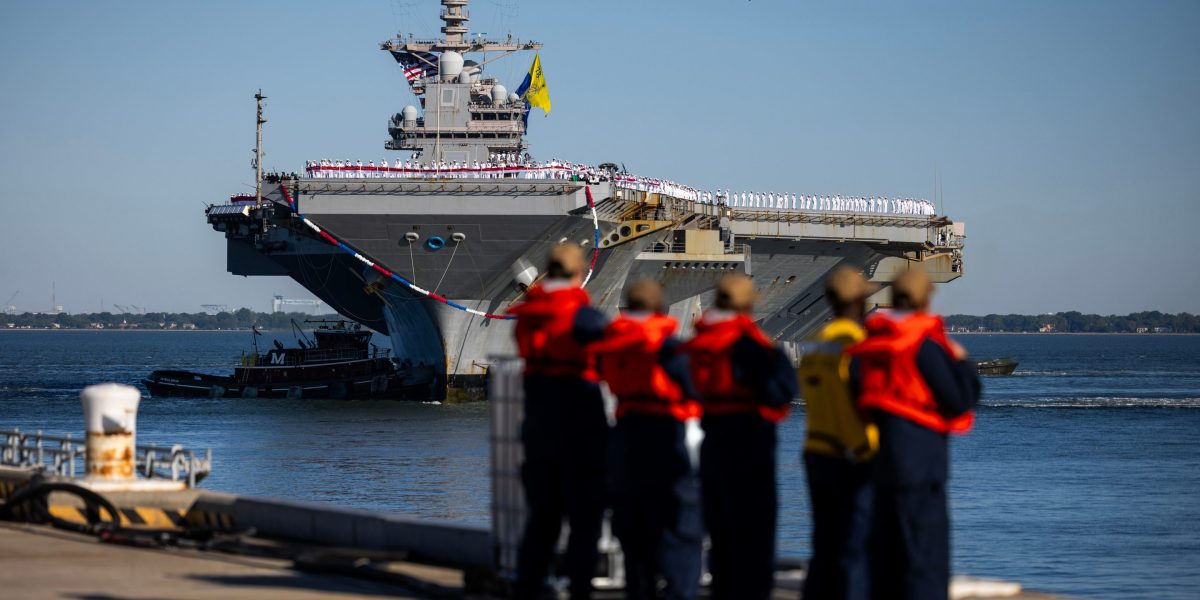
The USS Gerald R. Ford, recognized as the most advanced warship of the U.S. Navy, recently returned to Naval Station Norfolk alongside two destroyers. After a deployment that lasted more than 300 days, approximately 5,000 sailors were finally reunited with their families for the first time since June. This extended mission was fraught with challenges, including a significant fire incident that displaced many crew members during repairs on the Greek island of Crete.
Historic Achievements Aboard USS Gerald R. Ford
During a welcoming ceremony for the ships, U.S. Defense Secretary Pete Hegseth praised the crew of the USS Bainbridge, stating they performed admirably under demanding conditions. “You didn’t just accomplish a mission; you made history,” he expressed, reflecting the pride in their significant contribution to national security. Hegseth also acknowledged the crews of the USS Mahan and the USS Ford, further demonstrating the critical role these ships play in naval operations.
For their outstanding service, particularly in relation to the recent conflict with Iran, the USS Gerald R. Ford and its escort vessels were awarded the Presidential Unit Citation. This prestigious honor is reserved for military units that demonstrate extraordinary performance during challenging operations. Notably, the Ford’s deployment has set a record, achieving the longest at-sea duration for a U.S. aircraft carrier in over 50 years.
Impacts of Extended Deployments on Sailors
The USS Gerald R. Ford’s 326 days at sea represent a significant milestone, prompting discussions about the toll such extended absences take on service members and their families. Concerns have been raised regarding the mental and physical well-being of those stationed aboard, particularly in light of the fire incident that occurred in one of the carrier’s laundry spaces. These long deployments can strain both the crew and the vessel, raising questions about the sustainability of current operational practices.
In June, as the Ford commenced its mission off the coast of Virginia, its trajectory soon shifted toward the Mediterranean Sea. By October, it was redirected to the Caribbean as part of an unprecedented naval buildup in the region. Throughout its deployment, the carrier played a vital role in various military operations, including actions aimed at capturing Venezuelan leader Nicolás Maduro. As geopolitical tensions escalated, the USS Ford made its way towards the Middle East, participating in crucial events at the height of the conflict with Iran.
The Legacy of the USS Gerald R. Ford
While the USS Gerald R. Ford’s crew has endured lengthy deployments, it’s essential to note that the USS Nimitz’s crew also experienced an extensive absence of 341 days during 2020 and 2021. However, this included additional time spent in isolation to mitigate the spread of COVID-19, making direct comparisons difficult.
Looking ahead, the discussions surrounding the impacts of long-term naval operations will likely continue as military leadership seeks ways to balance readiness with the well-being of service members. The lessons learned from the USS Gerald R. Ford’s recent deployment may pave the way for improved operational strategies and support systems aimed at ensuring the health and morale of sailors on long missions.