
Yemen’s Foreign Minister, Afra al-Zouba, has firmly stated that Yemen will not be used as a pawn by Iran and should not be a battleground for settling regional disputes. In her remarks, she emphasized the robust partnership between Yemen and Saudi Arabia, highlighting the significance of this alliance in ensuring stability and security in the region.
Foundation for Security and Stability
Al-Zouba articulated that rebuilding state institutions is vital for Yemen’s security, regional stability, and the safeguarding of maritime routes. She underscored a comprehensive approach to deterrence that transcends military efforts, focusing on civilian protection, the strengthening of governmental frameworks, and diplomatic engagement, alongside humanitarian initiatives.
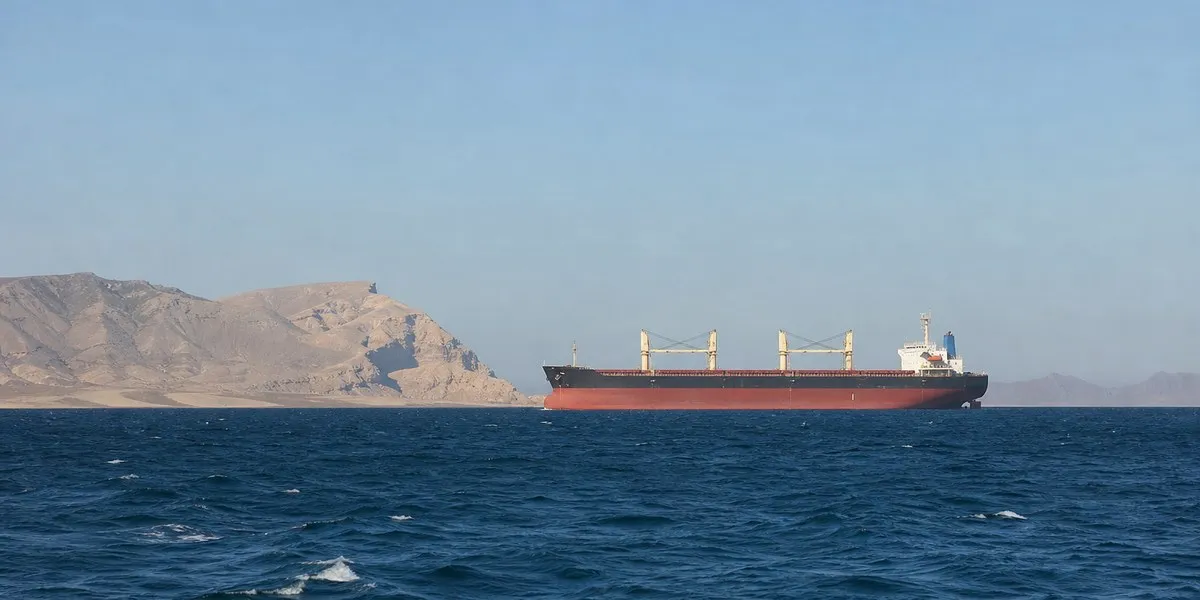
The Foreign Minister further pointed out that threats to navigation in the Red Sea and the Bab el-Mandeb Strait go beyond mere disruptions to vessel traffic, characterizing them as maneuvers by armed groups to impose their conditions. She asserted that military dominion over a territory does not equate to the authority over navigation, asserting Yemen’s sovereignty is non-negotiable and cannot be altered through force.
Enhancing Maritime Security
For the establishment of long-term peace, al-Zouba proposed a bolstered framework for state authority across coastal areas, ports, and islands. This would involve enhancing collaborations with neighboring coastal nations for information sharing on maritime security, port protection strategies, coast guard training, and efforts to curtail smuggling and organized crime.
She expressed gratitude toward Saudi Arabia for its unwavering support of the Yemeni populace and legitimate government while identifying Egypt as a crucial Arab ally. She noted that coordination with Cairo is ongoing in matters related to Yemen, Red Sea security, and bilateral relations.
Confrontations and Ongoing Conflict
Al-Zouba condemned the Iranian-backed Houthis for their escalating military capacities, which, according to the Yemeni government, jeopardize neighboring countries and maritime routes. She welcomed Russia’s stance in the UN Security Council, advocating for navigational freedom and condemning attacks on trade vessels.
Despite diplomatic efforts, the conflict continues to rage, particularly in Taiz, Marib, Al-Jawf, Al-Bayda, and Lahij. Recent reports indicate casualties among Yemeni government forces, including the deaths of 13 soldiers in battles in Taiz and Lahij. Additionally, a government source confirmed the elimination of a high-ranking Houthi commander and six of his followers near the Bab el-Mandeb Strait.
In summary, Yemen stands at a critical juncture, navigating complex regional dynamics while striving for stability through strengthened governance and international cooperation. As the situation develops, continuous dialogue and collaborative security measures will be paramount for fostering peace in this tumultuous region.