
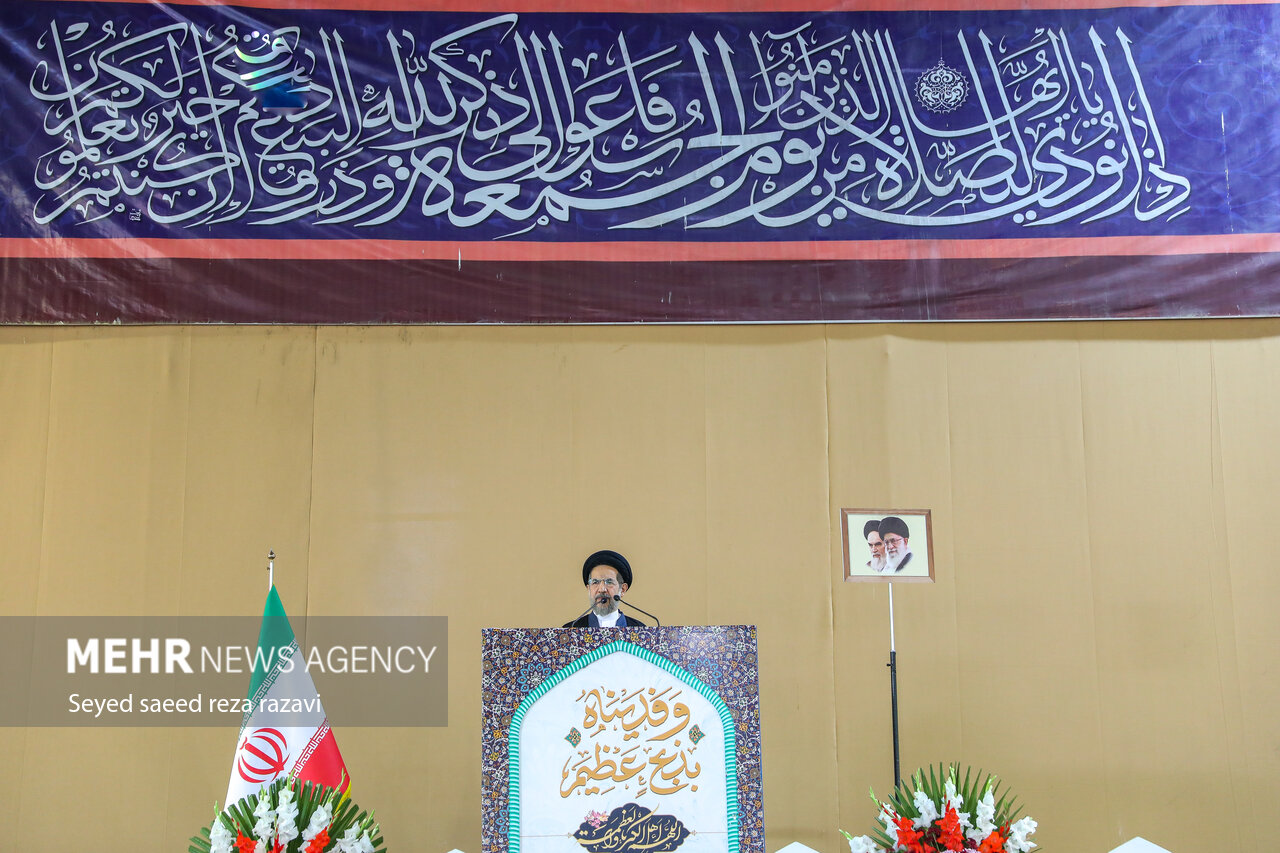
In a recent Friday prayer sermon in Tehran, Hojatoleslam Seyed Mohammad Hassan Aboutorabi-Fard emphasized transformative shifts occurring in the global dynamics, attributing these changes to a decline in Western political clout and diminishing U.S. dominance. His remarks were particularly anchored in the backdrop of events at the UN General Assembly, highlighting an evolving political landscape.
Shifts in Global Political Dynamics
Aboutorabi-Fard expressed that the current era is marked by significant developments, with increasing dissatisfaction resonating among various nations and their governments. Notably, he referenced a moment during the UN General Assembly when 77 delegations walked out during the Israeli Prime Minister’s address, signifying a broader discontent with Western policies. This exodus underscores a collective move towards re-evaluating alliances and support within the international community.
The Rise of Political Consciousness
He further elaborated on the burgeoning political consciousness among global populations, particularly within the Islamic world, noting a resurgence in embracing religious and moral identities. This awakening is reflected in the strengthening of the resistance front against Western influence, highlighting successes achieved by Islamic resistance forces. These developments, according to Aboutorabi-Fard, signal a significant shift in both political and economic power as we progress into the third millennium.
Impact of U.S. Military Interventions
The sermon also tackled the repercussions of U.S. military interventions in the Middle East, citing Afghanistan and Iraq as prime examples. Aboutorabi-Fard criticized the rationale behind these campaigns, arguing they aimed to reshape the region’s geopolitical landscape in favor of U.S. and Israeli interests. He drew attention to the extended occupation of Afghanistan from 2001 to 2021 and the invasion of Iraq in 2003, emphasizing the human toll these conflicts have exacted, which includes the loss of countless lives.
The Path to Regional Sovereignty
Reflecting on the aftermath of these conflicts, Aboutorabi-Fard noted that the withdrawal of U.S. forces from Iraq and Afghanistan symbolizes a newfound sovereignty for these nations. He asserted that the end of U.S. military presence marks a turning point toward greater self-determination and dignity for the Iraqi and Afghan people. This sentiment encapsulates a growing desire for independence from foreign hegemony, fostering a more robust sense of national identity and resilience.
In conclusion, Hojatoleslam Seyed Mohammad Hassan Aboutorabi-Fard’s address reveals a significant moment in global politics, portraying a world increasingly inclined to challenge Western dominance and advocate for self-governance. He encapsulated hope for the resistance front in the Muslim world, marking what he sees as the dawn of a post-U.S. influence era in the region.