
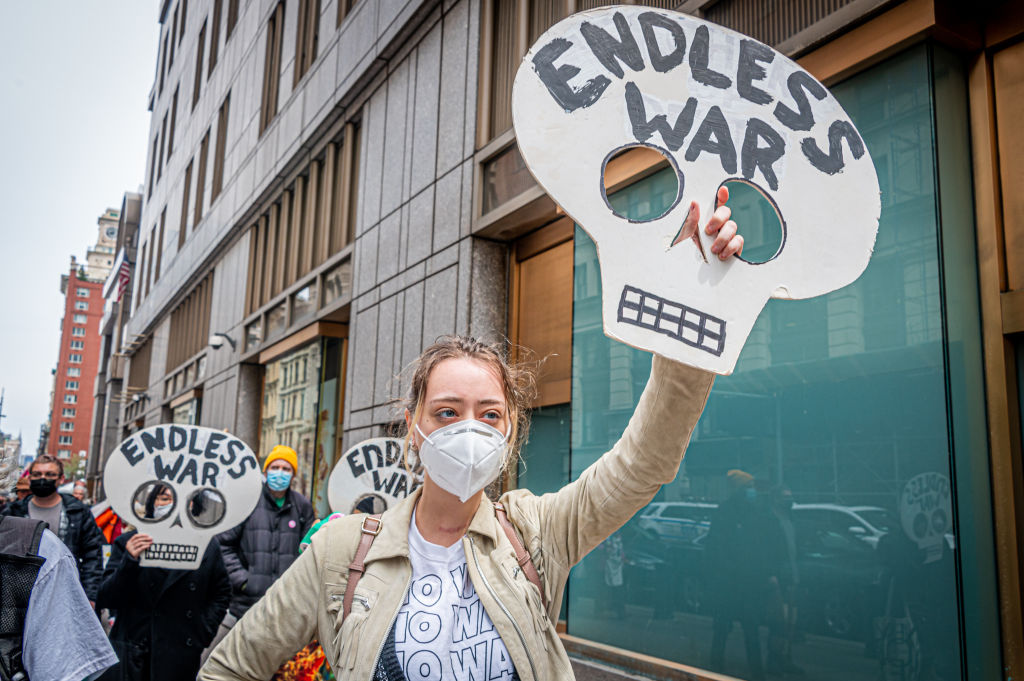
Twenty-five years after the tragic events of September 11, 2001, it might appear that U.S. foreign policy has largely remained consistent. The aftermath of 9/11 saw the initiation of the “War on Terror,” a campaign that has recently led to a renewed conflict in the Middle East under Trump’s administration, particularly concerning Iran.
### The Legacy of Antiwar Activism
Although the War on Terror did spark a harmful era of military interventions, it also ignited significant antiwar movements that have begun to question these “forever wars.” Initially, public sentiment surrounding the Iraq War was notably favorable, with around 70% approval. In contrast, Trump’s military actions against Iran face overwhelming disapproval, with only about a third of Americans in support as of now. This turn of public opinion can be attributed to years of activism that successfully challenged the legitimacy of ongoing military conflicts.
Recently, Jeremy Varon, a historian with a focus on antiwar movements, published “Our Grief Is Not a Cry for War,” providing an extensive look at the antiwar efforts against the War on Terror. In discussions with Varon, he highlighted the significant shift in public consciousness that took place after the Iraq War, where the antiwar movement was initially perceived as a failure for not preventing the invasion. Nevertheless, its influence was profound, shaping public opinion and political discourse over time.
### Shifts in Public Opinion and Political Landscape
The antiwar movement made various strides, largely delegitimizing the Iraq War before it began. Although it lacked the support of traditional allies like France and Germany, the movement garnered substantial traction globally, presenting a counter-narrative that questioned the rationale behind the war. Notably, on February 15, 2003, large-scale protests erupted worldwide, mobilizing millions and demonstrating the substantial opposition that existed even before the war’s commencement. Despite initial claims of patriotism, public sentiment became progressively critical as the war unfolded, eventually leading to a majority of Americans recognizing the wars in Iraq and Afghanistan as mistakes.
This growing dissent not only swayed public sentiment but also began to influence political structures, particularly within the Democratic Party. The rise of antiwar candidates indicated a shift in the political landscape, where opposition to the Iraq War became a defining feature of electoral campaigns. Even though George W. Bush sought re-election amidst a swell of patriotism post-9/11, the evolving antiwar message created a pivotal environment in which political leaders could no longer ignore the pressing realities of military conflict.
### The Future of Antiwar Movements
Today, U.S. involvement in conflicts remains a contentious issue, especially regarding Trump’s actions in Iran, which are met with significant public disapproval. Despite this, there is currently no strong antiwar movement to raise awareness or campaign against such interventions. In Varon’s view, this lack of organized resistance is disconcerting, especially as Americans grow weary of prolonged military engagement overseas.
The strategic lessons learned from past activism underscore the importance of both the message and the messenger. Presenting credible voices from among veterans and victims of war can shift public perceptions more effectively than conventional arguments. Moving forward, fostering a political environment encouraging dissenting opinions against military interventions is crucial.
Antiwar activism has a history of challenging and reshaping public discourse, and understanding its legacy is vital for future movements. While obstacles may arise, the necessity of addressing the consequences of military actions—both at home and abroad—remains imperative. As Varon articulates, the challenges faced today are immense, yet the potential for progress through organized activism is undeniable.