
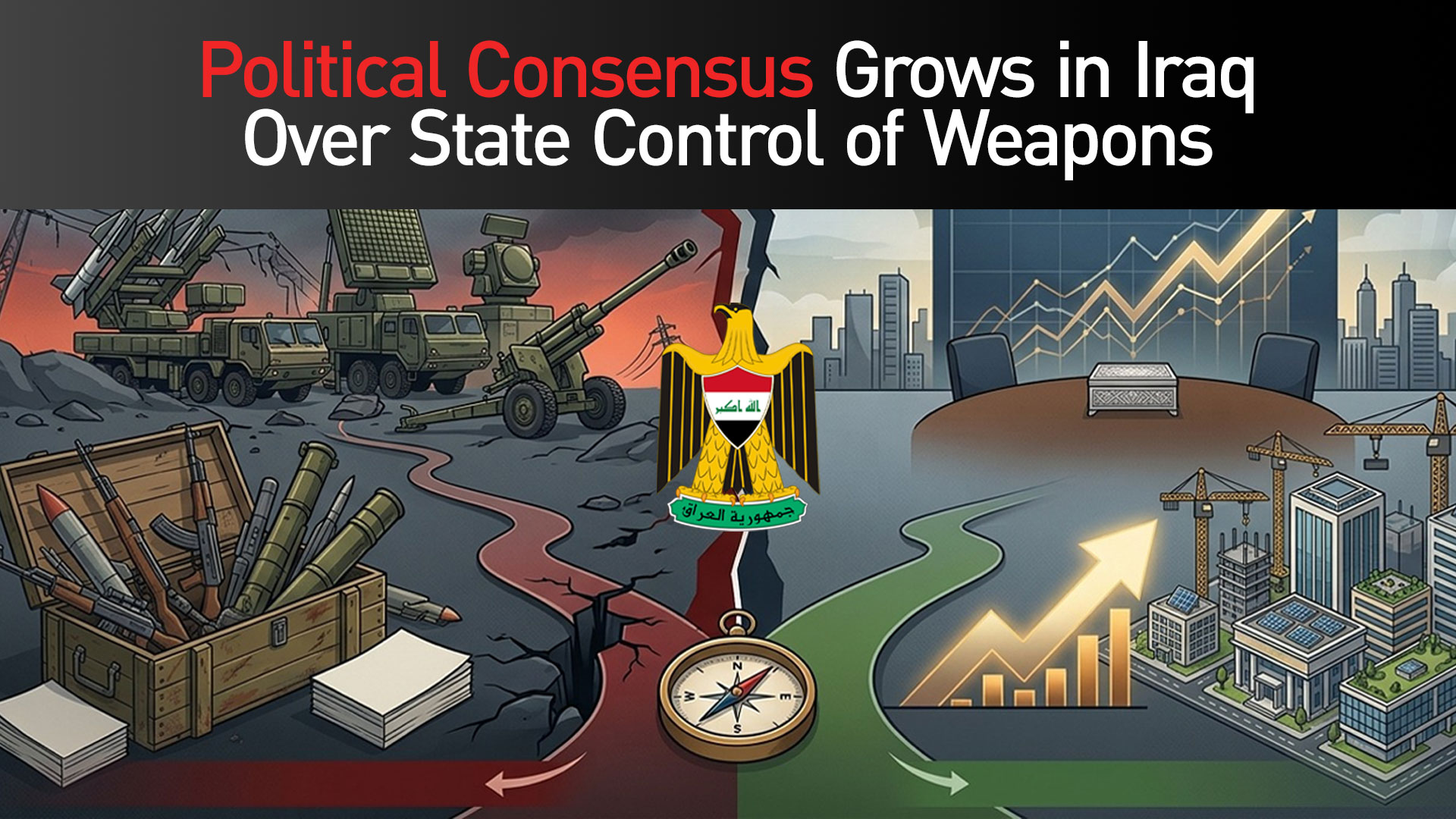
Iraq is currently facing a challenging situation regarding the regulation of weapons in the country. Despite achieving a rare political consensus on the need for state control over arms, Baha al-Araji has warned that more than a year may be required to fully integrate this control. The eyes of both local and international observers are set on the upcoming September 30 deadline, but many believe this date may represent the beginning of a complex process rather than a resolution.
The Political Landscape and Security Challenges
Baha al-Araji, a notable member of the Shiite Reconstruction and Development bloc, stated that significant political entities have come to an understanding on how to handle the arms currently beyond the government’s purview. However, he noted that trust issues among these parties, along with regional complications, suggest that actual implementation could be a lengthy endeavor. Al-Araji indicated that a committee involving high-ranking officials like Mohammed Shia al-Sudani, Nouri al-Maliki, and Hadi al-Amiri is working to establish a framework for controlling these weapons, especially after the withdrawal of international forces.
Political analyst Ghalib al-Daami echoed the sentiment that the September 30 date is not one of finality but rather symbolizes the initiation of preliminary actions. He emphasized that a complete resolution of the weapons issue is unrealistic within such a short timeframe and should be viewed as the beginning of an extended negotiation process.
The Need for Legislative Action
In order to solidify state control over weapons, Al-Araji has urged Iraq’s Council of Representatives to promptly draft and pass comprehensive legislation. This proposed legislation would remove the power of armed groups to operate independently and ensure that their members are fully integrated into state structures, particularly under the Popular Mobilization Forces, an official branch of Iraq’s security system. Al-Araji highlighted that with the departure of foreign coalition forces, armed factions will have less justification for maintaining independent arsenals.
Moreover, Al-Daami pointed out that while the current government appears more resolute than its predecessors, significant practical barriers still exist in facilitating a change. The challenge lies not only in gaining political support but also in effectively implementing the framework that would transition weapons under state control.
The Economic Implications of Armed Groups
The ongoing situation with armed groups has intertwined with economic considerations, particularly regarding Iraq’s financial relationships with the United States. Financial researcher Diaa al-Hassan warned that the lingering uncertainty surrounding these factions could deter foreign investment, as businesses seek stability and reliable legal systems. He noted that armed groups operating outside state control could impose levies that dissuade investors from entering the market.
Al-Hassan also flagged potential U.S. financial measures as a greater concern than direct sanctions targeting specific armed factions. He cautioned that restrictions affecting Iraqi banks and businesses that engage with Iran could lead to broader economic ramifications, stressing the influence of the U.S. Treasury and Federal Reserve on international dollar transactions.
The Path Ahead: From Consensus to Implementation
The central question now revolves around whether the political consensus that has emerged can transition into a functional, enforceable framework. For al-Araji, this means creating the necessary legislative structure that separates armed organizations from political groups, effectively integrating their personnel into recognized state institutions. On the other hand, al-Daami suggests that the timeline itself underscores the inherent difficulties, viewing September 30 as merely the start of a longer journey.
Both al-Araji and al-Daami, along with al-Hassan, agree that simply declaring a commitment to state control over weapons will not suffice. It will require diligent efforts to reshape the existing state of affairs, enforcing the rule of law to eliminate the existence of a “state within a state.” The complexity of this undertaking highlights the urgency to foster legal frameworks and institutional changes essential for creating a secure environment for investment and curbing the influence of proxy conflicts in Iraq.