
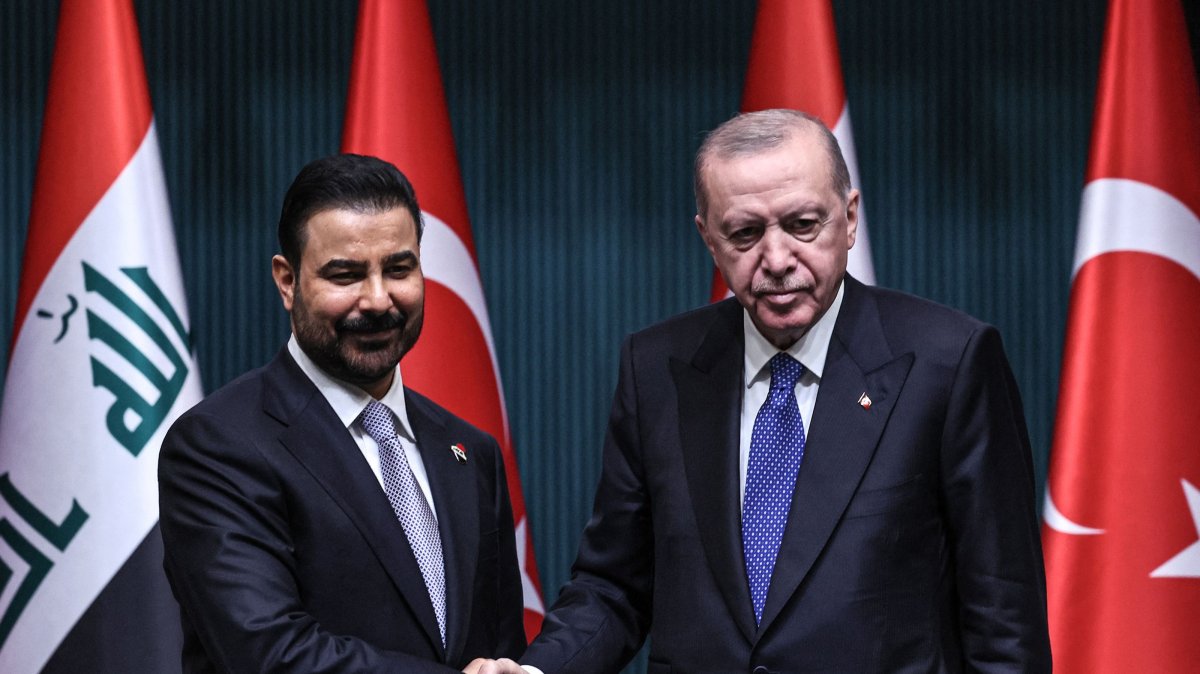
Iraq’s foreign policy is undergoing a significant transformation, moving beyond the traditional perspective of balancing competing regional and international powers. Prime Minister Ali al-Zaidi’s recent visits to Washington, Tehran, and Ankara illustrate a shift in Baghdad’s diplomatic strategy. Rather than relying on single partners for sectors like security and infrastructure, Iraq is now engaging multiple nations in various domains. This approach aims to mitigate the risks associated with dependence on individual countries and to enhance collaborations across different sectors, leading to a more resilient economic framework.
The Significance of Türkiye in Iraq’s Multi-Partner Strategy
Türkiye holds a crucial role in Iraq’s new multi-partner diplomacy. Its strategic importance extends beyond mere bilateral trade and political ties to encompass vital economic connections. Türkiye facilitates Iraq’s access to northern export routes, European markets, and essential infrastructure projects. By linking trade and security mechanisms, Türkiye provides a holistic partnership that enhances Iraq’s domestic economy while also offering logistical solutions for export and resource management.
During al-Zaidi’s visit to Ankara, five significant agreements were reached, showcasing the multifaceted nature of Iraq-Türkiye relations. These included memoranda on security training, transportation infrastructure, and water management, all aimed at diversifying Iraq’s dependence on various facets of foreign cooperation. By addressing pressing issues like water resources and infrastructural needs, these agreements represent a critical step in broadening Iraq’s diplomatic engagements beyond merely increasing the number of partners.
Addressing Iraq’s Economic Vulnerabilities
A large portion of Iraq’s economic challenges stems from its heavy reliance on oil exports via southern terminals, making it vulnerable to geopolitical tensions, particularly in the Strait of Hormuz. Interruptions in this crucial route can significantly impact the nation’s financial stability, affecting public investments and salaries. To combat this vulnerability, the development of northern export routes through Türkiye is imperative. Projects like the Kirkuk-Ceyhan Pipeline and the Development Road provide distinct yet complementary options for Iraq to diversify its export strategies, contributing to greater economic resilience.
The collaboration with Türkiye hinges on the ability to unify production, transit, and market access into a cohesive operational framework. Although geographical proximity is advantageous, Iraq must navigate challenges such as financing, legal structure, and security concerns to realize the full potential of this partnership. The success of these initiatives lies in turning high-level agreements into viable, operational projects that can bolster Iraq’s economic standing while reducing its risks.
The Necessity of Institutional Coordination
For Iraq’s foreign policy pivot to translate into tangible outcomes, coordination among domestic institutions is essential. Iraq needs to build upon its partnerships in security, transportation, and water management, requiring a shared commitment to institutional capacity. Türkiye’s support in security initiatives reflects a broader objective of collaborative growth, as Iraq seeks to modernize its water management and defense capabilities.
However, considerable challenges remain. The effectiveness of the agreements signed during al-Zaidi’s visit is contingent upon appropriate budget allocations, the sharing of power among Iraqi institutions, and the capacity to address the influence of non-state actors within the country. As Iraq works to implement these frameworks, the real measure of success will rely not only on political agreements but also the ability to harmonize these engagements within its governance structures.
In conclusion, al-Zaidi’s diplomatic tour highlights a critical juncture for Iraqi foreign policy, moving towards a multi-partner approach rather than a mere balance of power among regional rivals. As Iraq seeks to foster diverse partnerships, particularly with Türkiye, it must upgrade its infrastructure, safeguard its energy production, and streamline its institutional mechanisms. The road ahead is complex, but the foundation laid during these discussions could ultimately lead to greater economic resilience and broader opportunities for strategic cooperation.