
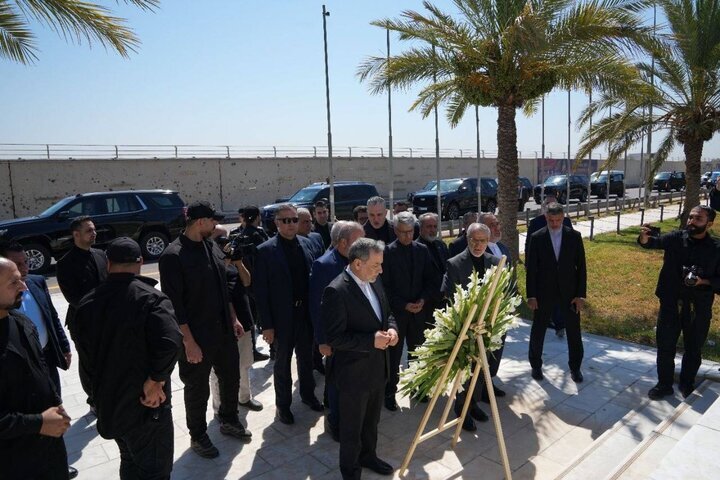
Iran’s top diplomat recently visited Baghdad, paying respects at the memorial dedicated to the martyrs of the Resistance Front, including former IRGC Quds Force Commander Lt. Gen. Qassem Soleimani and Iraqi Popular Mobilization Force (PMU) leader Abu Mahdi al-Muhandis. This visit highlights the ongoing reverence for these figures within Iran and their significance in the geopolitical landscape of the region.
Commemorating the Martyrs
Upon his arrival, the diplomat honored the legacy of General Soleimani and Abu Mahdi al-Muhandis, both of whom have become symbols of resistance against foreign intervention in the Middle East. Their assassination on January 3, 2020, marked a pivotal moment in the relationship between the U.S. and Iran. The two leaders were targeted by a drone strike ordered by then-President Donald Trump at Baghdad International Airport while on their way to meet with the Iraqi Prime Minister, Adil Abdul-Mahdi. This act was viewed as a significant escalation in tensions and has continued to shape regional politics.
The Aftermath of Their Assassination
The aftermath of the killings has been profound. It spurred a wave of protests and anger among Iran’s allies and supporters across the Middle East. The event not only galvanized Iranian support for its military operations but also solidified Soleimani’s and al-Muhandis’s roles as martyrs for the cause of resistance against perceived threats. Various factions within Iraq and Iran have rallied around their memories, using their legacies to justify ongoing military actions and to strengthen ties among allied militia groups.
Legacy and Impact on US-Iran Relations
The legacy of Soleimani and al-Muhandis continues to influence US-Iran relations. Their deaths have only intensified the complexities of diplomacy in the region, making it difficult for future negotiations. The Iranian government has vowed to retaliate against those considered responsible, and this has fostered a climate of distrust. As both nations navigate this intricate landscape, the remembrance events like the one in Baghdad serve as reminders of the ongoing conflict and the deep-seated animosities that persist.
In the broader context, this visit is indicative of Iran’s determination to assert its influence in Iraq and beyond. By commemorating these figures, Iran underscores its support for regional armed groups that share its ideological stance. This will likely continue to shape the geopolitical environment in Iraq and the surrounding areas, where memories of resistance and sacrifice find a powerful place in political narratives.
In conclusion, the homage paid to General Qassem Soleimani and Abu Mahdi al-Muhandis in Baghdad signals the enduring appreciation for their contributions to the Resistance Front. Their legacies continue to resonate within the region, influencing not just political dynamics but also the sentiments of many who view them as heroes of resistance against foreign intervention. As tensions remain high, these commemorations serve as reminders of the sacrifices made and the ongoing struggle for autonomy in the region.