
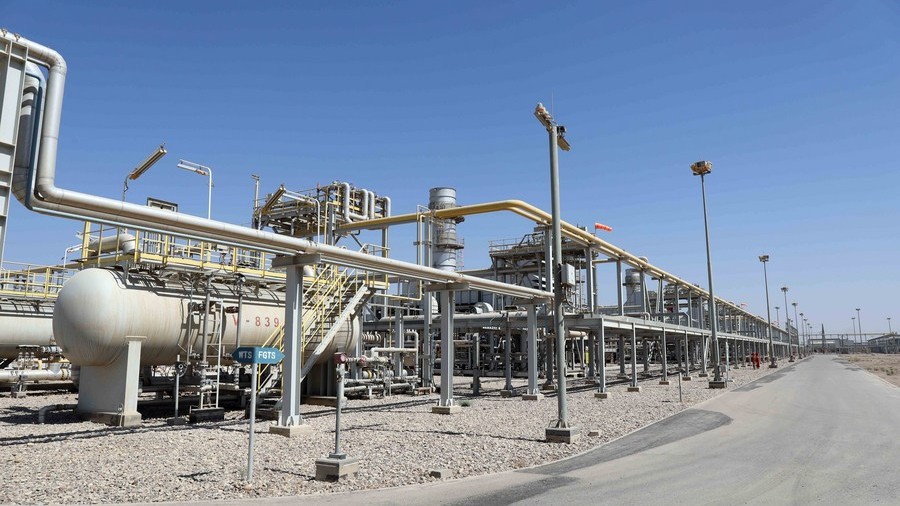
Iraq, the second-largest oil producer in the Organization of the Petroleum Exporting Countries (OPEC), faces a critical juncture in its oil export capabilities. With an agreement allowing the transportation of its crude through two pipelines into Turkey set to expire on July 27, the nation is racing against time. The closure of the Strait of Hormuz since February 28 has severely impacted Iraq’s oil export routes, limiting its options and forcing it to shut down production wells. With over 90% of its revenue historically generated from oil exports, the stakes have never been higher for Iraq.
### Background of the Crisis
The roots of this predicament trace back to a March 2023 ruling by an international arbitration court, which ordered Turkey to pay $1.5 billion in damages to Baghdad for breaching a 1973 oil export agreement. This breach occurred when Turkey permitted the semi-autonomous Kurdistan Regional Government (KRG) to export oil without Baghdad’s involvement. Originally, the KRG was meant to send crude production—around 550,000 barrels per day— through Baghdad’s State Organization for Marketing of Oil, with revenue sharing in place. However, the court ruling has led to tensions that threaten Iraq’s oil output and revenue further.
After the arbitration court’s decision, Turkey invoked a clause to terminate the longstanding agreement, effective July 27, 2026. Consequently, Iraq experienced a drastic reduction in its oil production, plummeting to approximately 1.389 million barrels per day by April, a stark contrast to the pre-blockade figures that were over 4 million barrels in early 2023. The sharp decline not only jeopardizes Iraq’s budget but also leaves its oil storage facilities at full capacity, further necessitating production cuts.
### Challenges in Transportation
With limited alternatives for moving oil, Baghdad has resorted to using tanker trucks, achieving transportation of about 500 trucks each day. However, these efforts are insufficient to sustain the nation’s economy. In response, the Iraqi government is working to repair an old pipeline system that connects the Kirkuk province to Turkey’s Ceyhan port, aiming to restore some level of export capability. This pipeline system, although previously prone to sabotage, has the potential to accommodate a significant volume when fully operational.
The Iraqi Oil Ministry is also focusing on the Kirkuk-to-Nineveh segment of this pipeline, a crucial aspect of their plan. The instigation of this segment, which can initially handle 150,000 to 250,000 barrels per day, is part of a larger strategy to revitalize the country’s oil exports and reduce dependency on the KRG’s routes. However, this ambition is constrained by the ongoing negotiations with Turkey, which currently holds significant leverage in discussions over oil transit agreements.
### Turkey’s Strategic Position
Crucially, with the impending deadline for the pipeline agreement, Turkey is positioning itself to extract as many concessions as possible. Reports indicate that Ankara is seeking investments and operational partnerships in various sectors, including oil, gas, and petrochemicals, as conditions for extending the deal. The stakes for Turkey are mutually beneficial, as a stronger economic collaboration with Iraq works in conjunction with its broader geopolitical interests.
The regional dynamics are complex, with superpower interests complicating the negotiation landscape. The KRG receives backing from the West, while the Federal Government of Iraq (FGI) has support from Russia and China. Turkey’s balancing act between these powers is evident, as it navigates its NATO commitments while also seeking to strengthen relations with countries like China, particularly through initiatives like the “Strategic Development Road Project.” This ambitious plan seeks to create seamless transport corridors linking Iraq and Turkey, integrating with larger geopolitical frameworks like China’s Belt and Road Initiative.
### Conclusion
In conclusion, Iraq stands at a critical juncture as it confronts a potential oil export crisis. With over 90% of its economy reliant on oil revenue, the implications of the forthcoming deadlines and ongoing negotiations could have profound effects on its financial stability. Both the KRG and FGI are racing against time to secure agreements that will enable them to navigate these challenges and avert a long-term economic downturn. This situation underscores the interconnectedness of geopolitics and energy markets, as the decisions made in the coming weeks will likely reverberate far beyond Iraq’s borders.