
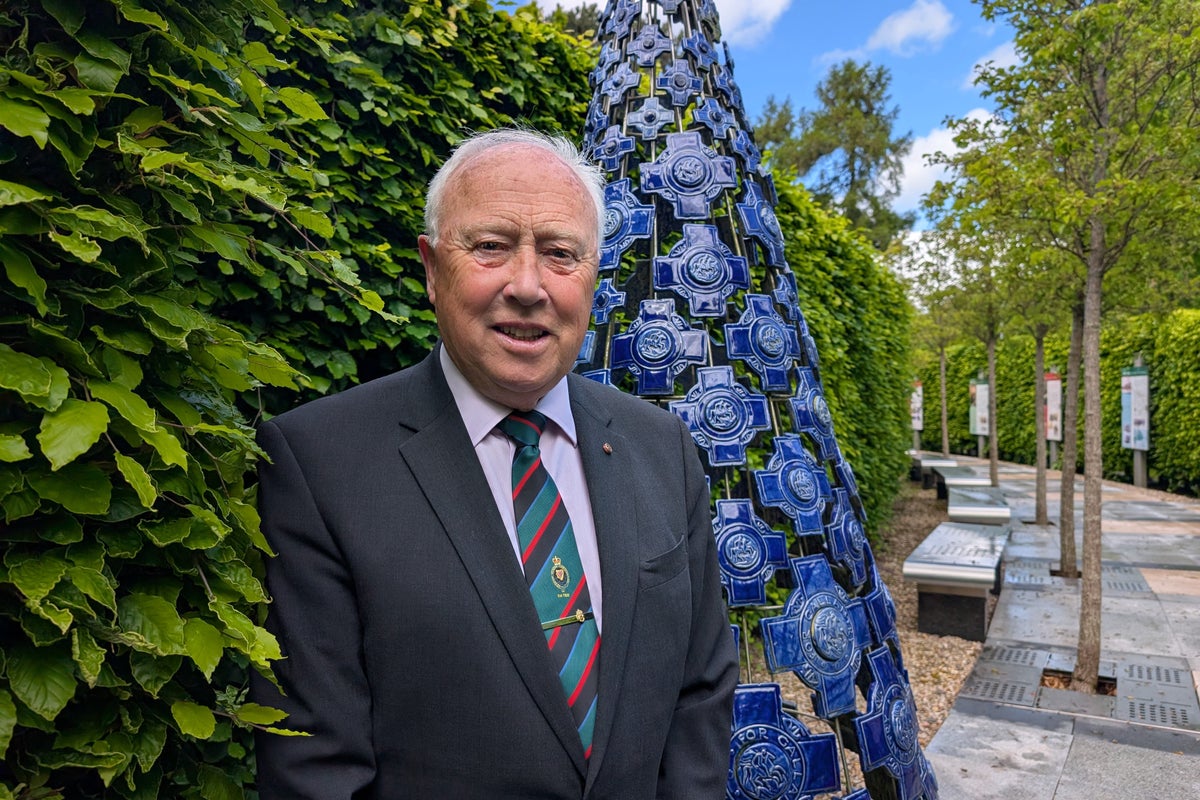
A former senior police officer in Northern Ireland has recently shared his experiences of helping to restore law enforcement in Iraq as the U.K. commemorates the end of Operation Telic. Stephen White’s contributions to rebuilding Iraq’s police force highlight the challenges and dedication involved in such a significant international mission.
Early Career and Transition to Iraq
Stephen White began his career with the Royal Ulster Constabulary (RUC) before transitioning to the Police Service of Northern Ireland (PSNI) in 2001. By 2003, he was serving as an assistant chief constable when he heard about a government initiative seeking senior police officers to assist in Iraq. Eager to apply his experience, particularly from his work alongside the Army during the Troubles, White responded to the call to action, leading to a journey that would profoundly impact his career and life.
Upon his arrival in Basra in July 2003, he anticipated taking charge of a large international police task force, yet was confronted with the reality of having only two police officers under his command. This situation, he recalls, was both frustrating and overwhelming, especially given the extensive resources he had expected. Despite his ambition and eagerness to contribute, the stark contrast between expectations and reality served as a harsh welcome.
Challenges of Rebuilding a Police Force
White was appointed as the director of law and order for Southern Iraq, responsible for establishing the first police academies in years. However, the conditions under which he worked were far from ideal. His base was a rundown electricity station lacking proper amenities, illustrating the severe logistical difficulties faced by the team. Overcoming these challenges was compounded by the ever-present threat of violence, making the task of restoring order that much more perilous.
The loss of Major Matt Titchener, a close colleague from the Royal Military Police, served as a grim reminder of the dangers that were part of everyday life in Iraq. Such incidents not only impacted morale but also influenced the arguments against sending civilian police to a conflict zone. White firmly believed in the necessity of cooperation between police and military forces, akin to their experiences in Northern Ireland.
Recognition and Long-term Impact
Participation in a television documentary about his experiences while in Iraq earned White a reputation as a “thorn in Number 10’s side” due to his candid remarks about inadequate resources. However, these disclosures ultimately caught the attention of influential figures like Jack Straw, the then Foreign Secretary. Through persistent advocacy, White successfully argued for the expansion of British police presence in Iraq, leading to the deployment of additional officers.
The aftermath of these events shaped White significantly. Despite the hardships, he found camaraderie and resilience among the British and international forces stationed there. His commitment to building a functional police force was honored by his later appointment as the European Union head of mission in Iraq. Years after returning to the U.K., White now heads the RUC Foundation, ensuring that the sacrifices made by police officers during the Troubles are remembered.
Commemoration and Reflection
As the Royal British Legion prepares to honor those who served during Operation Telic, White emphasizes the importance of remembrance. The ongoing loss experienced by families and communities remains deeply poignant to him. He acknowledges the mixed emotions tied to survival in such a tumultuous environment. However, he expresses gratitude that no serving British police officers lost their lives in Iraq.
The upcoming memorial service at the National Memorial Arboretum and subsequent events at Parliament Buildings in Stormont serve to acknowledge the legacy and courage of those who served. White’s reflections offer a powerful reminder of the complexities and sacrifices involved in rebuilding societies in the aftermath of conflict.