
The recent U.S.-Iran Memorandum of Understanding (MoU), signed by President Donald Trump, has sparked considerable debate, particularly regarding its implications for the U.S. and Israel. Many critics believe the deal poses significant risks, and calls for its abandonment are growing louder. Identifying effective advocates against this agreement raises important questions. Who could credibly mount a campaign against the MoU while avoiding the taint of previous foreign policy failures?
The Challenge of Historical Associations
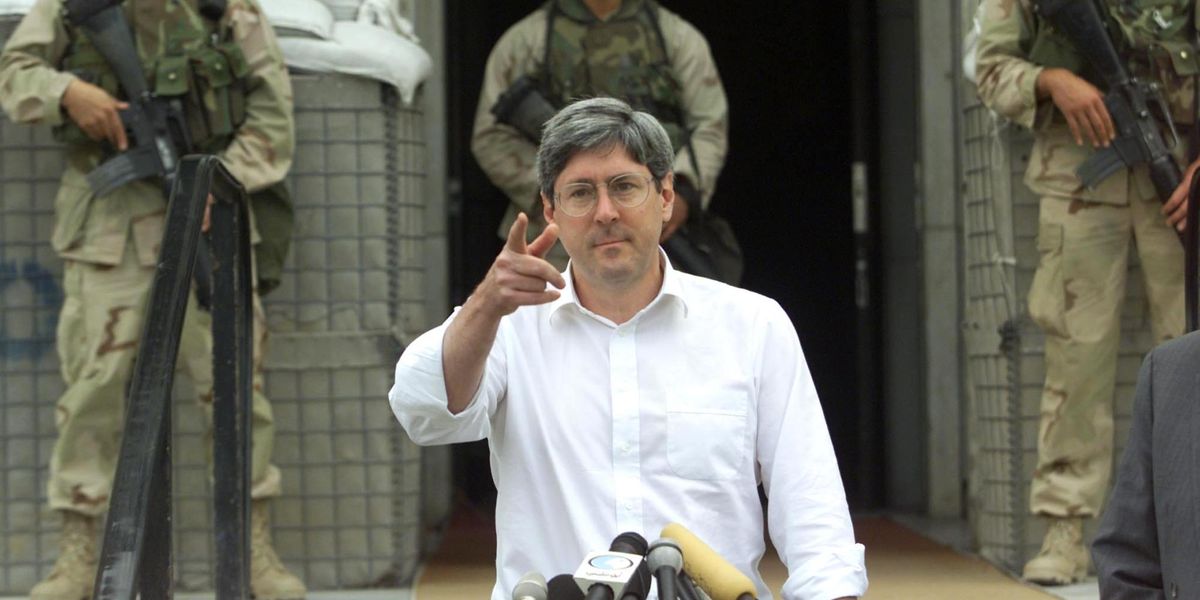
One crucial factor in choosing spokespersons for an anti-MoU campaign is to be wary of individuals linked to past military disasters, such as the invasions of Iraq and Afghanistan. A controversial figure emerging in this context is Douglas Feith. Notably, Feith played a key role in shaping the flawed policies that led to these contentious wars. His reappearance in public discourse, particularly through an op-ed in the Washington Post, was unexpected given his long absence from significant media engagements. Feith’s arguments, steeped in the neoconservative ideology, fail to resonate with many, particularly those aware of his history.
The Irony of Feith’s Critique
In his op-ed, Feith critiques Vice President J.D. Vance and President Trump, accusing them of naivety in their approach to Iran. This line of reasoning rests on the premise that democracies should be wary of engaging with “bad actors” like Iran. Ironically, this position ignores the complex history of Iranian compliance with international agreements, particularly the 2015 Joint Comprehensive Plan of Action (JCPOA), from which the U.S. unilaterally withdrew under Trump.
Feith’s standpoint, however, seems compromised by his own sketchy legacy. His tenure at the Pentagon is marred by accusations of manipulating intelligence to justify the Iraq invasion, which in turn shapes public perception of his credibility today. Critics argue that his involvement could inadvertently weaken the case against the MoU, as it ties the critique to the same neoconservative ideologies that failed in Iraq.
Lessons from History
As the U.S. grapples with its relationship with Iran, it must consider the lessons of past interventions. Feith’s past roles in the Bush administration were characterized by a troubling manipulation of intelligence and strategy, notably through agencies like the Office of Special Plans (OSP). This office was infamous for its attempts to propagate misleading narratives about Saddam Hussein’s regime, which eventually contributed to long-lasting instability in Iraq.
Moreover, Feith’s efforts to collaborate with figures like Ahmad Chalabi further illustrate the dangers of relying on unverified intelligence. The fallout from these decisions resulted not just in military failure but also in humanitarian crises that impacted millions. Such a legacy should serve as a cautionary example, emphasizing the need for grounded, credible voices in contemporary debates regarding military and diplomatic strategies.
The Importance of Credibility in Advocacy
Advocating for or against complex international agreements necessitates a nuanced understanding of past actions and their consequences. Given his controversial history, Feith’s resurgence in this debate raises questions about the effectiveness of his message. The subtleties of U.S.-Iran relations require a fresh approach, one that does not echo the same missteps of the past.
In trying to persuade public opinion, it’s essential to align advocacy efforts with credible individuals who can discuss these topics without being overshadowed by their previous failures. As the discourse evolves, focusing on responsible and informed voices will be crucial for influencing public perception effectively, steering the conversation towards constructive engagement rather than repeating the mistakes of history.