
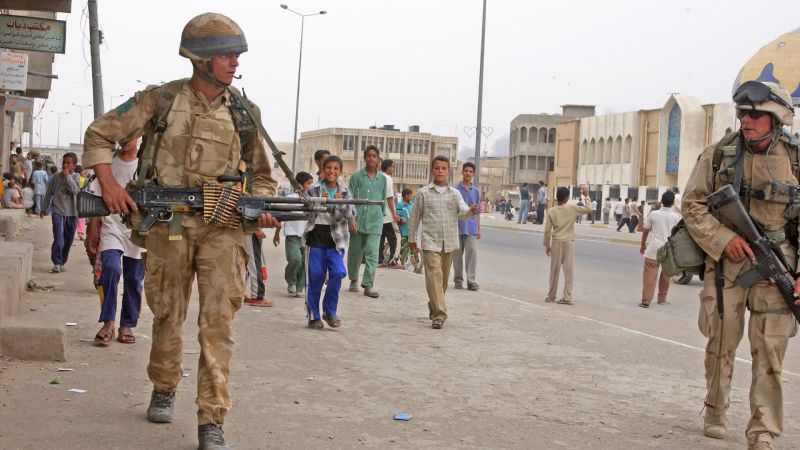
In the years since the withdrawal of British troops from Iraq, significant transformations in warfare have unfolded. The conclusion of Operation Telic marks an important chapter in modern military history, highlighting the country’s evolution from conventional combat to a complex landscape filled with new threats. The UK’s military engagement in Iraq from 2003 to 2011 not only defined the battlefield of that era but also laid the groundwork for contemporary conflicts, reinforcing vital lessons regarding the changing nature of warfare.
The Era of IEDs
Improvised Explosive Devices (IEDs) emerged as a dominant threat during the Iraq War. Initially recognized as a critical danger only months after the invasion, IEDs evolved rapidly, utilizing military-grade explosives and advanced detonation mechanisms left behind after the fall of Saddam Hussein. It was reported that at the peak of the conflict, there were approximately 4,000 IED incidents each month, predominantly targeting Iraqi security forces and civilians. This escalation in frequency showcased the acute transformation of the battlefield, with UK Armed Forces grappling with roadside bombs that increased in sophistication over time.
Many of the IEDs employed were not only varied in their design, ranging from radio-controlled to explosively formed projectiles, but they also became more lethal as the insurgents adapted their strategies. British troops, deployed in vulnerable vehicles such as the Snatch Land Rover, faced devastating casualties attributed to these devices. Critics labeled the Snatch as a “mobile coffin,” highlighting its insufficient armor against the evolving threat of IEDs, which would lead to continued modifications in military logistics and equipment.
Tank Warfare Reimagined
Another significant feature of the Iraq conflict was the introduction and utilization of tank warfare. British forces deployed advanced tanks, including the Challenger 2 and the Warrior Infantry Fighting Vehicle (IFV), which showcased their effectiveness early in the battle. The initial successes, where British tanks outmatched opposing forces with remarkable ease, were soon overshadowed by the new threats presented by IEDs and the emergence of non-state actors wielding anti-tank weapons with increasing efficiency.
As the conflict progressed and lessons were learned, the nature of armored warfare evolved. Modern tanks have had to adapt to the realities of asymmetric conflict, often reinforced with protective measures such as anti-drone nets and cage armor. This adaptation illustrates a crucial shift; tanks, once seen as the pinnacle of battlefield dominance, must now contend with advanced technologies and tactics employed by enemy forces. The continual adjustments showcase a battlefield in flux, spotlighting the ongoing need for military innovation.
The Rise of Non-State Actors
The dynamics within Iraq shifted drastically following the fall of Saddam Hussein, leading to the emergence of a fractured landscape rife with non-state actors. Groups like Al-Qaeda proliferated, employing complex tactics that included not only IEDs but also suicide bombings and targeted attacks against military personnel, creating an unpredictable environment for British forces. This fragmentation culminated in the rise of ISIS, which adopted a deadly approach to asymmetric warfare designed to gain and maintain territory.
Today, the fight against these non-state actors continues through operations such as Operation Shader, wherein UK forces collaborate with international allies to counteract the resurgence of ISIS. The conflict’s nature continues to evolve, emphasizing the need for adaptable strategies and comprehensive training for military personnel tasked with these domestic and international challenges. With changing threats, military adaptations remain paramount, typifying the ongoing dialogue between innovation and tradition within armed forces.
The evolution of warfare since Operation Telic highlights a broader narrative of military engagement—one marked by constant adaptation and a responsive approach to multifaceted conflicts. As global security landscapes shift dramatically, understanding and embracing these lessons remains crucial for future military operations.