
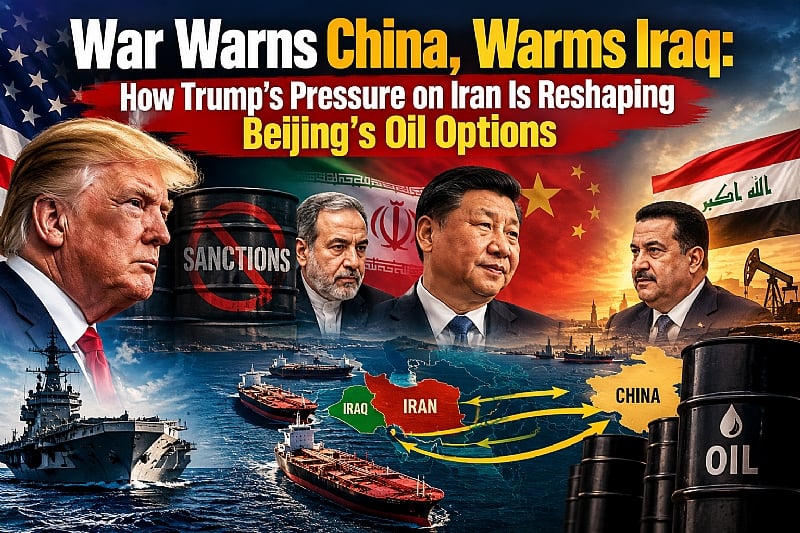
China’s Strategic Shift Amidst US-Iran Tensions
In recent times, China finds itself confronted with strategic dilemmas as it navigates the complexities of its relationship with Iran amid heightened U.S. naval actions. Historically, China has maintained a stance of strategic ambiguity, refusing to unconditionally align with any party in international confrontations. However, as discussions between the U.S. and China hint at Beijing not extending direct support to Iran, a pivotal question arises: will China gradually shift away from its alliance with Iran, or will it continue its traditional approach of strategic ambiguity? The recent visit of Iran’s Foreign Minister Abbas Araghchi to China adds further intrigue to this evolving scenario.
Understanding China’s Dependence on Iranian Oil
China’s dependency on Iranian oil cannot be understated, as a significant portion of Iran’s crude exports has been directed toward Chinese markets. The country’s smaller refineries, colloquially known as “teapots,” primarily focus on economic gain rather than taking definitive political stances in the U.S.-Iran confrontation. With anticipated sanctions potentially restricting access to Iranian crude, these refineries may find more favorable options in Iraqi or Qatari oil, which presents a new strategic opportunity for Iraq. Reports suggest that Chinese refiners are actively securing alternative supplies, with deals reportedly struck for up to 20 million barrels for the upcoming months. This shift highlights the challenges faced by Iran and raises questions about China’s willingness to navigate U.S. sanctions or adapt to a changing market landscape.
For years, around 90% of Iran’s oil exports were directed to China, with figures indicating exports of approximately 1.4 million barrels per day by 2025. If the ongoing naval restrictions significantly disrupt these exports, Chinese buyers are likely to explore alternatives. This evident pivot towards Iraqi oil should not necessarily be interpreted as a repudiation of Iran, but rather as a practical response to ensure energy security.
The Impact of Naval Blockades on Oil Trade Routes
The implications of naval blockades extend beyond mere access to crude oil; they also influence established shipping routes. Traditionally, large vessels carrying Iranian oil to China depended on intricate transfer operations along specific maritime paths, including areas adjacent to the Strait of Malacca. However, these established methods become increasingly precarious under heightened naval scrutiny. The question then arises: when conventional shipping lanes become vulnerable, can the market respond with new routes and alternative suppliers?
Evidence suggests a favorable response to these challenges. Economic realities are driving Chinese oil buyers to reassess their sources, increasingly gravitating toward Iraq and Qatar. This transition could have lasting implications for the global oil market, as Iraq begins to assert itself as a viable supplier, filling the void left by Iranian crude.
Iraq’s Ascendancy in the Global Oil Market
Iraq stands poised to gain from these shifting dynamics, propelled by recent engagements with the U.S. that extend beyond security to encompass broader economic relationships. While Iraq requires stable oil exports and security agreements, the question arises: why is Iraqi oil more readily accepted by international markets compared to Iranian crude, which faces strict scrutiny? The comparative acceptance of Iraqi oil may reflect differing perceptions of regional actors, raising valid concerns regarding the consistency of sanctions policies.
Prior to the recent crisis, China was already Iraq’s largest oil buyer, obtaining around 1.2 million barrels of crude daily. The decline in preference for Iranian supplies appears to signify an acceleration of existing economic ties rather than a complete departure. In this context, Iraqi crude emerges as a competitive alternative, especially as prices fluctuate favorably.
Navigating Geopolitical Risks in Energy Trade
While Gulf oil transportation presents unique risks, particularly around the strategically vital Strait of Hormuz, Iraqi oil offers a promising alternative—especially when significant discounts are available. For Chinese buyers, the decision ultimately hinges upon a cost-benefit analysis balancing acceptable risks against potential savings.
The ongoing geopolitical tension reinforces the idea that limiting one nation may inadvertently bolster opportunities for others, particularly Iraq. If Chinese buyers can access more affordable options, economic rationale might eventually outweigh political alignments. This situation underscores the need for nations to diversify their energy sources and adapt to a fluid geopolitical climate.
In conclusion, the evolving landscape of energy trade between Iran, Iraq, and China highlights a complex intersection of economics and geopolitics. As China navigates this landscape, the question remains: will the current realignments be a temporary shift or signify a more enduring restructuring of energy relationships? The coming months will be critical in determining how these dynamics shape global oil markets.