
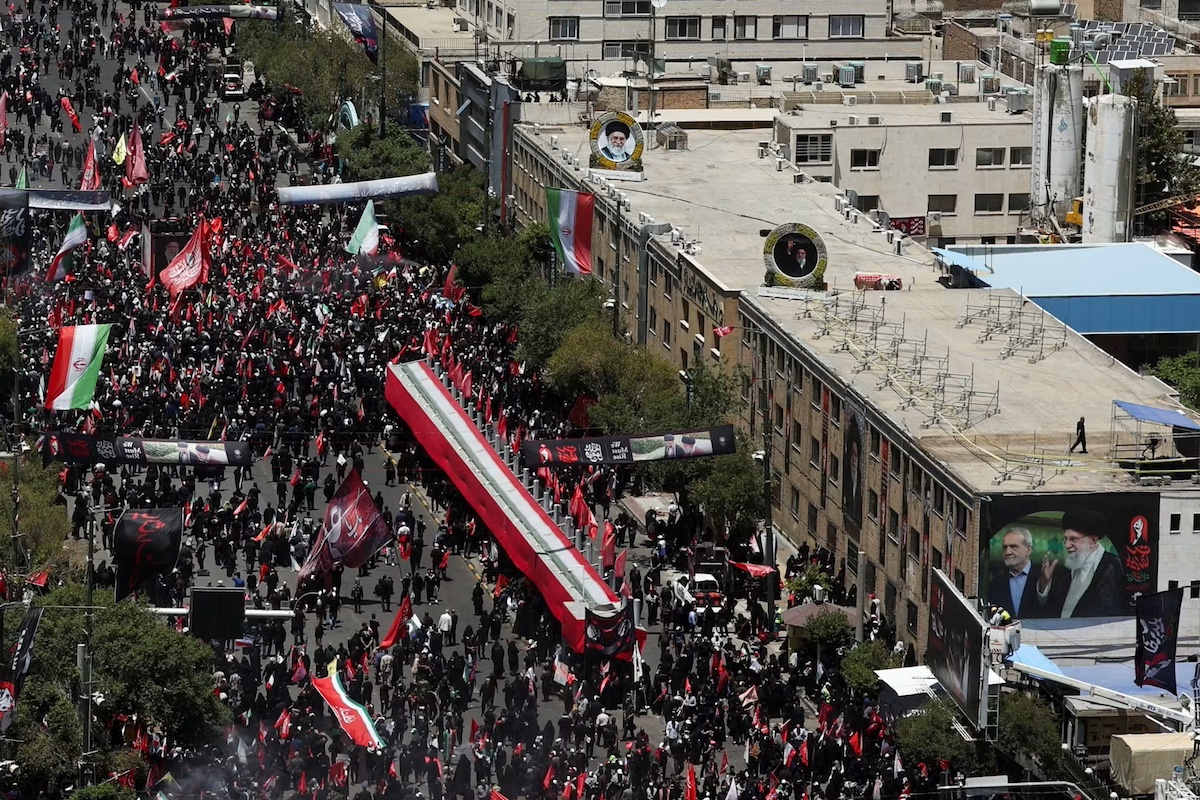
Earlier this month, the passing of Ayatollah Ali Khamenei, the Supreme Leader of Iran, marked a significant turning point in regional geopolitics with his burial in Mashhad. The four-day memorial attracted numerous international dignitaries, each carefully selected by their respective countries, reflecting the delicate nature of diplomatic relations in the Middle East and South Asia.
Geopolitical Implications of Khamenei’s Funeral
The attendance of only two prime ministers at Khamenei’s funeral—Shahbaz Sharif from Pakistan and Ali Falih Kadhim al-Zaidi from Iraq—highlights an emerging alliance between these neighboring countries, often referred to as an “Axis of Sympathy.” This coalition marks a complex shift in regional dynamics, challenging traditional alignments and indicating a growing camaraderie amid rising tensions between Iran and its adversaries, particularly the U.S. and Israel.
In contrast, India, which has historically maintained closer ties with Iran, opted not to send its Prime Minister Narendra Modi, who had previously refrained from condemning Khamenei’s assassination during a joint U.S.-Israeli airstrike. The absence of high-ranking Indian officials at the ceremony could symbolize a strategic distancing, influenced by India’s complicated relationship with both Pakistan and its expanding ties with Israel. While Indian media suggested that Iran appreciated India’s participation, this interpretation glosses over significant geopolitical shifts.
The Rise of Pakistan as a Diplomatic Power
Pakistan’s role in the recent geopolitical climate has been notably assertive. The country has navigated complex diplomatic waters, enhancing its positioning as a mediator between Iran and the United States. During the 2026 Gulf conflict, Pakistan facilitated negotiations that provided Iran with avenues for diplomatic relief. Such initiatives reflect Islamabad’s ambition to become a stabilizing force in a region historically rife with conflict.
However, Islamabad’s influence extends beyond U.S.-Iran relations. Pakistan successfully secured a ceasefire that also included restrictions on Israeli operations in Lebanon. In doing so, it showcased its ability to project influence in broader Middle Eastern dynamics, a role India seemed unable to fulfill, particularly given the nation’s strategic ties to Israel.
The Significance of Geographical Alliances
The emerging alliances in Southwest Asia, particularly between Iran and Pakistan, benefit from geographic proximity. Both nations share a lengthy border, facilitating more effective collaboration on various issues, including regional security and counter-terrorism efforts against groups like the Taliban. In contrast, India’s position as a non-bordering power complicates its ability to engage in direct negotiations with either country, limiting its diplomatic maneuverability.
In recent years, India has sought to establish a “multi-alignment” foreign policy, although its historical connections with Iran have been strained under current conditions. This distancing poses questions about the viability of India’s strategic calculations in a rapidly changing geopolitical landscape. While the need for partnerships continues to evolve, the deep-rooted tensions with Pakistan make it challenging for India to redefine its engagement with Iran.
As Khamenei’s funeral underscored the shifting dynamics in international relations, it also highlighted the strategic chess game countries must engage in. The participation of Iraq and Pakistan at this significant event, though symbolic, is a clear sign of their intention to navigate a more assertive role in regional politics. This realignment may serve to redefine the power structures of Southwest Asia, reflecting broader aspirations shared among neighboring states.
In summary, the changing alliances and the emergence of new diplomatic paradigms signal a reevaluation of inter-state relationships in Southwest Asia. Khamenei’s death may have acted as a catalyst for these shifts, as countries reassert their strategic aims in a landscape defined by complex relationships and emerging coalitions.