
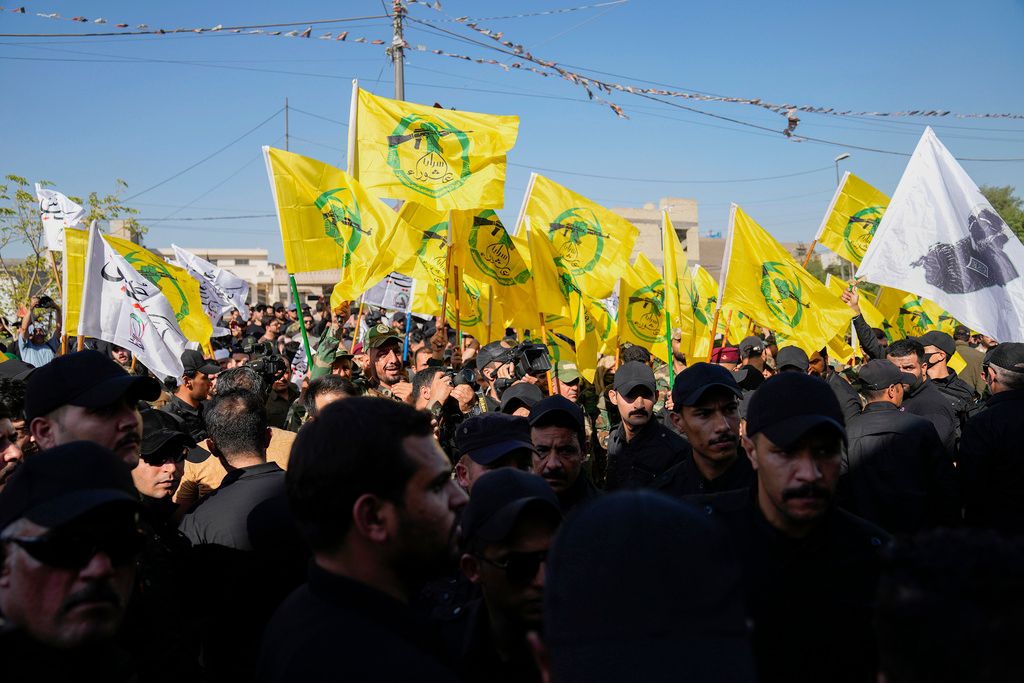
Iran-backed militias in Iraq are intensifying their demands as the deadline for disarmament approaches. With a pivotal date of September 30 set by the Iraqi government for these groups to relinquish their weapons, the landscape appears increasingly fraught with potential conflict and geopolitical entanglements.
Militant Demands and Political Dynamics
The Iranian-backed factions, including Kataib Hezbollah, Harakat Al-Nujaba, and Kata’ib Sayyid ul-Shuhada, are making a series of escalating demands as the disarmament deadline approaches. Among these conditions are calls for the withdrawal of U.S. and Turkish forces from Iraq, as well as a complete cessation of American political influence in the region. These groups are not merely focused on disarmament; their demands reflect broader aspirations to reshape the political and security landscape in Iraq.
Furthermore, the militias are also insisting on the dismantling of the PKK (Kurdistan Workers’ Party) and a more robust presence of the Iraqi army in the Kurdistan Region. They are calling for the acquisition of missile and air defense systems to better secure Iraqi airspace, underscoring their rejection of the government’s attempts at disarmament. This indicates that the situation is evolving from a purely military focus to a multidimensional political negotiation.
The Significance of the September 30 Deadline
September 30 is not just the deadline for disarmament but also marks a momentous occasion—the scheduled exit of coalition forces after a presence of approximately 23 years. This mutual timeline adds pressure on the Iraqi government to address the complex security environment while adhering to international expectations for a successful disarmament process. The withdrawal of U.S. forces has been closely tied to the expectation that Iraqi militias will be effectively brought under government control, allowed to function solely within the framework of state authority.
Adding a layer of complexity, the United States has urged Iraq to finalize the disarmament of its militias before all coalition forces exit. The international community closely watches this transition, weighing in on the implications of security and stability in the region. Failure to meet the disarmament deadline could lead to increased violence and political instability, raising concerns not only for Iraq but also for neighboring countries.
The Broader Implications for Iraqi Sovereignty
The demands from Iranian-backed militias not only reflect internal power struggles but also question the sovereignty of the Iraqi government. With various factions asserting significant influence, the ability of the government to execute its policies is under scrutiny. Should these militias remain armed and retain their autonomy, they could continue to undermine state authority and complicate Iraq’s relationships with its neighbors and international allies.
As the September 30 deadline looms closer, the stakes are high for the Iraqi government. The balance between addressing the demands of powerful militias and demonstrating a commitment to disarmament is crucial in establishing not just security, but a stable political environment in Iraq. The coming weeks will be decisive in shaping the future trajectory of Iraqi governance and its efforts to regain control over its armed factions.