
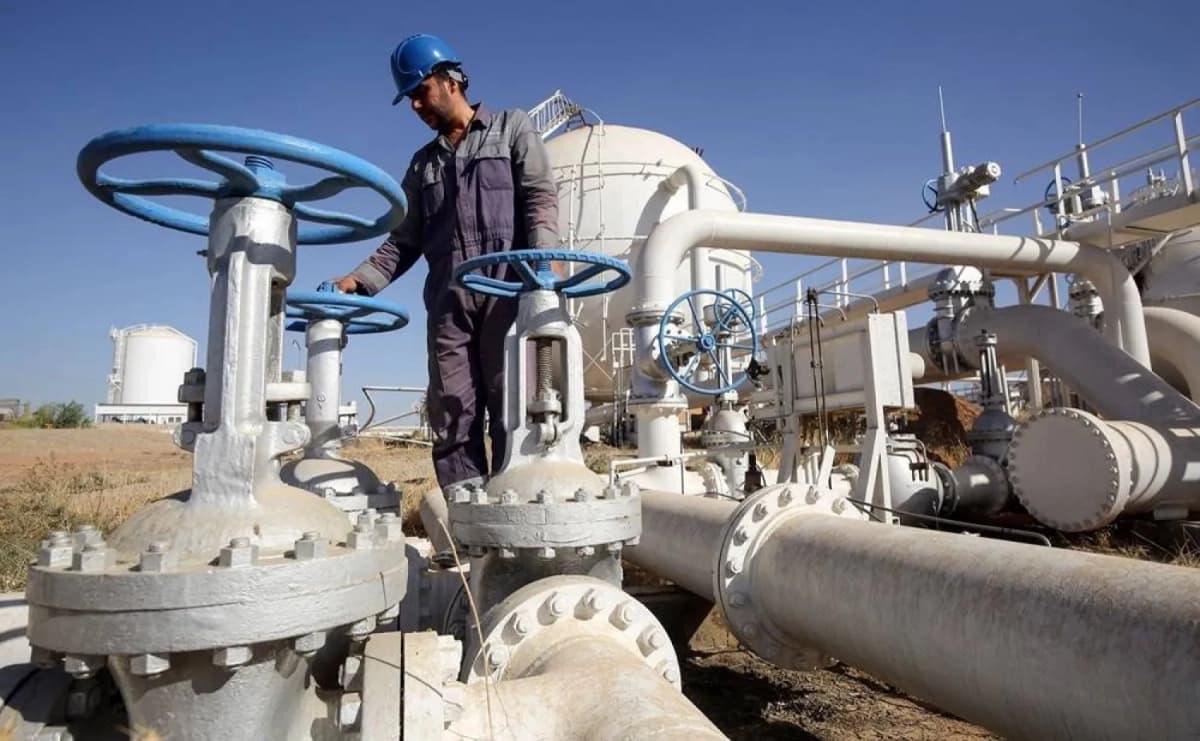
Erbil’s Ambitious Oil Export Expansion
Erbil, situated in the Kurdistan Region of Iraq, has outlined plans to significantly ramp up its oil exports. The government has set an ambitious goal to increase daily exports through Syria and Turkey to one million barrels. This announcement comes shortly after Baghdad emphasized its commitment to enhancing overall oil exports to five million barrels a day.
Proposed Increase in Oil Export Capacity
Bassim Khudair, Iraq’s oil minister, revealed that the nation is currently exporting approximately three million barrels per day as of September. He elaborated on plans to boost export capacity through pipelines leading to the Turkish port of Ceyhan and across Syria. This strategic move aims to surpass one million barrels daily in the foreseeable future, reflecting Iraq’s effort to tap into more lucrative markets and enhance revenue streams.
Recent Developments and Infrastructure Investments
Just days prior to these announcements, Khudair articulated that expanding export capacity remains a priority for Iraq upon the completion of vital infrastructure, notably the strategic pipelines extending toward Peshkhabur and Baniyas. These pipelines are crucial for facilitating smoother and more efficient export routes. The location of Peshkhabur—where Iraqi borders converge with Syria and Turkey—positions it as a key transit point for oil exports.
Recent reports from Iraq’s State Oil Marketing Organization (SOMO) indicate that August exports reached 73.69 million barrels, but only 3.93 million of those came from the Kurdistan Region and Kirkuk oilfields through Ceyhan. Thus, there is significant room for growth as Iraq aims to consolidate its oil sector amid ongoing disruptions.
Challenges and Strategic Partnerships
The Iraqi government faces various logistical and security challenges hindering optimal export capacity. In July, Baghdad signed agreements with Damascus and international partners to rehabilitate the Kirkuk-Baniyas oil pipeline. This initiative aims to revitalize an essential 800-kilometer energy corridor that connects Iraq’s northern oil fields with the Syrian coast, providing a direct route to Mediterranean markets.
By reopening critical crossings and establishing new trade routes through Syria, Iraq hopes to mitigate risks associated with shipping disruptions via the historically turbulent Strait of Hormuz. This chokepoint is vital, as approximately 20% of global oil supplies traverse this route.
Navigational Pathways Towards Enhanced Trade
In the wake of strategic realignments, Iraq has also recorded a rebound in oil exports through the al-Waleed border crossing into Syria. This revitalization emphasizes the country’s commitment to restoring its position in the global oil market despite the challenges posed by regional instability. Local officials have indicated the daily dispatch of hundreds of oil tankers, enhancing Iraq’s export capabilities via this critical crossing.
Moreover, Iraq has actively pursued alternative routes to diversify trade channels, ensuring that disruptions in one line do not cripple its oil sector. The government remains focused on maximizing export efficiency while fortifying its infrastructures, thereby solidifying Iraq’s standing as a significant player in global oil markets moving forward.
With its ongoing endeavors and robust plans, Iraq’s oil industry looks poised for a transformative phase, aiming to embrace a future where it is less vulnerable to market fluctuations and geopolitical challenges.