
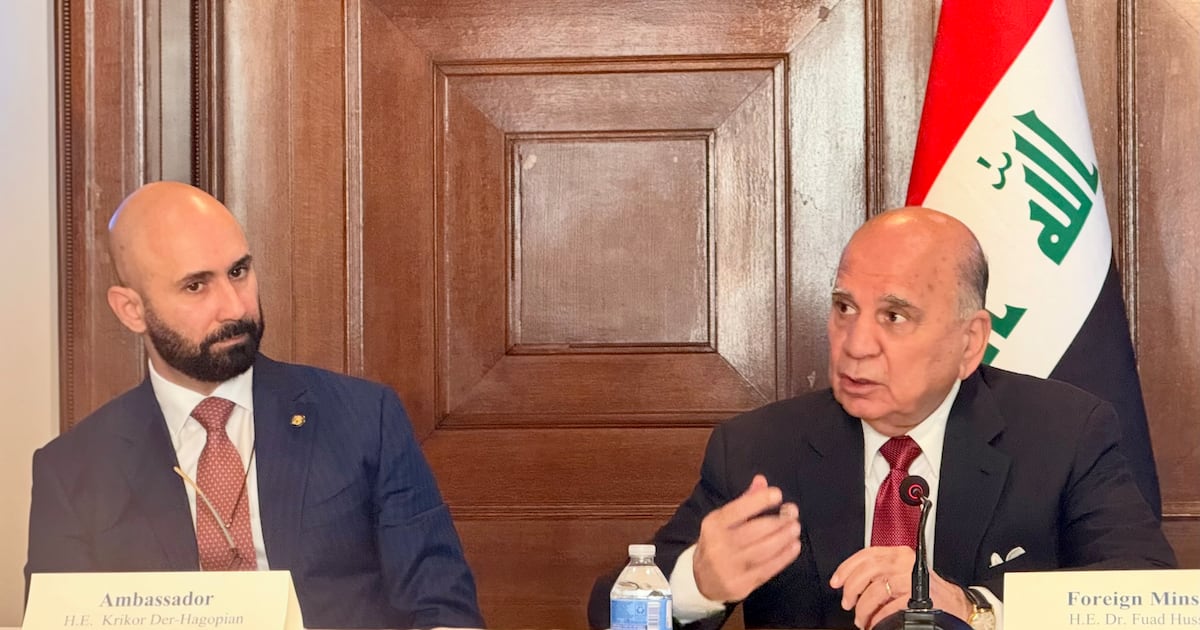
Iraq is optimistic about achieving its goal of disarming armed groups by the June 30, 2027 deadline, according to Foreign Minister Fuad Hussein. This plan comes despite some resistance from influential Iran-aligned factions within the country. Hussein made the announcement during a press conference at the Iraqi embassy in Washington, where he outlined the government’s commitment to bringing these groups under control.
Clear Timeline and Commitment
Hussein emphasized that the Iraqi government has laid out a definitive plan to disarm various armed factions and to incorporate them into the Iraqi security apparatus. “We have established our target, the means, and the timeline,” he stated, firmly rejecting the notion that disarmament could become an indefinite political process. His words reflect a strong commitment to reaching the disarmament target, stating, “We must reach the target, and that doesn’t mean it will stay as an open end.” This level of determination aims to alleviate concerns both nationally and internationally regarding the governance and security situation in Iraq.
Initially, the Iraqi administration had set the September 30 deadline—coinciding with the U.S. troop withdrawal—for bringing weapons under state control but later extended it to June next year. The change underscores the complexities involved in the disarmament process, especially with the challenges posed by powerful factions like Kataib Hezbollah, which recently denied any agreement regarding disarmament with Prime Minister Ali Al Zaidi.
Engagement with Armed Groups
As part of the disarmament initiative, Hussein noted that the government has engaged with seven armed factions, with several groups expressing their support for the planned disarmament. Some factions have even begun transferring their weapons to the official security forces, indicating a willingness to participate in the integration process. Hussein highlighted the intention to incorporate these factions into the Iraqi armed forces, which would place them “under the umbrella of the Iraqi government.”
Acknowledging the influence of external forces on this plan, Hussein reiterated that the ultimate decision remains with Iraq, saying, “We will not permit any group to take unilateral actions that affect neighboring countries.” He emphasized that the government’s commitment to disarmament is also crucial for restoring Iraq’s relations with Gulf states, which have been strained by attacks originating from Iraqi territory.
Future of US-Iraq Relations
Hussein’s comments come just as Iraq transitions into a new phase in its security relationship with the United States following the end of the 12-year mission aimed at combating ISIS. The Iraq government is eager to foster a bilateral security partnership with the U.S., including discussions on intelligence sharing and military cooperation. “The process can start with the United States,” he said, indicating readiness for productive dialogue in the near future.
He reassured that Iraqi forces are now capable of tackling any residual ISIS threats, yet acknowledged that challenges from ISIS operatives outside Iraq, particularly in Syria, remain. Hussein estimated that there may still be hundreds, if not thousands, of ISIS fighters active there. “ISIS is not just a military force; it’s an ideological one,” he warned, stressing the necessity of maintaining vigilance against any resurgence.
In summary, Iraq’s push for disarming armed groups and enhancing security ties with the U.S. marks an important turning point for the nation. As the Iraqi government aims to consolidate control and reclaim its sovereignty, it hopes to reassure neighboring countries and rebuild fruitful relations within the region, ultimately aspiring for stability and peace.