
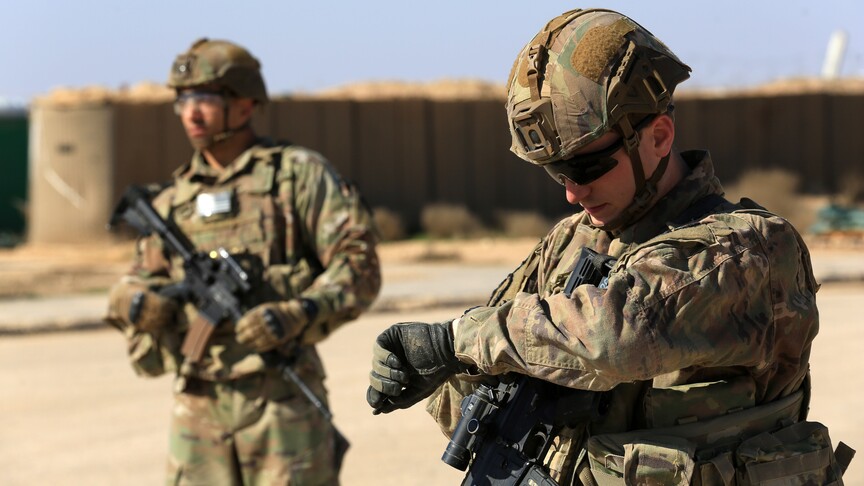
Iraq is undergoing significant changes, with Prime Minister Ali Faleh Al-Zaidi recently announcing the complete withdrawal of U.S. troops from the country. This move coincides with the government’s ambitious plans to bring all weaponry under state control by June 2027. The absence of foreign military presence, according to Al-Zaidi, serves to eliminate the rationale that various armed factions previously cited for retaining their arms. This marks a pivotal moment for Iraq as it seeks to establish itself firmly as a nation governed by centralized authority rather than fragmented factions.
Complete Withdrawal of U.S. Forces
On Friday, Al-Zaidi confirmed that Iraq is free of U.S. troops, even in advisory roles, stating that this development paves the way for a more stable governance structure. With the government’s intention to ensure that no weapons exist outside state institutions, the prime minister has made it clear that this mandate is both final and non-negotiable. He underscored that by June 30, 2027, all armed groups must adhere to this directive. Al-Zaidi revealed that the government has already engaged with various armed factions, reaching agreements that reflect a commitment to unify the state’s control over armaments.
He reflected on a critical juncture in Iraq’s history, indicating that at one point, the country faced potential international isolation and the exit of foreign embassies. The perception that armed factions were in control has been dismantled, with Al-Zaidi proclaiming, “Iraq is a state that has factions, not factions that own a state.” This re-defining moment exemplifies Iraq’s pursuit of national unity and security.
Enduring U.S.-Iraq Partnership
Despite the withdrawal, Baghdad remains determined to maintain a strong strategic partnership with the United States. Al-Zaidi emphasized that Iraq recognized the technological and economic advantages provided by its relationship with Washington. He noted that American companies have already begun engaging in projects within Iraq, focusing on areas that promise mutual benefits. This ongoing partnership, combined with efforts to enhance Iraq’s energy sector, is expected to elevate the country’s position on both regional and international stages, particularly in the wake of transformative economic agreements.
Responses to Regional Challenges
In the realm of regional dynamics, Al-Zaidi reaffirmed that Iraq will not participate in any military conflict, positioning the nation as a mediator among conflicting parties. He asserted the importance of reaching agreements to resolve crises, regardless of the friction that may emerge. Moreover, he rejected the notion of shutting down the Iran-Iraq border, warning that such a decision would lead to economic hardships for both countries. “Closing the border with Iran means economically besieging ourselves,” he cautioned, underscoring Iraq’s need for diplomatic and economic synergy.
Energy Strategies and Future Outlook
On the energy front, Al-Zaidi highlighted Iraq’s plans to create alternative oil export routes, aiming to reduce its dependency on the Strait of Hormuz. This decision comes in light of ongoing maritime navigation disruptions in this crucial waterway. He mentioned the importance of resuming oil exports through Türkiye’s Ceyhan port, a strategy that could diversify export channels and mitigate risks associated with relying solely on traditional routes. By 2032, Iraq aims to boost its oil production capacity to an impressive 10 million barrels per day, illustrating its ambitions for economic growth and stability.
In discussing the Development Road project with Türkiye, Al-Zaidi described it as Iraq’s “third river,” emphasizing its potential to connect southern ports to Turkish and European markets. The project is set to start once the budget receives parliamentary approval, signaling a robust roadmap for future prosperity and connectivity.
With these developments, Iraq is not only striving for internal control but is also poised for significant growth and stability on the world stage.