
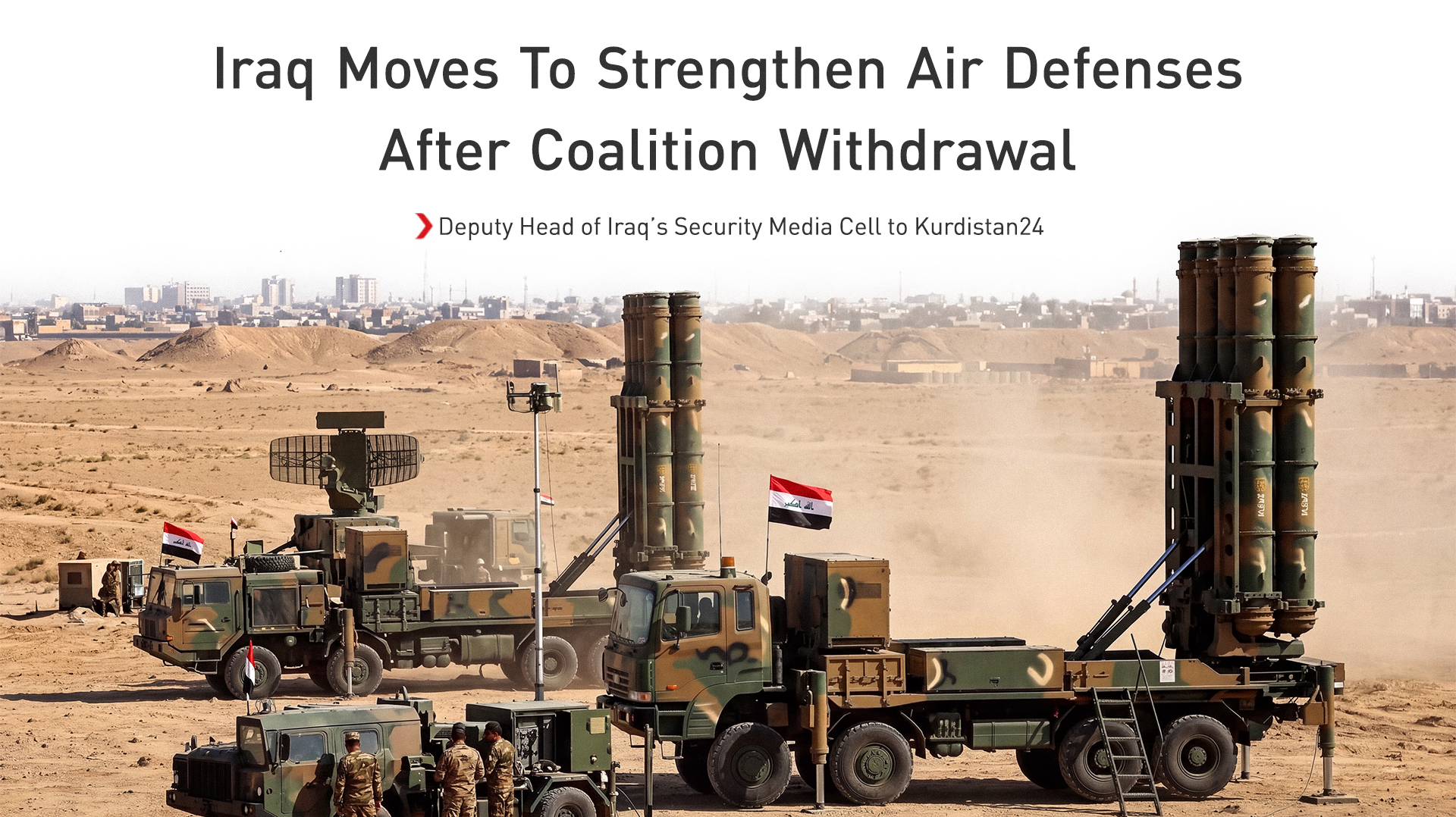
Iraq is taking proactive steps to enhance its air defense capabilities following the withdrawal of Coalition forces, according to recent statements from Iraq’s Security Media Cell. The country plans to enter into agreements with various leading nations to acquire sophisticated air defense systems, thereby ensuring the protection of its territorial integrity.
Strengthening Air Defense Post-Withdrawal
In an interview with Kurdistan24, Tahsin al-Khafaji, the deputy head of Iraq’s Security Media Cell, revealed that the Iraqi armed forces, comprising the military, internal security units, intelligence agencies, and both Popular Mobilization Forces and Peshmerga, stand ready to safeguard the nation’s borders and skies. The final withdrawal of Coalition troops, completed on September 30, marks a significant transition in Iraq’s security dynamic, placing full responsibility on domestic forces. This change is also anticipated to transform Iraq’s relationship with the Coalition into one focused on training and weapons acquisition rather than active military presence.
Clarifying Misunderstandings
Khafaji addressed recent misinformation circulating on social media regarding the crash of an F-16 fighter jet in Baghdad. He described these claims as unfounded and clarified that Iraq’s Ministry of Defense officially dismissed them. According to him, all F-16s involved in a recent military display over the capital successfully returned to their bases, showcasing the operational readiness of Iraq’s air defense.
Future Plans for Air Defense Acquisition
The Iraqi leadership is committed to closing any potential security gaps created by the Coalition’s exit. Khafaji stated that the commander-in-chief of the armed forces is prioritizing the procurement of modern air defense systems. Sufficient budget allocations will be made for these acquisitions, and contracts are expected to be signed with several prominent countries in the near future.
Training programs will also be set up to equip Iraqi forces with the skills needed to operate these advanced systems effectively. These initiatives aim not only to bolster Iraq’s air defenses but also to assure citizens that the government is taking necessary actions to fortify national security.
Conclusion: Ensuring National Security
As Iraq embarks on this new chapter, the focus will be on enhancing its sovereignty. By increasing its military capabilities and addressing the need for effective air defense, Iraq aims to prevent any breaches of its airspace. This determined approach reflects the country’s commitment to maintaining stability and security, leveraging its own resources to safeguard its citizens. The transition from Coalition support to indigenous control marks a critical evolution in Iraq’s defense strategy, and future developments will be closely monitored by both national and international observers.